Via Ferrata Karhorn
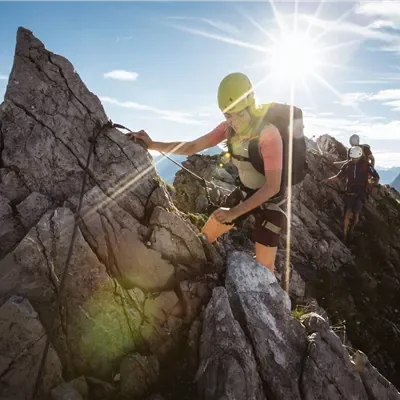
The Karhorn Klettersteig is a via-ferrata route located above the village of Warth am Arlberg in the Austrian Vorarlberg region. This fixed-rope climbing path offers alpine enthusiasts an accessible introduction to exposed ridge climbing in a dramatic mountain setting. First built in 2001 and later extended, it has become a popular climbing adventure for those seeking both scenery and moderate technical challenge.
Trail Overview
Region: Warth am Arlberg, Vorarlberg, Austria
Mountain / Summit: Karhorn (2,416 m) above the Wartherhorn saddle.
Route structure: Divided into two main sections: East Ridge (Ostgrat) and West Ridge (Westgrat).
Access by lift: Use the Steffisalp Express lift to shorten the approach.
Length & elevation gain: The via ferrata itself is around 600–650 m in length (fixed-rope section) and the approach adds significant elevation.
Difficulty grade:
East Ridge: A/B (easy to moderate) — suitable for beginners.
West Ridge: C/D (more difficult) — for those with some via ferrata experience and stronger fitness.
Typical duration: Considering approach, via ferrata, and descent, expect ~4-6 hours depending on route choice.
Route Description
Starting from the upper station of the Steffisalp Express lift, the walk leads along a marked alpine path toward the Wartherhorn saddle. From the saddle the via ferrata begins:
East Ridge (Ostgrat): This section starts at the saddle and follows a well-secured ridge with ladders, cables and foot-holds through rocky terrain. The difficulty is moderate (A/B) and the exposure is present but manageable for those confident on heights. The ridge leads directly to the summit of Karhorn at 2,416 m.
West Ridge (Westgrat): For those wanting greater challenge, the route may continue from the summit via the West Ridge. This section is steeper, more exposed, and rated C/D. It involves traverses along ridgelines and more vertical rock sections. After completing the ridge section you descend via a marked path back toward the cable-car station.
The descent may follow either the normal trail or a more direct path, depending on the chosen ridge. Weather and terrain conditions must be carefully considered, particularly for the more demanding West Ridge.
Highlights
Panoramic Alpine Views: From the ridge you enjoy sweeping vistas of the Lechquellen mountain range and neighboring peaks — the exposure enhances the sense of altitude.
Accessible via Lift: The nearby Steffisalp Express lift removes much of the vertical slog, meaning you reach high terrain quickly and can focus on the via ferrata experience.
Varied Terrain: The route mixes secured steel cables, ladders, narrow ridges and open alpine slabs — offering excellent contrast and climbing interest even in the “easier” section.
Beginner Friendly Option: The East Ridge gives first-time via ferrata climbers a taste of ridge climbing in high mountains, without needing full alpine route skills.
Step Up for Experienced Climbers: The West Ridge provides a meaningful challenge for climbers who want more exposure, steeper sections and a more sustained technical climb.
Difficulty and Required Skills
The Karhorn Klettersteig is rated from A/B (East Ridge) to C/D (West Ridge) according to standard via ferrata grading systems.
For the East Ridge (A/B):
Basic sure-footedness and no severe fear of heights.
Standard via ferrata equipment: helmet, harness, via-ferrata lanyards with energy absorbers, gloves.
Some exposure but minimal overhangs; less demanding arm strength.
Good fitness: moderate uphill walking before the climb, and descent thereafter.
For the West Ridge (C/D):
Solid mountain experience with comfort on exposed ridges.
Strong arms and legs for steeper, more vertical climbs.
Navigation / route-finding skills: more complex terrain and longer sections.
Weather awareness: steeper rock, potential for rock-fall or strong winds.
Longer descent time and higher altitudes add fatigue factors.
Regardless of route choice, climbers must be prepared for alpine conditions: sudden weather changes, possible rock debris, and variable trail exposure. The normal physical preparation and acclimatization for 2,400 m elevation apply.
When to Go
The ideal period for the Karhorn Klettersteig is during the summer months, typically from late June to early October, depending on snow melt and weather. Because part of the route is above the tree line and on exposed ridges, early or late in the season snow or ice may linger, making the climb more hazardous.
Mid-summer (July-August): Most reliable in terms of conditions, but possible heat and increased crowds.
Late summer (September): Cooler air, fewer people, often crisp and clear views.
Early season (June): Possible snow patches and cold conditions; check local reports.
Autumn (October): Risk of early snows or frost; shorter daylight hours.
Always check local weather forecasts and lift operation (Steffisalp Express) schedules before planning the climb.
Access and Logistics
Starting Point: Warth am Arlberg village (Vorarlberg, Austria).
Lift Access: Take the Steffisalp Express lift from Warth to the Steffisalp station. From there walk ~45-60 minutes to the Wartherhorn saddle (the via ferrata start).
Return: After the ridge/climb and descent, return via normal trail or lift access back to Warth.
Equipment Rental: Via ferrata kits are often available in Warth am Arlberg if you don’t bring your own gear.
Safety Considerations: Inform yourself about current route condition, rockfall risk, weather, and potential closures.
Accommodation: Warth am Arlberg offers hotels, guesthouses and alpine lodges suitable as base for the climb.
Transport: Warth is reachable by train and bus from larger Austrian hubs; check local public transport connections for arrival and departure.
Why It Belongs on Every Adventurer’s List
The Karhorn Klettersteig bridges the gap between accessible high-alpine thrill and manageable risk: it offers the sensation of climbing a mountain ridge without needing full mountaineering skills or multiple days on the trail. Its combination of scenic ridge exposure, lift-assisted access and optional escalation (East Ridge → West Ridge) means it works for both newcomers and seasoned climbers.
It gives you the taste of ridge walking and via ferrata in a dramatic alpine arena, where the views reward every step, and the altitude adds a sense of grandeur. It is both a proper alpine adventure and a climb that can be completed in a day — perfect for those who want to experience high mountains, steel cables, and cliff-edge thrills without committing to a multi-day expedition.
For anyone building their mountain résumé, the Karhorn Klettersteig offers a perfect mix of accessibility, technical interest and alpine grandeur.