Via Ferrata Drachenwand
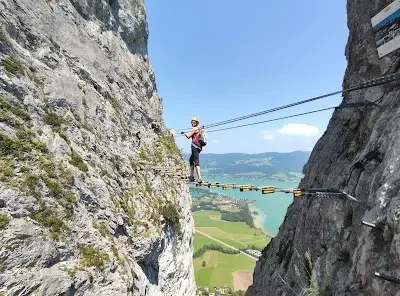
The Drachenwand Klettersteig is one of Austria’s most scenic via ferrata routes, perched above the shimmering waters of Mondsee in the Salzkammergut region. This exhilarating climb offers a unique combination of iron-rungs and cables, sweeping views of alpine lakes and peaks, and a genuine adventure feel despite its accessibility. Whether you’re a seasoned via ferrata enthusiast or a fit outdoor adventurer looking to step up from standard hikes, this route delivers memorable exposure and vistas.
Trail Overview
Location & elevation: The route ascends to approximately 1,060 m above sea level on the Drachenwand ridge above Mondsee, starting from around 485–550 m.
Length & ascent: The via ferrata is roughly 4–4.5 km long with around 400–500 m of vertical gain (some sources say up to 560 m of climbing) due to the technical nature of the route.
Difficulty grade: Generally rated as C with sections of C/D (via ferrata grading) or described as 60% B, 40% C with some D parts depending on variant and conditions.
Time required: Expect approximately 2.5 to 4 hours for the climb itself (excluding approach and descent).
Terrain type: Alpine wall ascent via cables, ladders, and some exposed traverses overlooking the lake below. The descent often uses a separate path or down-route through the “Drachenloch” section.
Route Description
The typical experience begins at a trailhead near the village of St. Lorenz by Mondsee. A short walk brings you to the base of the Drachenwand ridge:
Approach: From the parking at the Gasthof Drachenwand area (or marked trailhead) follow signage to the chapel (Theklakapelle) and then a marked path toward the klettersteig entry. The approach takes about 20–30 minutes.
Via ferrata climb: You clip into the steel cable and ascend via a mix of natural rock and fixed aids. Early sections cover ladders and moderate wall terrain (grade B). As you ascend, the route becomes more serious—especially the dramatic rope/wooden ladder sections and suspended bridge over cliff-ledge. Some sections approach C/D when water flows heavily or when you take the more ambitious variant.
Summit: The route culminates on the ridge near the summit of the Drachenwand (≈ 1,060 m). From here the panorama opens wide over Mondsee lake and the distant Dachstein massif. A break at the top is highly recommended.
Descent: From the summit you can descend via a marked hiking path (often the “Drachenloch” descent) which involves forest tracks or steep paths back toward the valley. Some exposure remains. Number of users report the descent path as being more strenuous on tired legs.
Highlights
Lake & mountain panorama: The trail offers one of the most breathtaking views in the Salzkammergut, with the blue-green expanse of Mondsee below and high alpine peaks in the distance.
Classic via ferrata features: Expect ladders, fixed cables, and the iconic rope/wooden bridge section that gives a sense of floating above the valley.
Accessible adventure: Although technical in parts, the route is more accessible than many high-alpine ferratas—making it an excellent “step-up” route for those who already hike and scramble.
Unique setting: Being able to combine a fun via ferrata climb with a lake environment and alpine ridge makes this route stand out from many conventional mountain hikes.
Photo opportunities abound: From the ladder sections to the summit vista, this route is highly photogenic—ideal for outdoor photography and memorable memories.
Difficulty and Required Skills
Fitness: Good aerobic fitness is required—there is sustained climbing and exposure for around 2–4 hours.
Technical skill: You should be comfortable with via ferrata technique (using a harness, lanyard, and carabiners clipped to the cable). Good head for heights is highly recommended.
Exposure: Rated roughly C (some C/D). This means steep sections, potential for vertical exposure, and some tricky parts—not just walking.
Equipment: Harness, via ferrata lanyard, helmet, gloves, sturdy shoes. On descent a good pair of hiking shoes is necessary.
Conditions: The route should be done in stable weather. If the rock is wet or during heavy flows the “waterfall” sections become more demanding. Some sources say this route is “not for beginners” in certain conditions.
Descent caution: After the climb the descent can be tiring and less protected, so safe footing and attention are required.
When to Go
Season: The ideal months are from late spring to early autumn (May to September) when the route is free of snow and the weather is more predictable.
Time of day: Arriving early (before 9 a.m.) is wise, especially in summer or on weekends, since this route is popular and traffic can build up.
Weather conditions: Only attempt in dry, stable conditions. Wet rock, mid-day heat, or afternoon storms increase risk. The descent path must also be dry.
Crowds: In peak season the route may be crowded. Early start or less busy weekdays improve the experience.
Access and Logistics
How to reach: Drive (or public transport) to St. Lorenz (Upper Austria), then park near the Gasthof Drachenwand or trailhead parking. From the main A1 motorway, exit at Mondsee.
Trailhead: The trail begins with a short walk from the parking area. Easy signage leads to the via ferrata entry near the chapel route.
Descent & exit: After reaching the summit, follow the marked hiking path down through the Drachenloch route or forest-road descent back to valley level. Allow time for descent as tired arms and legs may slow you.
Public transport: If using public transit, reach Mondsee and then local bus/taxi to St. Lorenz.
Safety / permits: No special permit is required, but pay attention to route regulations, access signage, and respect any seasonal closures. Carry insurance and check local avalanche or rockfall warnings if early or late season.
Facilities: As this area is well-visited you’ll find small inns, guesthouses, and accommodation in St. Lorenz or nearby Mondsee town. Food and beverages available before/after ascent.
Why It Belongs on Every Adventurer’s List
The Drachenwand Klettersteig is a perfect blend of accessible adventure and alpine ambience. It delivers the thrill of a via ferrata—ladders, exposure, cables—without requiring multi-day equipment or glacier travel. The dramatic backdrop of Mondsee, the airy ridge, and the distinct rope-bridge highlight make it memorable and Instagram-worthy yet still substantial. For anyone looking to elevate their mountain experience beyond typical hiking but avoid full alpine mountaineering, this route is ideal. It tests fitness, balance, and nerve; offers panoramic rewards; and is located in one of Austria’s most beautiful lake-and-mountain regions. Whether you’re seeking a serious one-day ascent or a stepping stone to more technical terrain, the Drachenwand route delivers both challenge and spectacle. Its accessibility also means you can plan for it as a highlight day excursion in your Alpine program.