
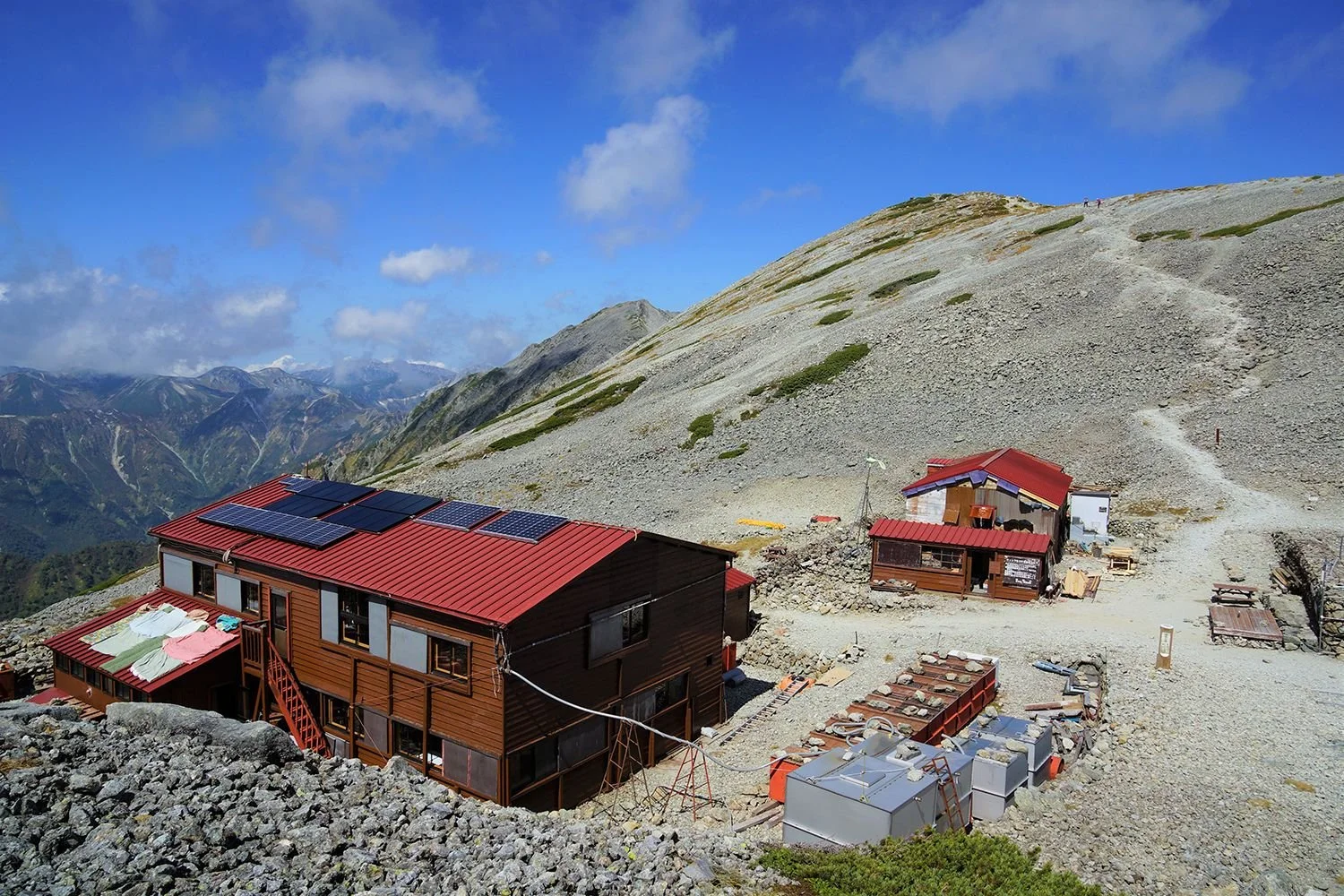
Minami-dake-goya (南岳小屋)
Minami-dake-goya is a high-alpine ridge hut positioned between Mt. Yarigatake and the entrance to the Daikiretto—the famously exposed traverse toward the Hotaka peaks. It is a key strategic stop for hikers and traverse parties moving along the Yari–Hotaka ridgeline, allowing you to split long stages, manage weather windows, and plan water logistics before committing to serious terrain.
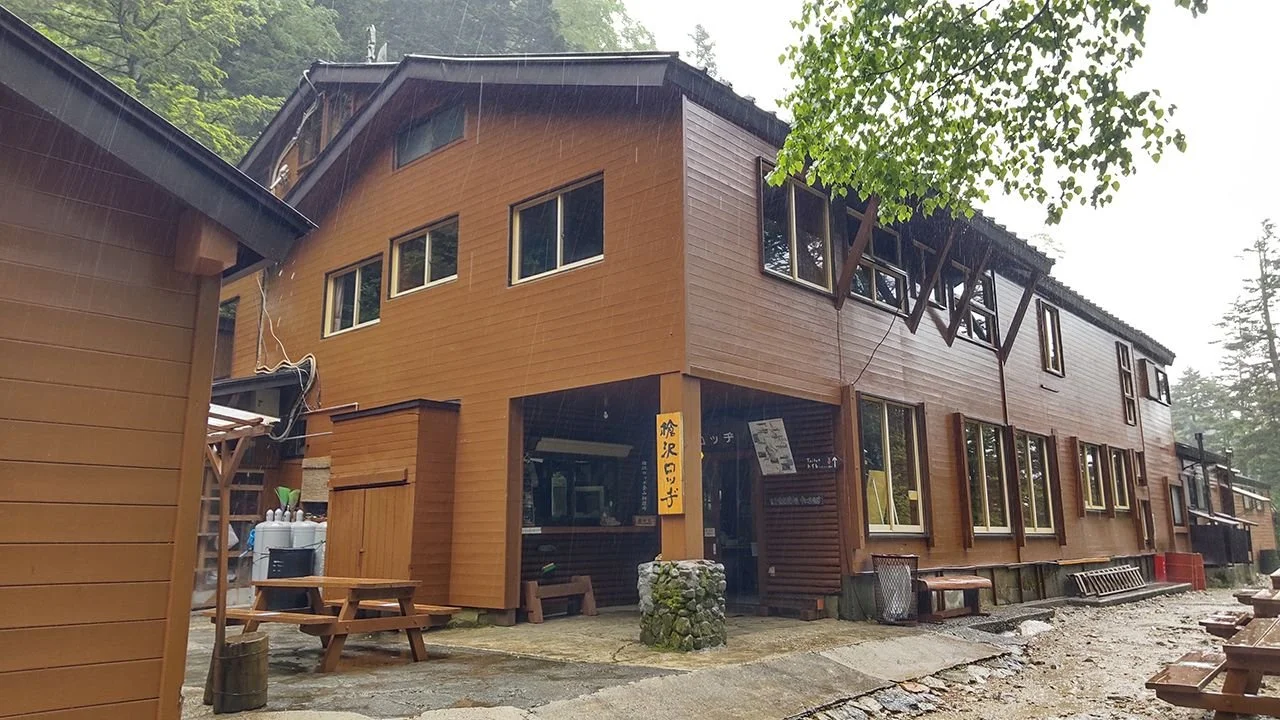
Yarisawa Lodge (槍沢ロッヂ)
The Yarisawa Lodge (槍沢ロッヂ) is a classic forest-zone mountain lodge positioned at the midpoint of the main hiking route from Kamikōchi to Mt. Yarigatake. Operated by the Yarigatake Sanso Group, it’s designed as a high-throughput staging base: a comfortable, efficient stop to split the approach, manage timing, and push higher the next day toward Sesshō Hyutte and the summit ridge.
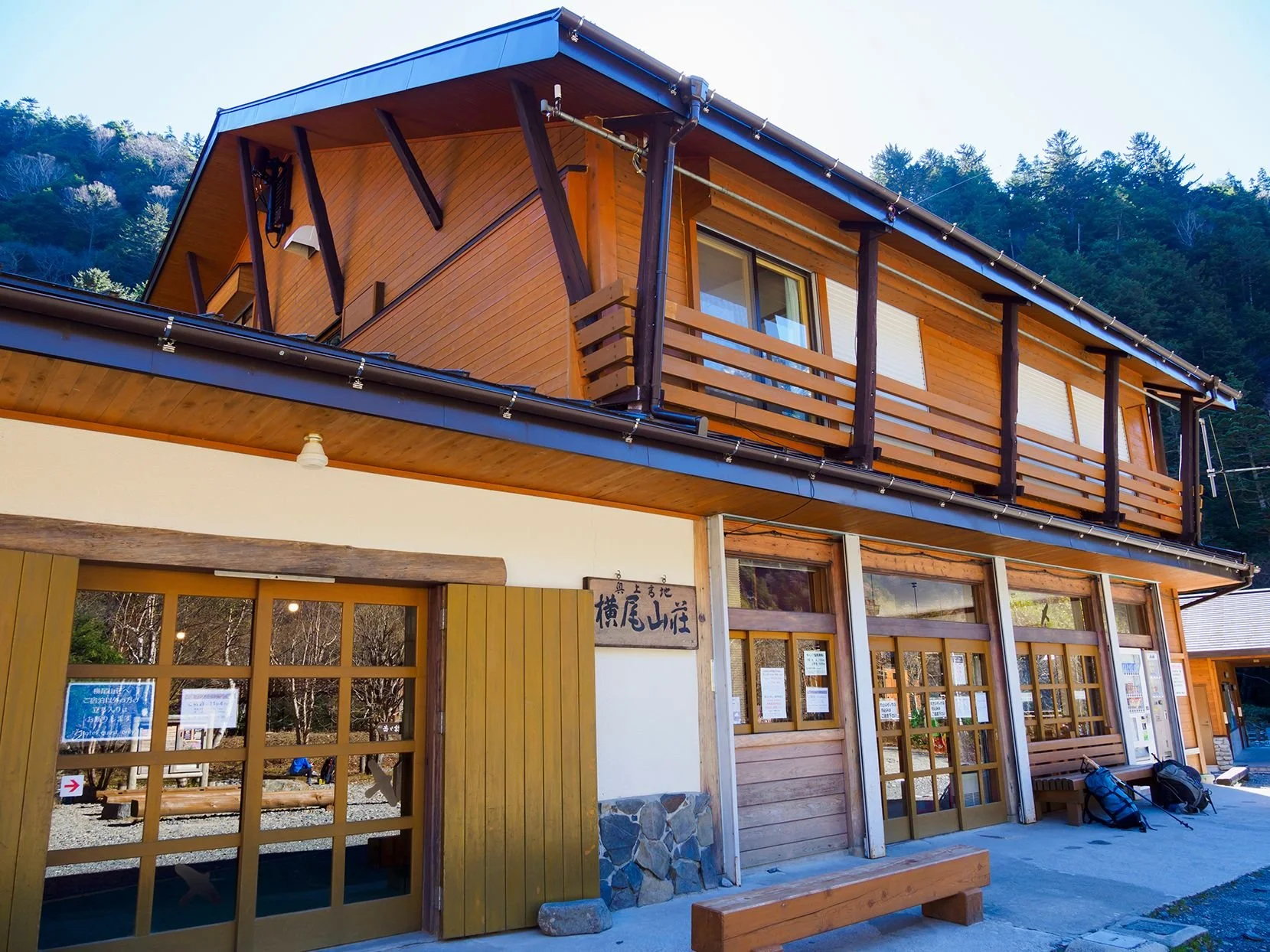
Yoko-o-sanso (横尾山荘)
Yoko-o-sanso (横尾山荘) is the classic trail-lodge hub at Yokoo, the main “branching point” in Kamikochi for routes toward the Yari–Hotaka region (Yarisawa, Karasawa) and for the traverse toward Chōgatake / Tokugō Pass. It’s not a ridge hut—it’s a strategic base camp: comfortable enough to reset, but positioned for serious multi-day itineraries.
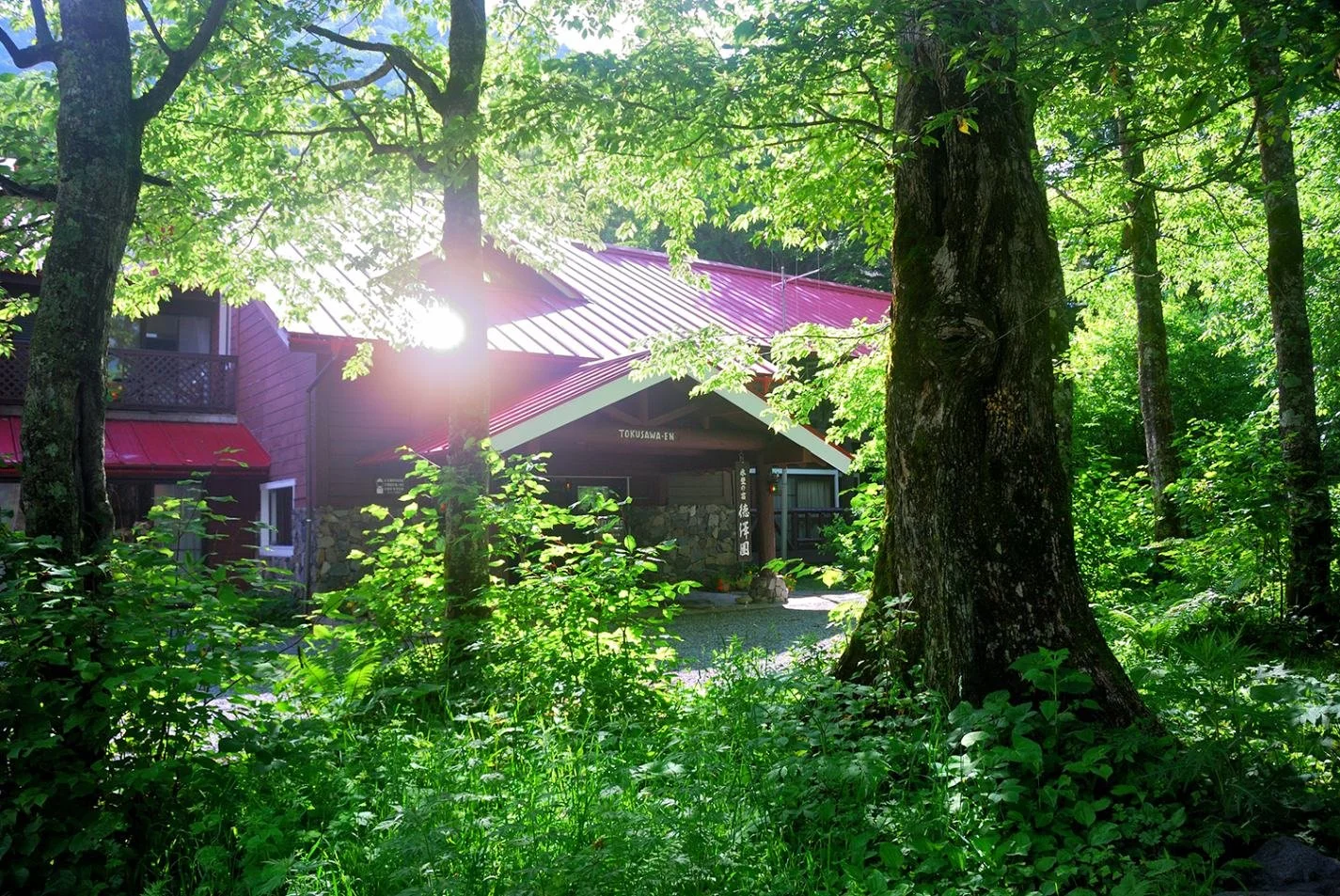
Tokusawaen (徳澤園)
Tokusawaen is the flagship stay in Tokusawa, one of the most important waypoints in Kamikochi—famous for wide meadows, giant elm trees, and the dramatic backdrop of the east wall of Mt. Mae-Hotaka (popularised by Inoue Yasushi’s Ice Wall). It’s best understood as a logistics hub: a comfortable overnight that unlocks early starts toward deeper Northern Alps routes, while also managing the Tokusawa Campsite directly in front of the lodge.
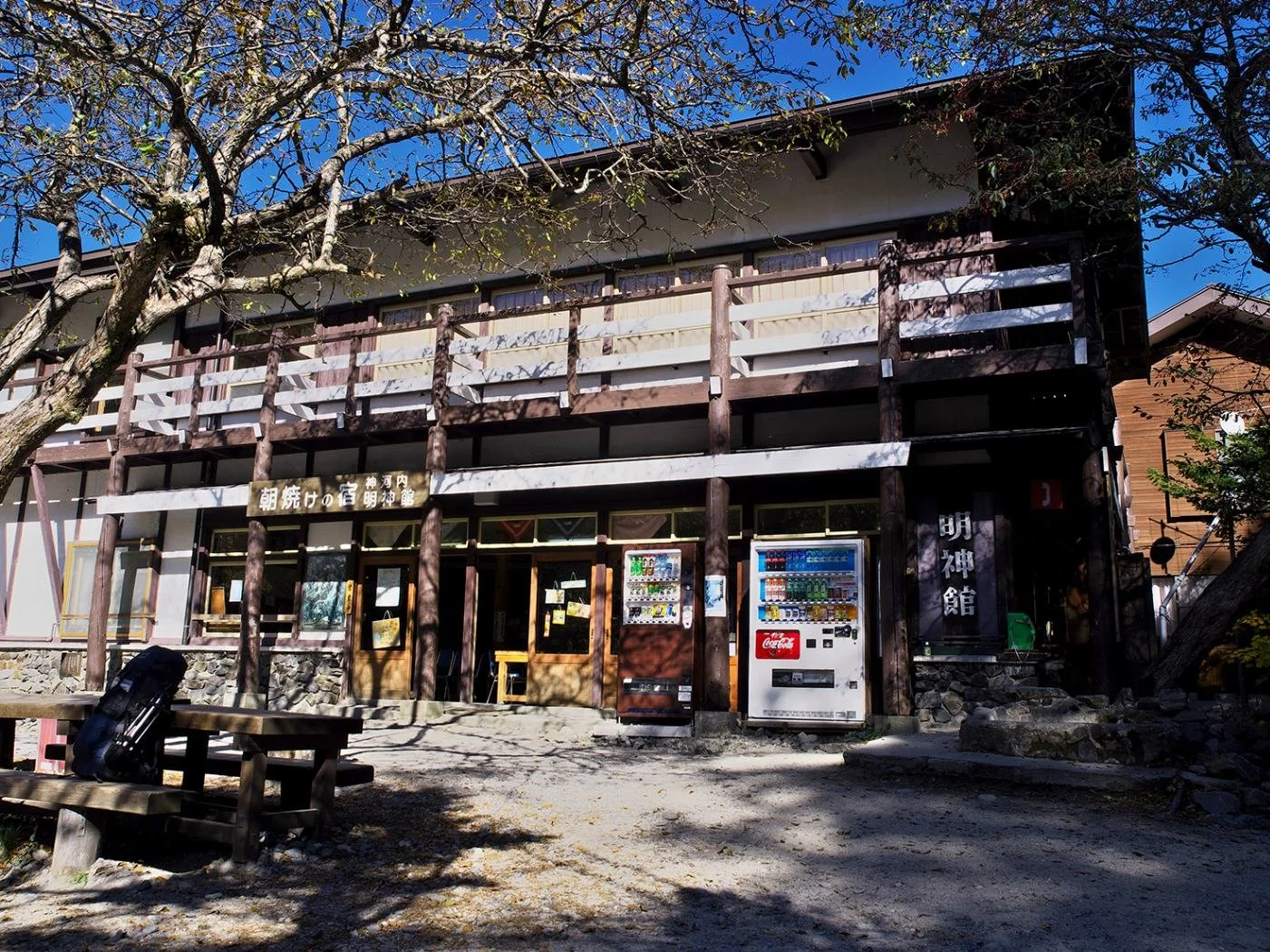
Myojin-kan (上高地 明神館)
Myojin-kan is the classic one-inn stay in the Myojin area of Kamikochi, set close to Myojin Pond and the Hotaka Shrine (Okumiya). It’s not a ridge hut—think mountain lodge / hiking base: you walk in with a backpack, settle early, and you get the rare “Kamikochi before 7am” experience (quiet trails, mist, and sunrise light).
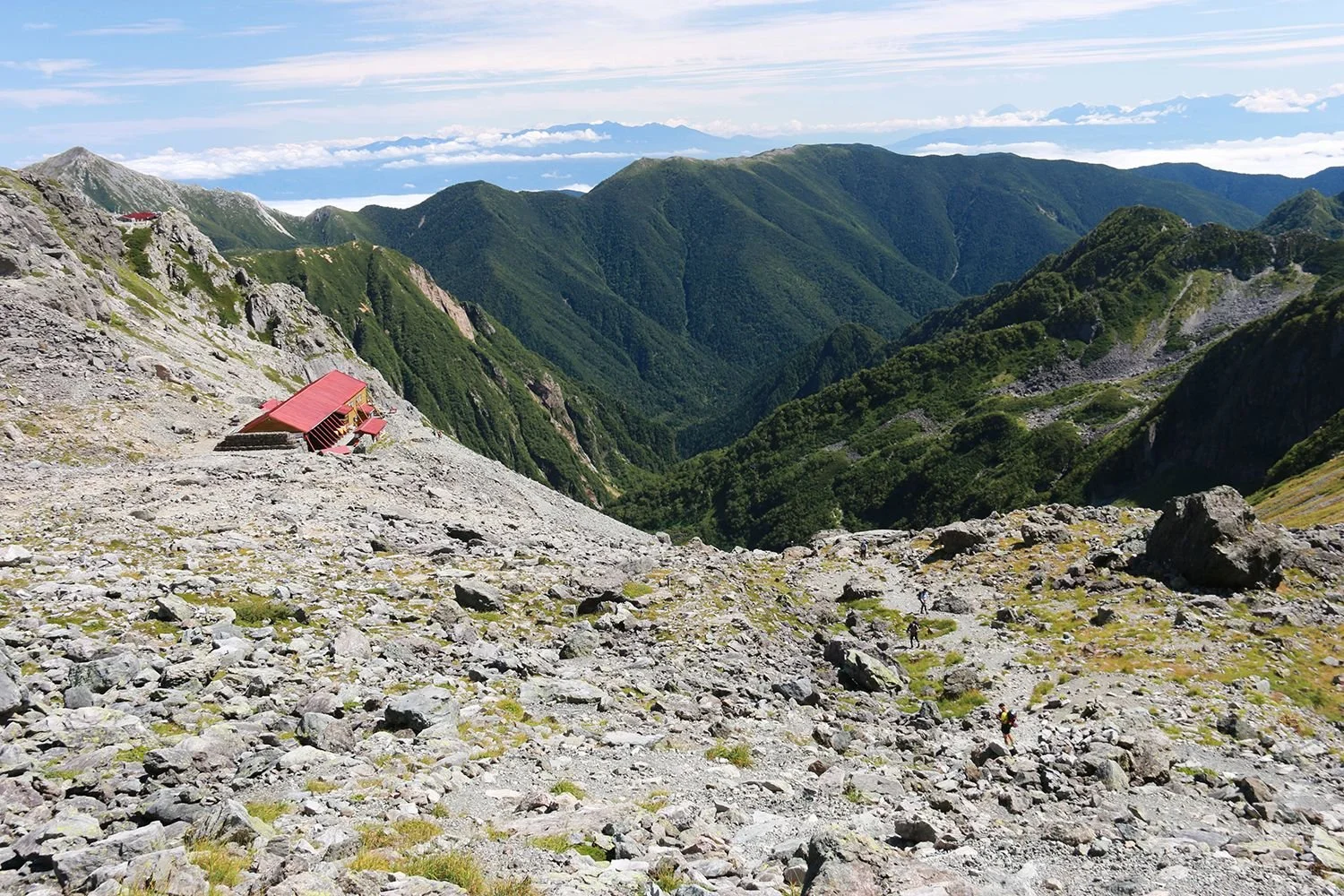
Sesshō Hyutte (殺生ヒュッテ)
Sesshō Hyutte is a historic mountain hut located in the Sesshō-daira area just below Mt. Yarigatake (槍ヶ岳). It’s widely used as a staging base for the final summit push, and as a practical stop on long traverses such as the Omote-Ginza and routes connecting into the Yari–Hotaka region.
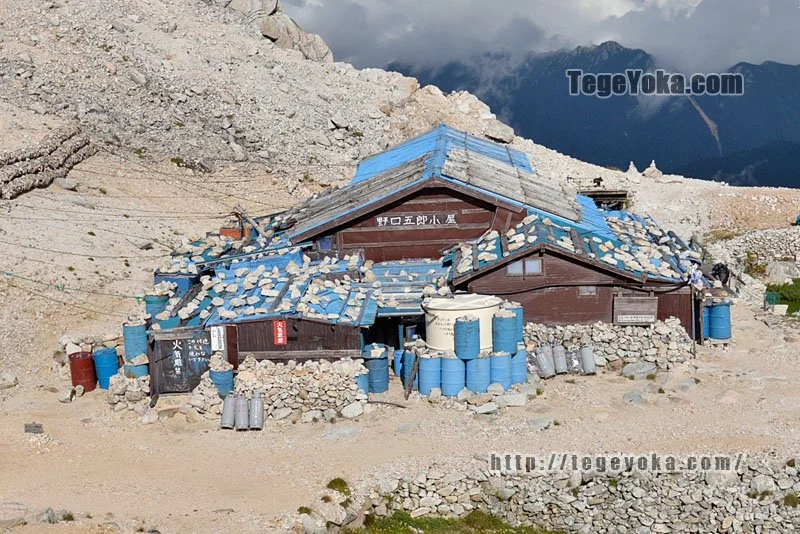
Noguchi-goro-goya (野口五郎小屋)
Noguchi-goro-goya is a small, historic ridge-stage hut on the Ura-Ginza (裏銀座) traverse in the Northern Japanese Alps, sitting just below Mt. Noguchi Goro-dake (野口五郎岳). It’s a true “move-through” hut: minimal capacity, big weather exposure, and a strategic position for long multi-day itineraries linking the Eboshi / Mitsudake side toward Suishō (Kuro-dake) and the deeper Kurobe interior.
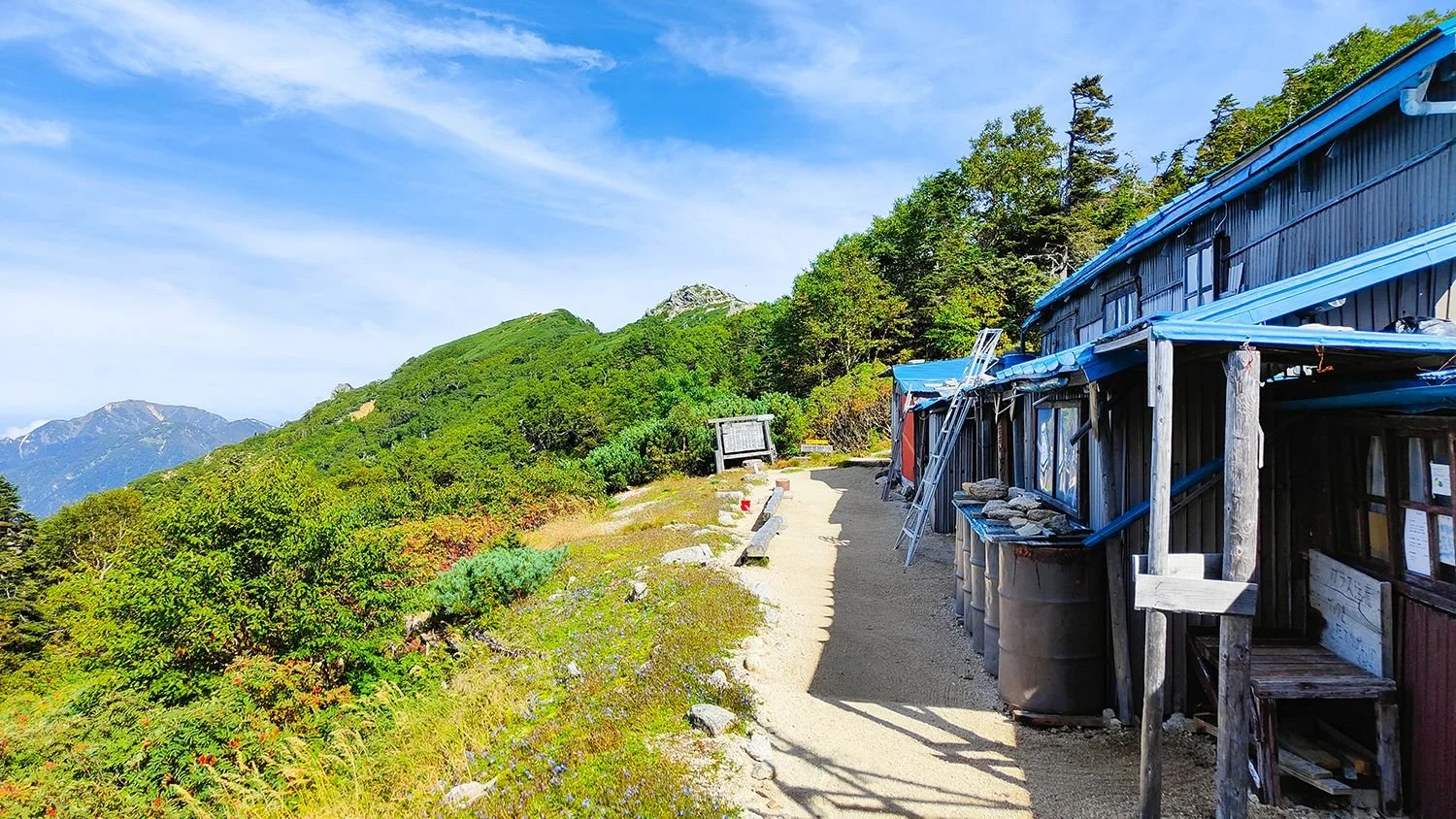
Eboshi-goya (烏帽子小屋)
Eboshi-goya (烏帽子小屋) is a classic ridge-stage mountain hut and a famous “gateway” to the Ura-Ginza route network in the Northern Japanese Alps. It’s strongly associated with big traverse itineraries toward peaks like Noguchi-Goro, Suishō, and deeper Kurobe-headwaters stages, and it’s also the practical base for an ascent of Mt. Eboshi-dake.
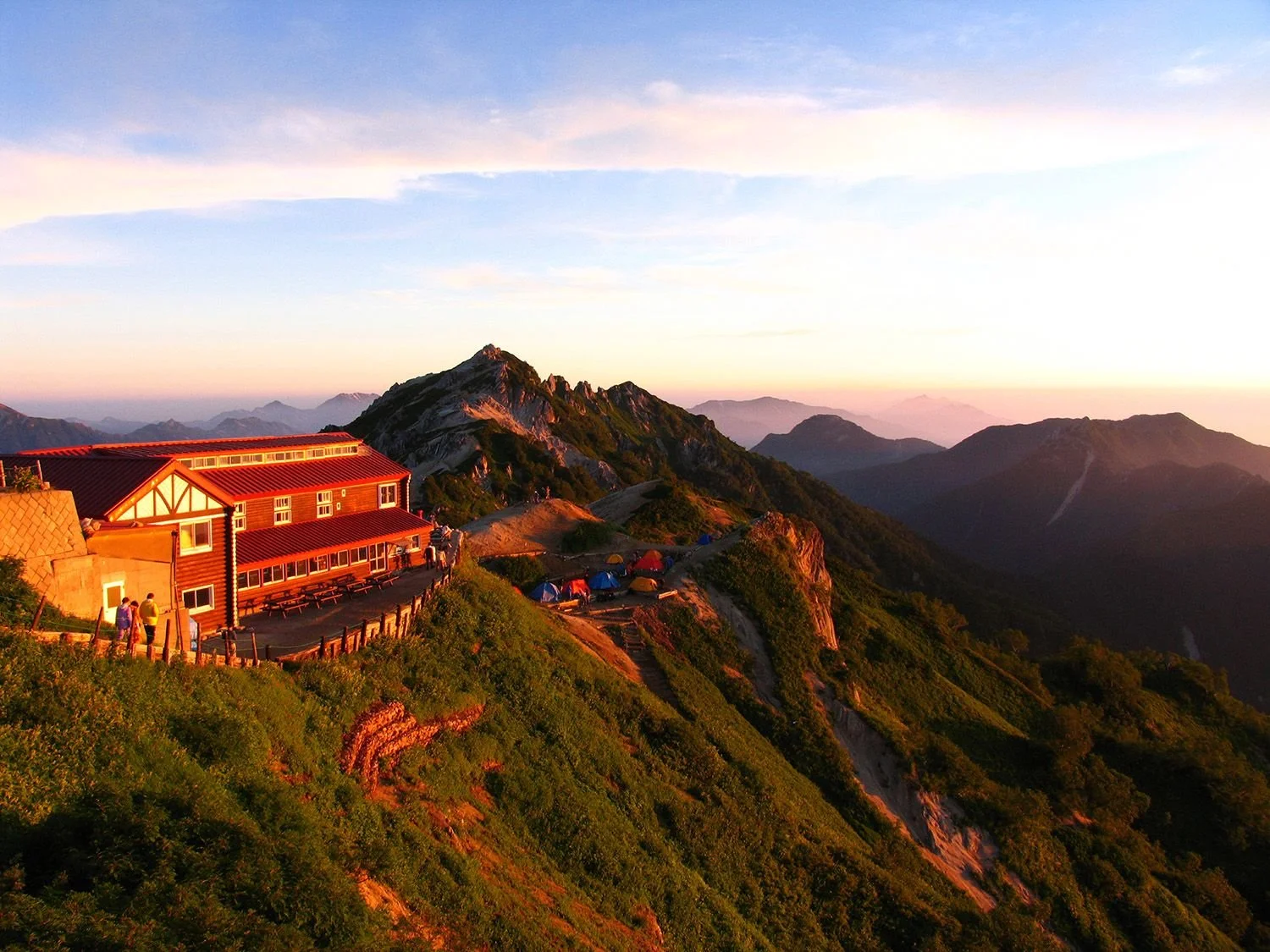
Enzan-so (燕山荘)
Enzan-so (燕山荘 / Enzanso) is one of Japan’s most iconic and high-capacity mountain huts, sitting on the ridgeline just below Mt. Tsubakuro-dake (燕岳) in the Northern Japanese Alps. It’s both a destination hut (views, classic hut culture) and a major logistics hub for routes along the Omote-Ginza / Northern Alps ridge networks.
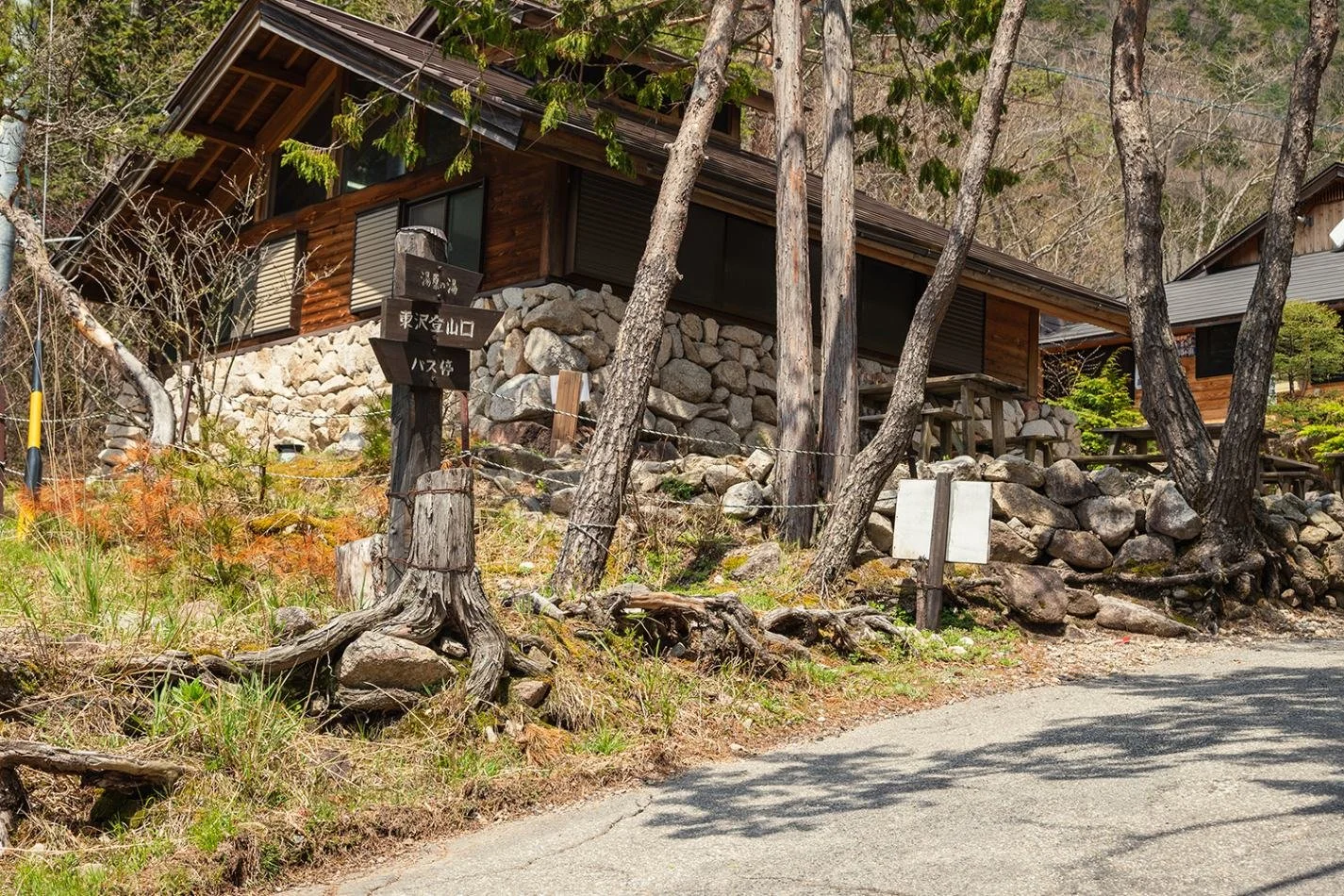
Nakabusa Onsen (中房温泉)
Nakabusa Onsen (中房温泉) is a unique mountain lodge with natural hot springs that also functions as a major trailhead base for classic Northern Japanese Alps routes—especially the approach toward Mt. Tsubakuro-dake (燕岳) and the so-called “Panorama Ginza” corridor. It’s the kind of place that works both as logistics (sleep + early start) and as recovery (serious onsen culture) in one stop.
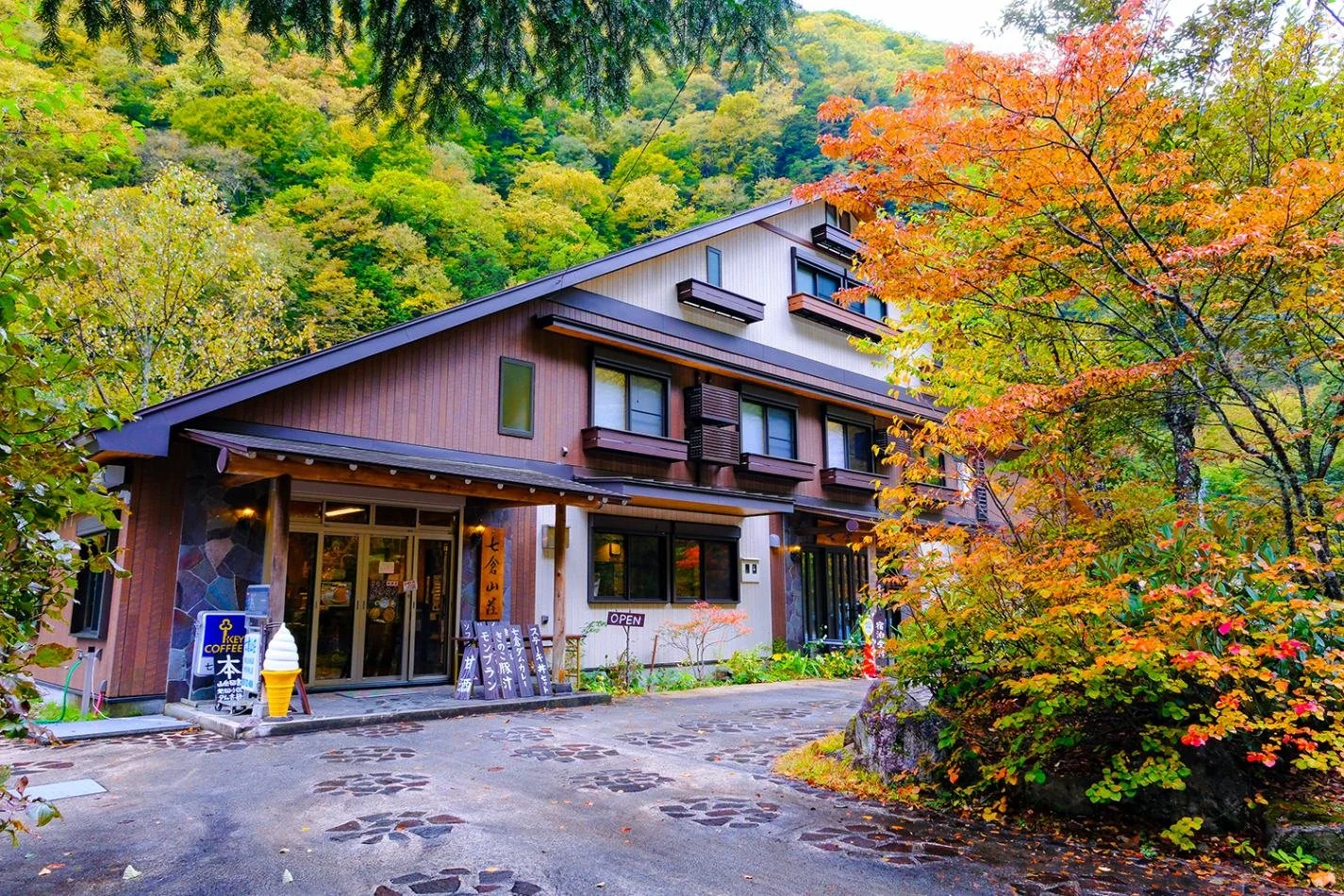
Nanakura-sanso (七倉山荘)
Nanakura-sanso (七倉山荘) is a mountain lodge with natural hot-spring baths at the entrance of the Takase Valley (Ōmachi, Nagano). It’s widely used as a logistics base for hikers heading into the Northern Alps “Ura-Ginza” traverse corridor and as a relaxing stop thanks to its onsen facilities.
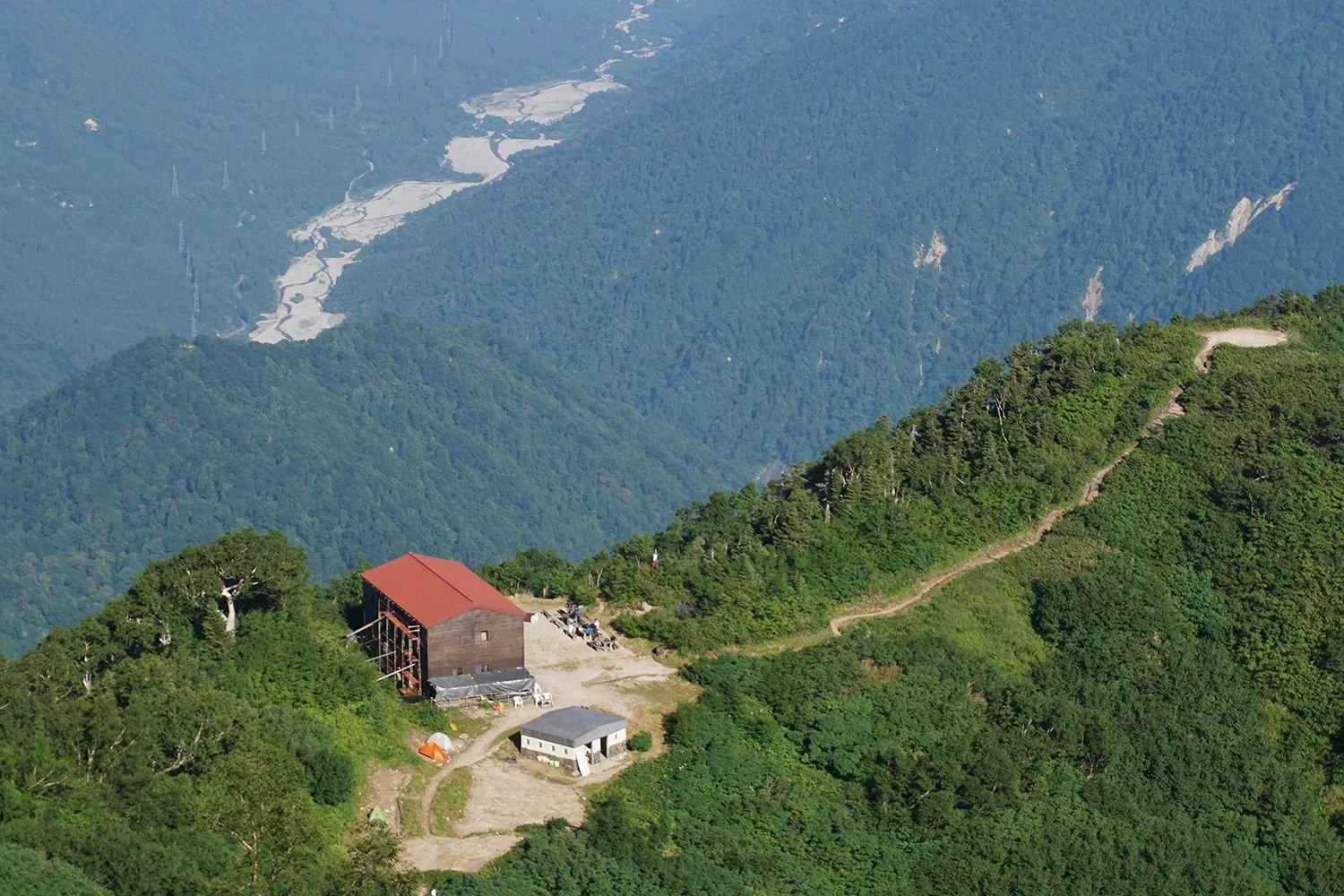
Tsurugi-dake Hayatsuki-goya (早月小屋)
A Tsurugi-dake Hayatsuki-goya (早月小屋) é a única hut instalada na longa e famosa Hayatsuki Ridge (早月尾根), um dos acessos mais duros e diretos ao Mt. Tsurugi-dake (剱岳). Aqui a função é clara: parar, recuperar e gerir o timing antes de um dos trechos finais mais exigentes do dia (ou de um itinerário de 2 dias).
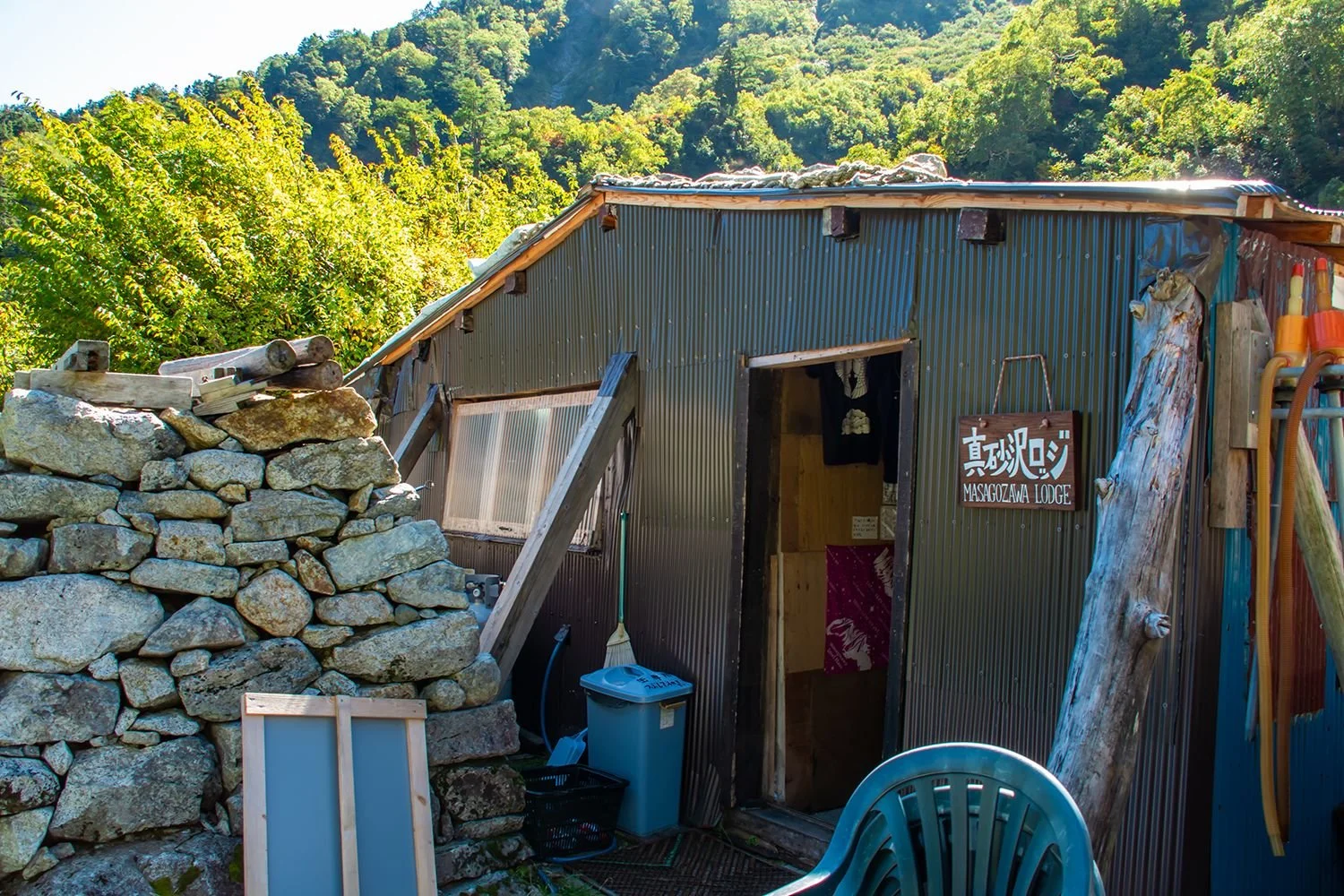
Masago-sawa Lodge (真砂沢ロッジ)
The Masago-sawa Lodge (真砂沢ロッジ) is a small, remote valley-stage lodge deep in the Tateyama–Tsurugi area. It sits in the lower Tsurugi-sawa corridor and is most commonly used as a strategic overnight on the Tsurugi-sawa route, where hikers transition from long approach stages into more committing alpine terrain.
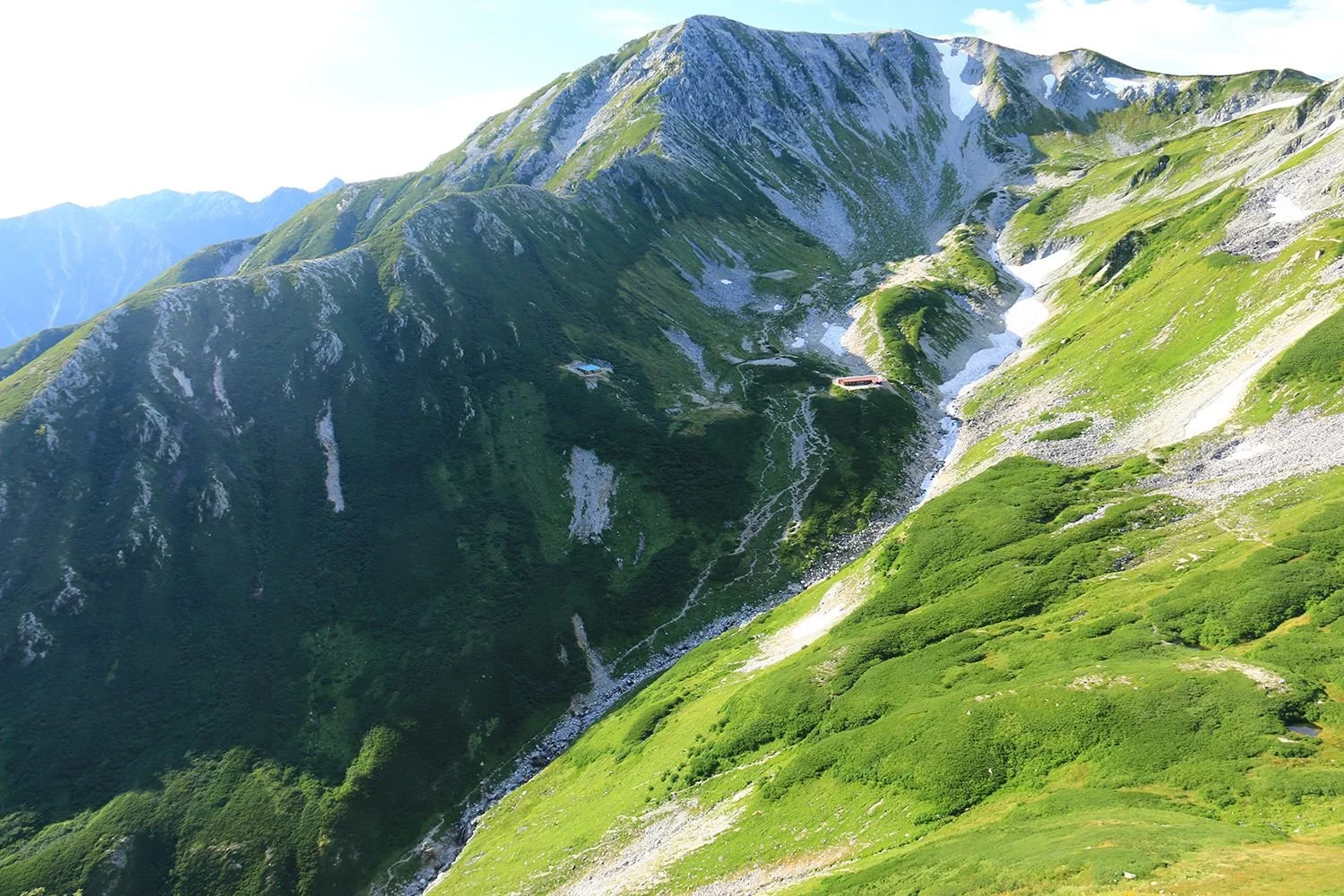
Tsurugi-sawa-koya (剱沢小屋)
Tsurugi-sawa-koya (剱沢小屋) is a historic, high-mountain hut in the Tateyama–Tsurugi area, widely used as a base and stage hut for parties aiming at Mt. Tsurugi-dake (剱岳) and related ridge itineraries. Its value is strategic: it sits in the core approach zone where hikers transition from plateau logistics to serious alpine terrain.
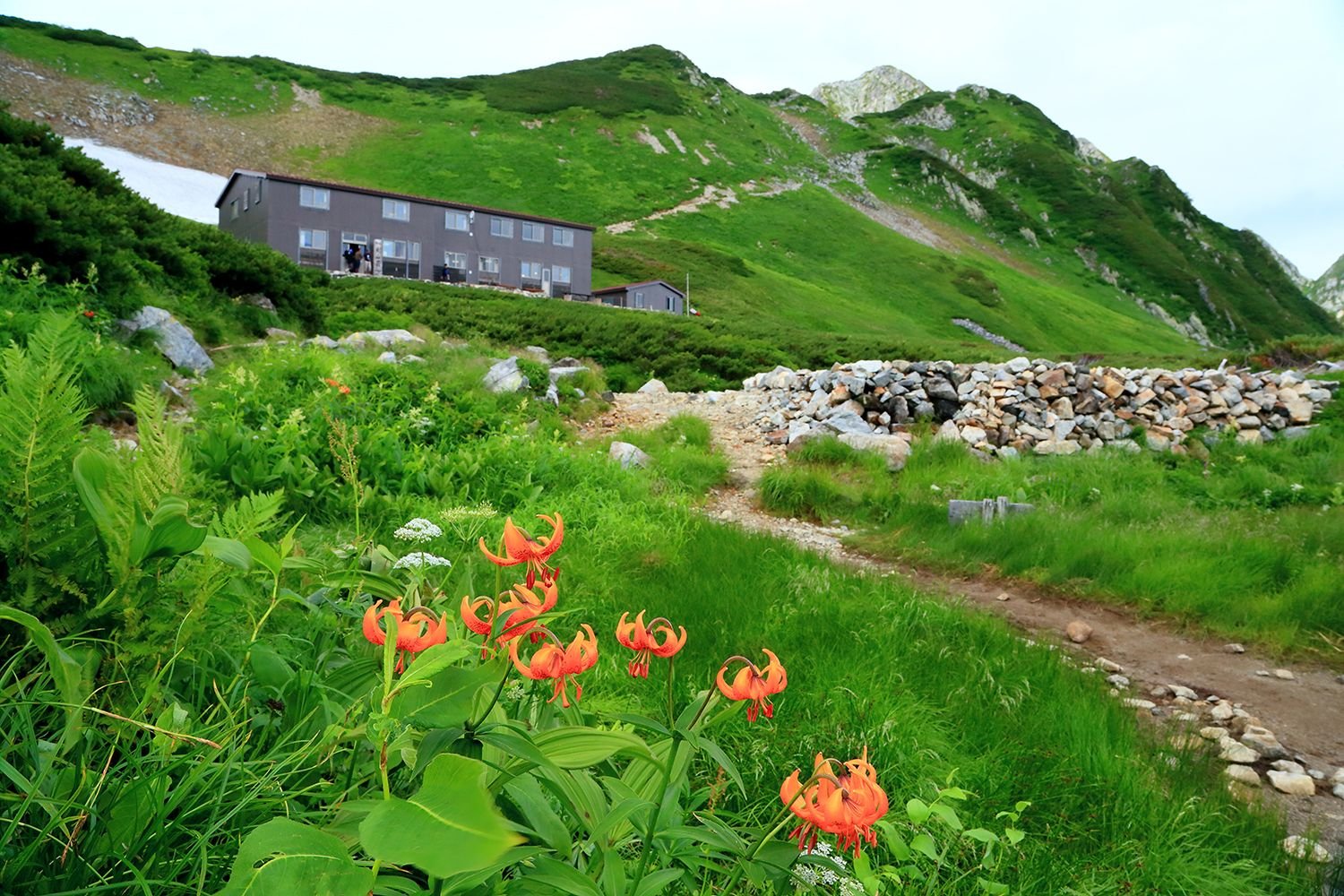
Kenzan-so (剣山荘)
Kenzan-so is the best-known high-mountain base hut for Mt. Tsurugi-dake (剱岳)—positioned to support early summit pushes, route planning, and safe timing on one of Japan’s most serious “rock-and-exposure” mountains. It was rebuilt in 2007, and is known for unusually “comfortable” infrastructure by Japanese hut standards (e.g., modern toilets and shower facilities).
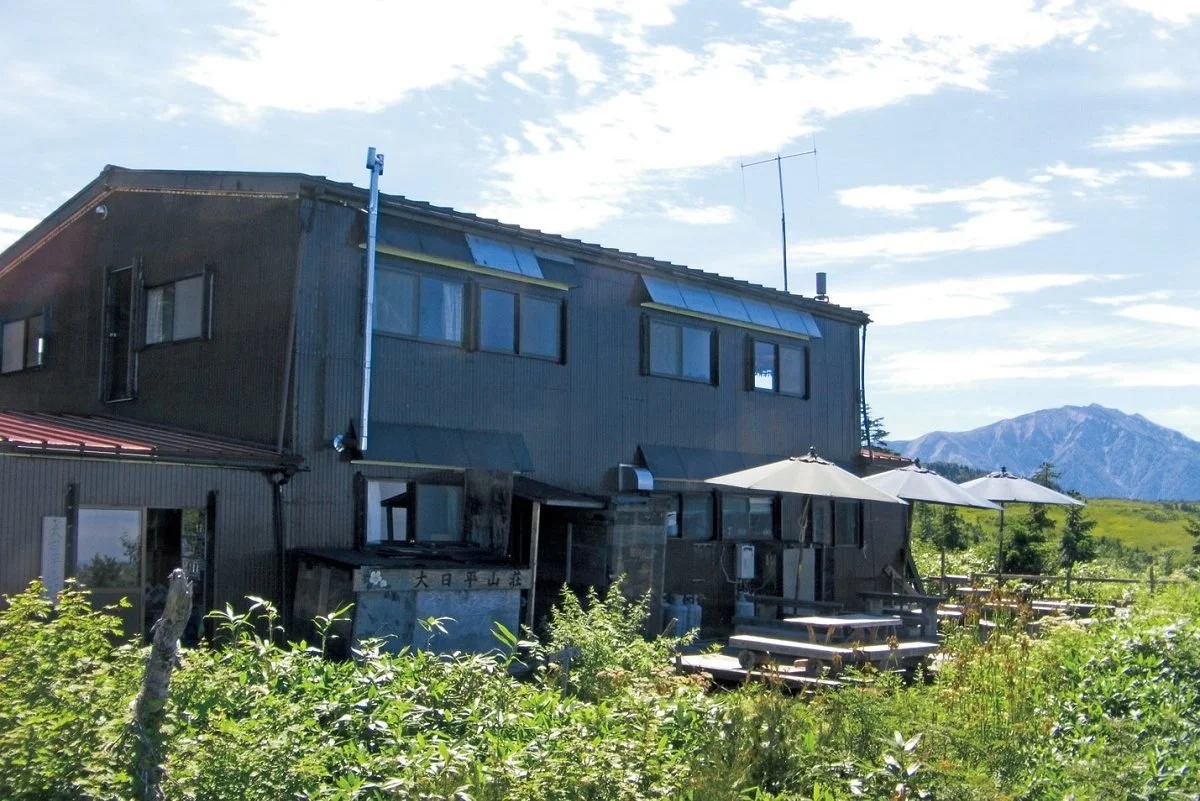
Dainichi-daira Sanso (大日平山荘)
The Dainichi-daira Sanso (大日平山荘) is a mountain hut on the Dainichidaira plateau in the Tateyama range (Toyama). It’s best understood as a stage hut: a practical overnight that breaks up long approaches between the Shōmyō Gorge / valley side and the higher ridgelines leading toward the Dainichi peaks and Tateyama backcountry.
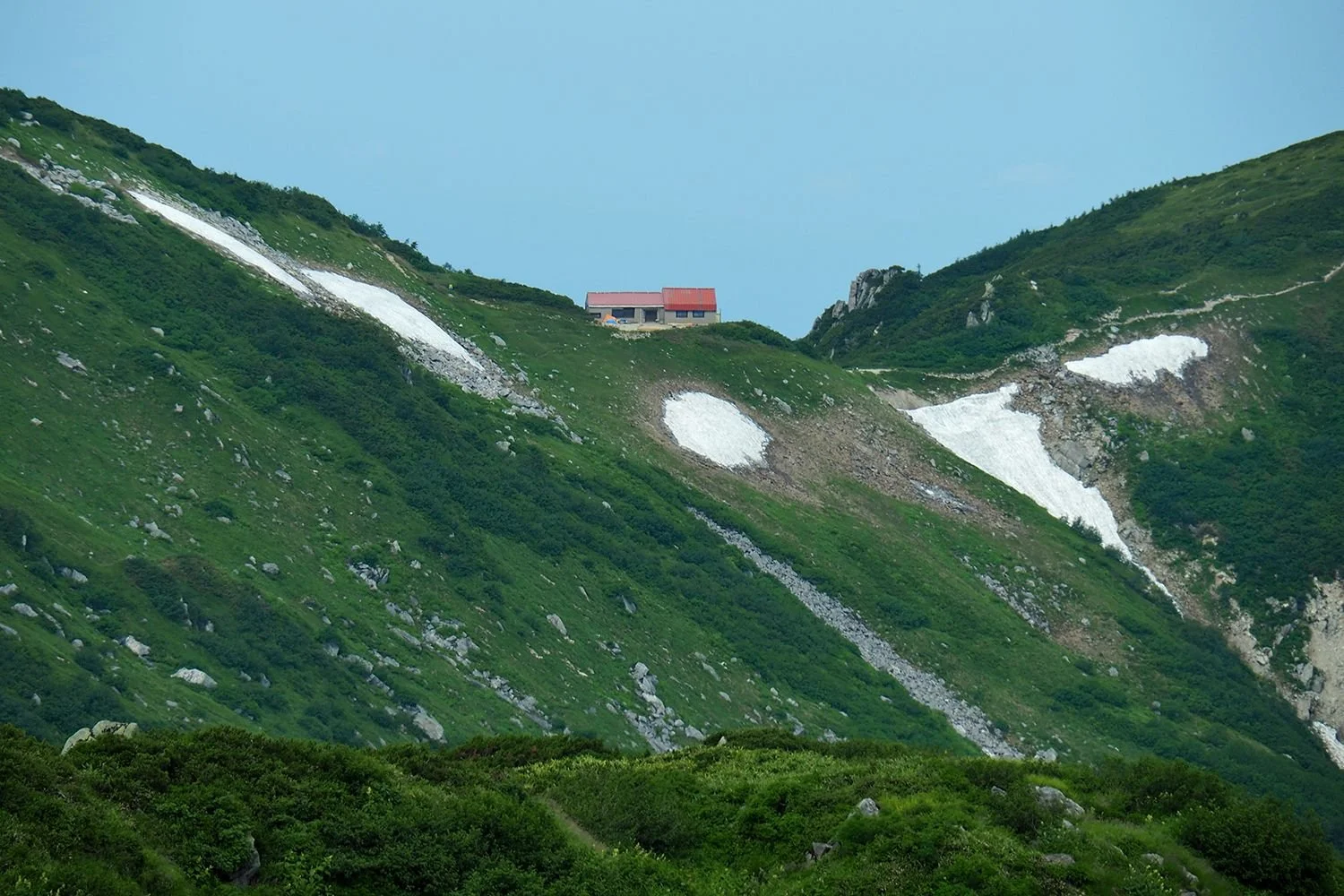
Dainichi-goya
Dainichi-goya is a compact, route-focused mountain hut in the Tateyama range (Toyama Prefecture), positioned for hikers crossing the more remote ridgelines west of the main Murodo hub. It’s best treated as a true stage hut—a practical overnight that supports long ridge days and weather-window planning rather than comfort-driven stays.
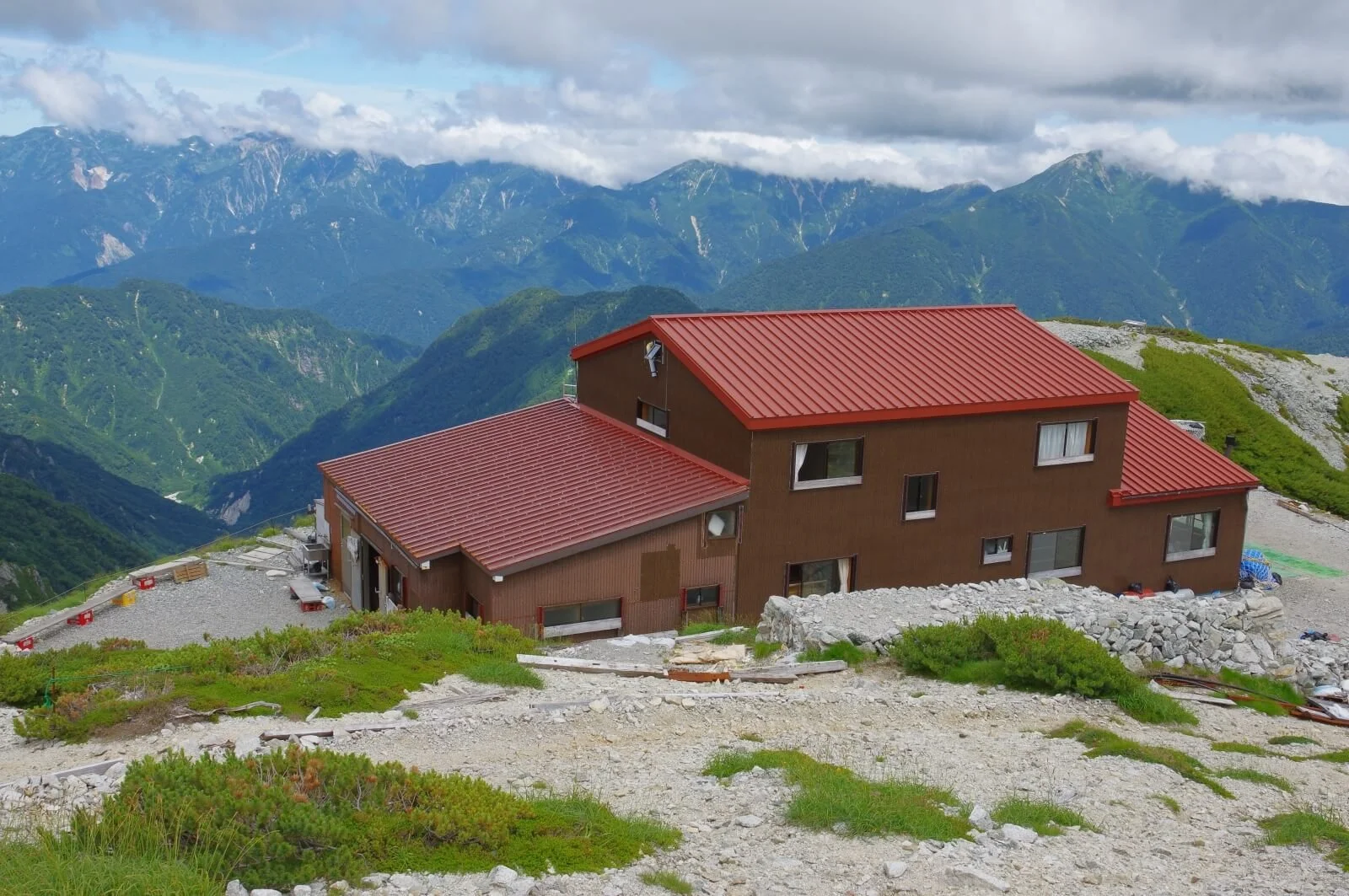
Kuranosuke-sanso (内蔵助山荘)
Kuranosuke-sanso (内蔵助山荘) is a small, traditional high-ridge mountain hut positioned just below Mt. Masago-dake in the Tateyama–Tsurugi area of the Northern Japanese Alps. It’s best used as a serious stage hut—a place to sleep, reset, and time weather windows—rather than a comfort lodge. Its big value is panoramic ridge positioning and access to committing Tateyama ridgeline itineraries.
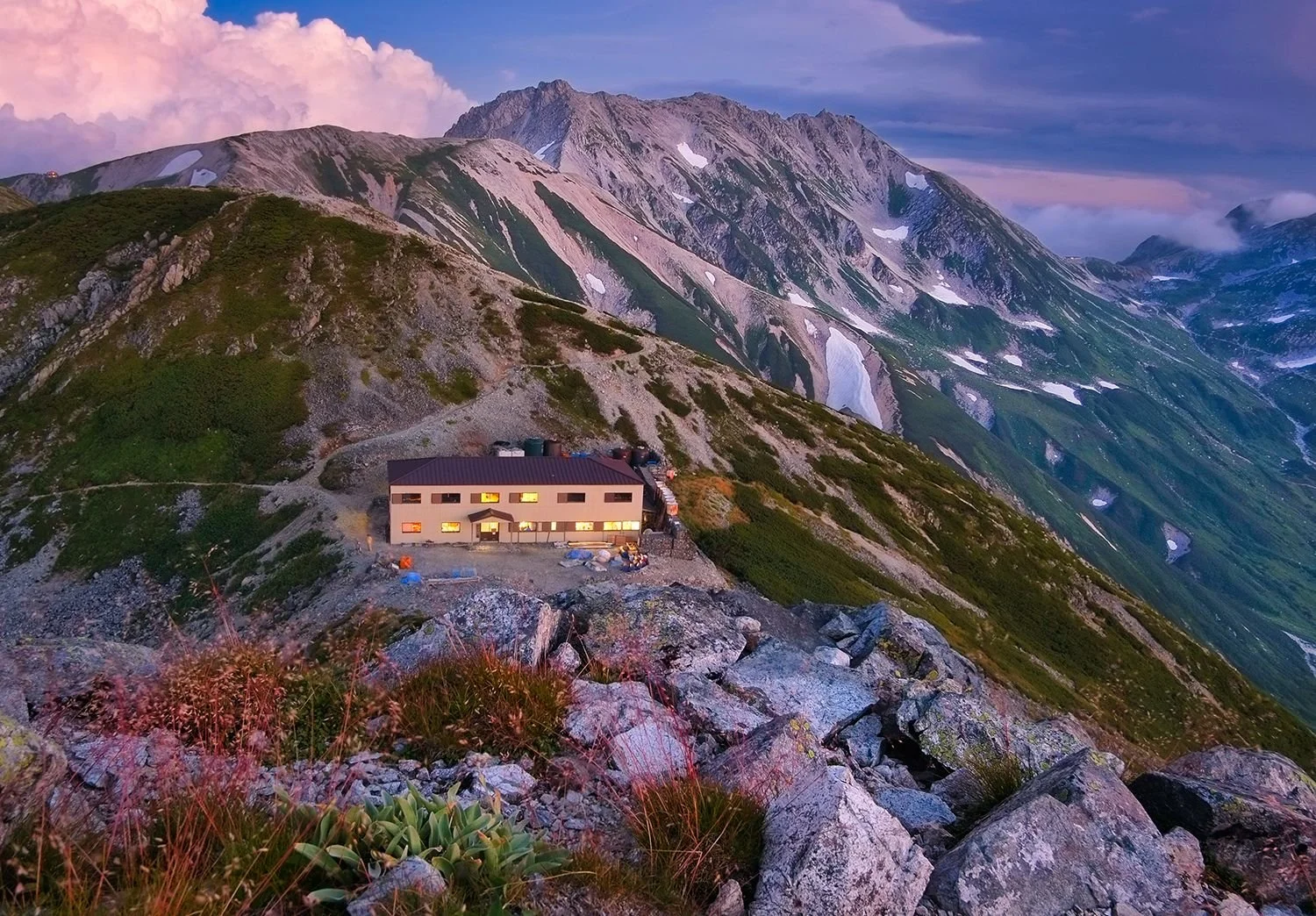
Tsurugi Gozen-goya (剱御前小舎)
Tsurugi Gozen-goya is a major public mountain hut on the Tateyama–Tsurugi ridgeline, sitting at Bessan Norikoshi—one of the most famous viewpoints of Mt. Tsurugi (剱岳). It’s a high-traffic stage hut and base for parties aiming at Tsurugi-dake, as well as trekkers linking Tateyama-area routes.
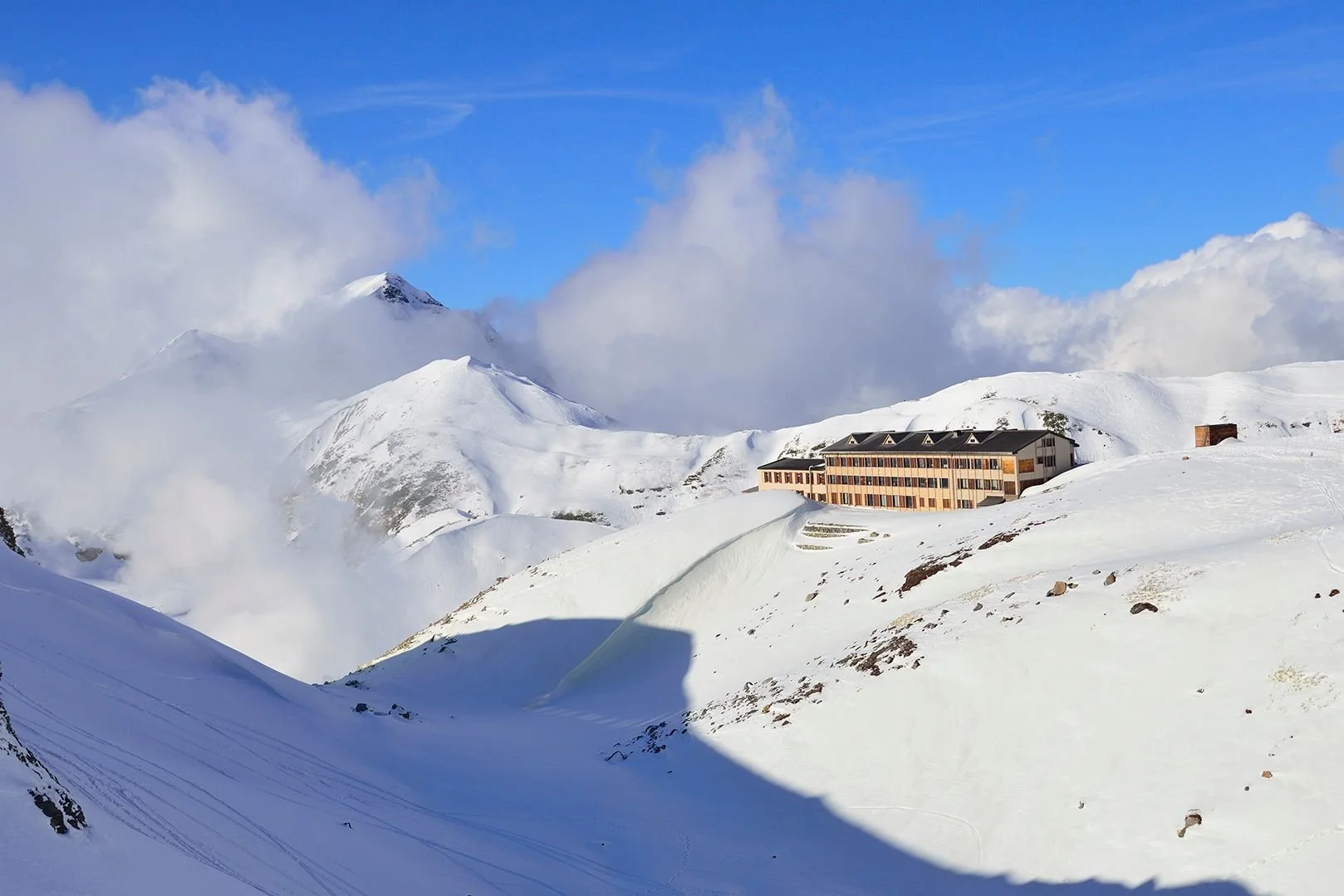
Raicho-sou (らいちょう温泉 雷鳥荘)
Raicho-sou is a large mountain lodge with natural hot-spring baths located near the Murodo-daira plateau in the Tateyama area. It’s best used as a comfort-forward base for Tateyama day hikes and plateau exploration—more “alpine lodge” than minimalist ridge hut, with strong infrastructure and easy access from the Alpine Route hub.