Via Ferrata Trogkofel / Gartnerkofel
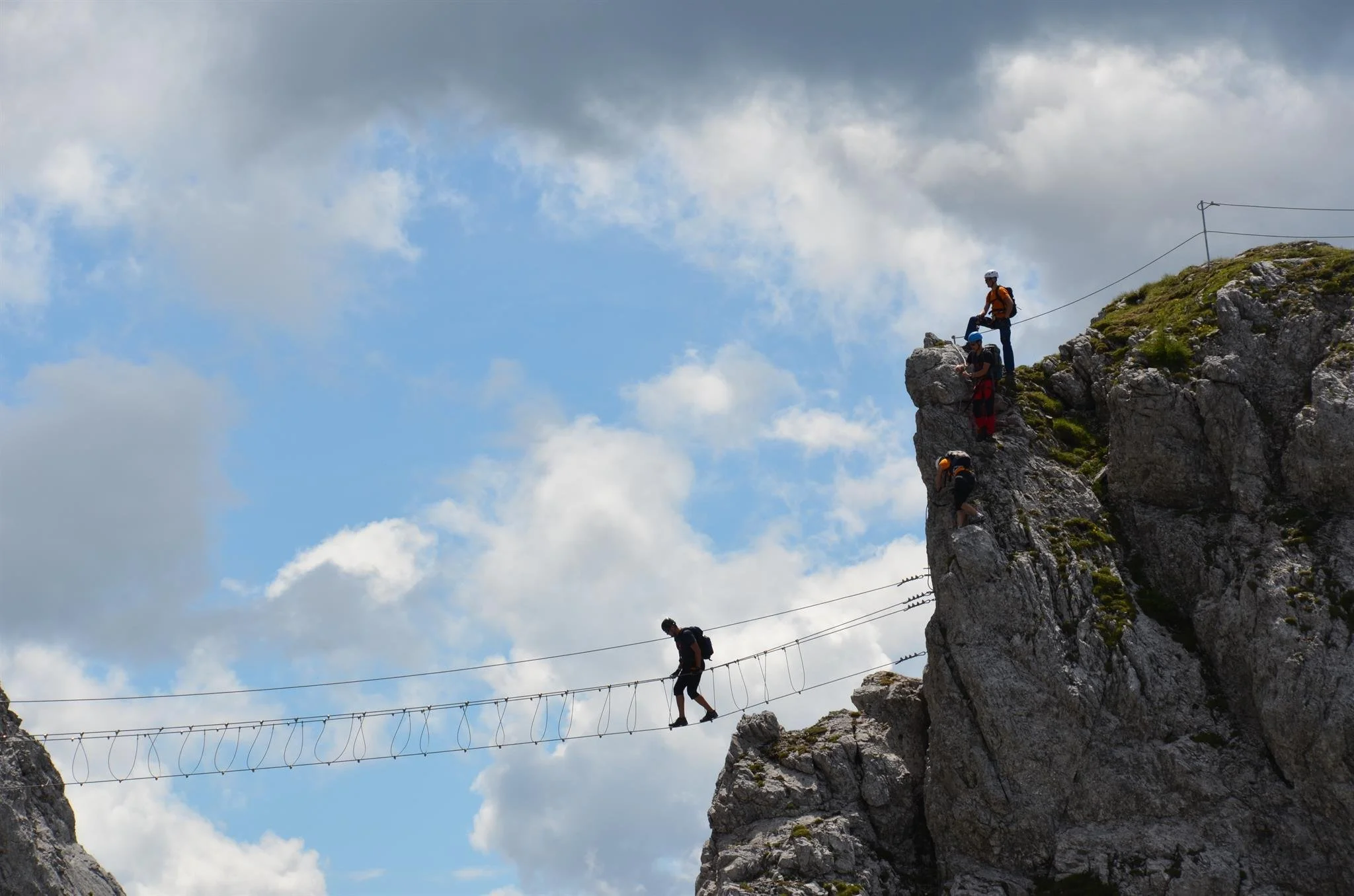
High in the Karnischer Hauptkamm (Carnic Alps) along the Austria–Italy border, the Trogkofel and Gartnerkofel peaks host two unforgettable via ferrata routes: the “Crete Rosse Klettersteig” up Trogkofel and the “Däumling Klettersteig” on Gartnerkofel. These routes combine the thrill of vertical terrain with alpine wilderness, dramatic rock faces, and panoramic summit views. Whether you’re seeking a serious climbing-adventure or a high-mountain experience with a fixed-cable route, these ferratas deliver.
Trail Overview
Location: Nassfeld-Pressegger See region, Carinthia (Kärnten), Austria – near the border with Italy.
Peaks: Trogkofel (2,280 m) and Gartnerkofel (2,195 m).
Via Ferrata Grades:
Crete Rosse (Trogkofel) is rated approx. B/C in sections; overall “moderately difficult” for a ferrata.
Däumling (Gartnerkofel) is rated C (with B/C sections) and includes cable bridges.
Vertical gain and length: For Crete Rosse, about 150 m of ferrata ascent, with additional approach and summit terrain.
Season: High summer through early autumn, when rock is dry and access roads/trails are open.
Route Description
Crete Rosse (Trogkofel)
From the Rudnigalm (or via Schlanitzen valley) you ascend a mountain road or trail to the Sattel (col) beneath the south wall of Trogkofel. At the base of the wall the fixed-cable route begins, following a steep rill (gully) upward. In the main section you encounter B- to B/C-rated terrain: narrow ledges, a steep rib, step-bolts or rung aids, a small chimney with a block to skirt beneath, and an exposed wall section. After the secured section the terrain opens onto a karst plateau; from there ~30 minutes of ridge or hiking terrain bring you to the summit.
Däumling Klettersteig (Gartnerkofel)
This route begins near the Gartnerkofel lift station area. The ferrata crosses rock towers, includes several cable-bridges (one notable “Nepal bridge”), and traverses exposed slabs and ridges. After the secured section you can choose to continue to the summit of Gartnerkofel (≈10-20 min) and then descend via marked trail.
Combined Option
Ambitious hikers may link both peaks: ascend Crete Rosse to Trogkofel, traverse (or descend) via Karnischer Höhenweg to Gartnerkofel, then complete the Däumling ferrata and descend. This provides a full ridge experience in the Carnic Alps.
Highlights
Spectacular rock-face exposure: Both ferratas offer steep vertical terrain, airy traverses and summit views seldom matched in the region.
Border-ridge ambiance: Positioned along the Austria–Italy border, the routes deliver both Alpine drama and historical terrain (part of the Carnic front).
Summit payoff: Reaching Trogkofel’s summit presents 360° alpine vistas: Carnic Alps, Julian Alps, and lower valleys. Gartnerkofel gives panoramic seats above the Nassfeld area.
Unique features: The Nepal-bridge on the Däumling route is a standout highlight. On Crete Rosse the initial rill and block traverse provide memorably vertical terrain for a “moderate” rated via-ferrata.
Less crowded than major alpine ferratas: While very good routes, they attract fewer masses than the giant Dolomite ferratas, meaning quieter trails and a more genuine alpine adventure.
Difficulty and Required Skills
Fitness and endurance: Good level of stamina required—approach and descent are non-trivial and total day time may be several hours.
Technical skills: Full via ferrata kit needed: helmet, harness with via-ferrata lanyards, gloves recommended. Must be comfortable with fixed cables, ladders, exposed terrain and have surefootedness.
Wild-mountain sense: Weather can change quickly; parts of the approach may involve loose rock or schrofen terrain. For Crete Rosse you should be comfortable on B/C terrain. For Däumling, route is rated C with sections of B/C and includes bridges and exposed slabs.
Exposure: Though not the most extreme rated ferrata, there are exposed sections, steep drop-offs and sections where a slip would be serious.
Descent: Need to plan descent either via the normal hiking route or via the Karnischer Höhenweg; being alert for fatigue is important.
When to Go
Best season: Mid-June to early October. By mid-summer the access roads/trails are clear, rock is dry and weather more stable.
Avoid early season: Snow may linger, approach trails may be wet or slippery.
Late season: September can provide quieter crowds, dramatic light and crisp air; check for early snow especially above 2,000 m.
Time of day: Start early, especially for Crete Rosse, to avoid afternoon thunderstorms. Ferrata terrain becomes more dangerous in wet conditions.
Access and Logistics
Starting point: For both routes the Nassfeld-Pressegger See region (Carinthia) is base. Drive to Tröpolach and follow signage to Schlanitzen or Rudnigalm for Trogkofel; for Gartnerkofel use the Gartnerkofel lift station area near Nassfeld.
Parking: Available at valley trailheads or lift stations (e.g., at the base of the Gartnerkofelbahn).
Approach: Trail or forest road ascents to ferrata base; for Crete Rosse expect ~300-400 m ascent before the vertical section.
Descent: After finishing the ferrata, follow marked trail back to base. For a full ridge traverse you may return along Karnischer Höhenweg (trail number 403) to complete loop.
Accommodation: Many mountain huts and guesthouses in the Nassfeld area; consider staying nearby to allow early start.
Transport: Road access via Hermagor/Tröpolach; seasonal lift operations (Gartnerkofelbahn) may help with ascent. For public transport check local bus links in Austria.
Why It Belongs on Every Adventurer’s List
These via ferratas present a unique combination of vertical terrain, alpine context and relative accessibility. The routes allow you to experience a classic mountaineering feel—exposed ridges, summit rewards and quiet high-alpine landscapes—without requiring full technical climbing gear. For adventurers who want to push beyond standard hikes but are not ready for full expedition-style climbing, Trogkofel and Gartnerkofel deliver. Beyond the physical challenge, the region’s beauty, historic ridge setting and lesser-traffic make this an alpine adventure to remember.