Via Ferrata Sulzfluh
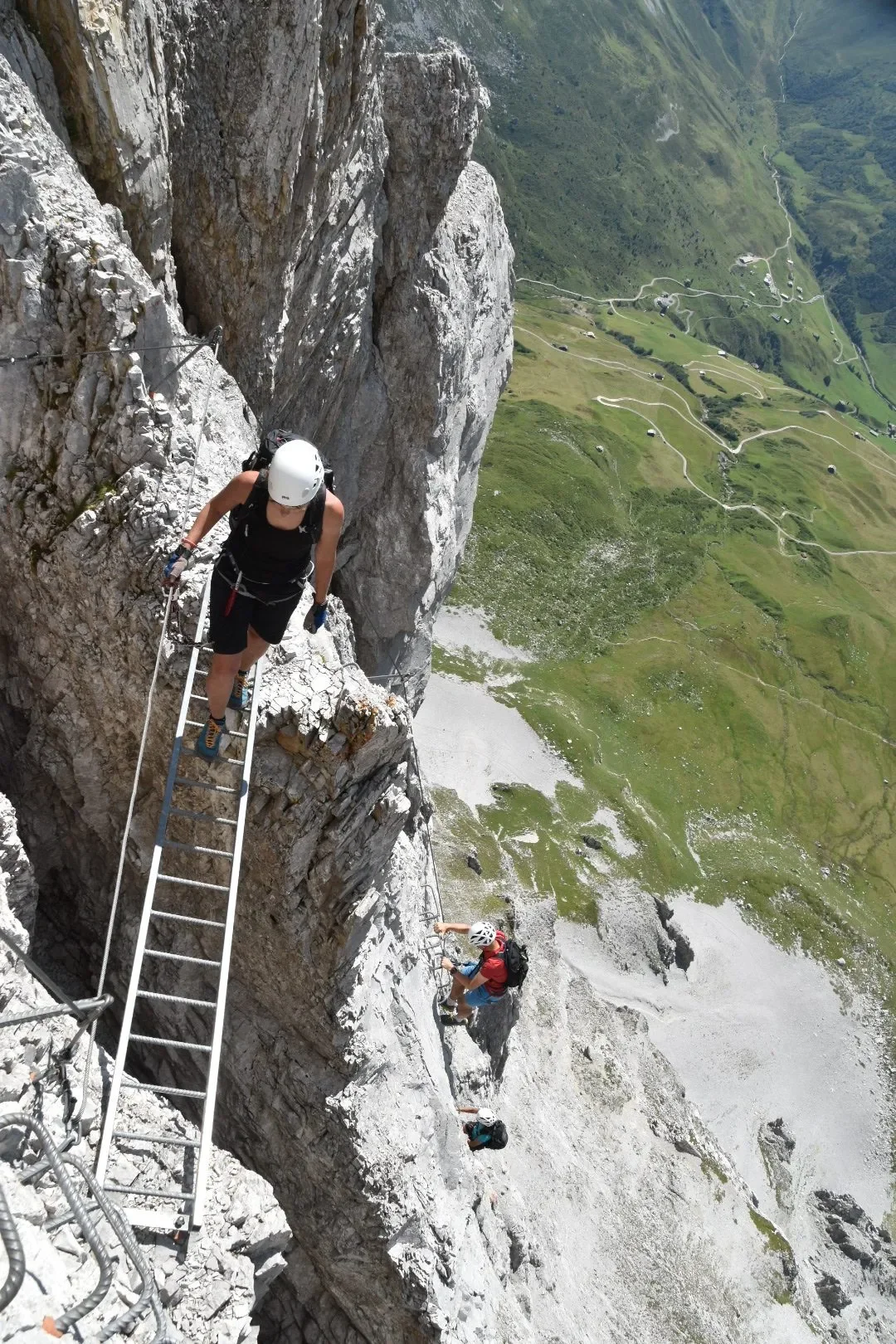
Perched high above the valley of St. Antönien in the Rätikon range of the Alps, the Sulzfluh Klettersteig is a demanding, dramatic via-ferrata route climbing the southern flank of the 2,817 m peak Sulzfluh. Unlike simple walking trails, this route is built for adventurous climbers who seek vertical exposure, iron-rungs, ladders and cables. It blends rock climbing, alpine hiking and summit ascent into one full-on mountain experience. Opened around 2005, the route has quickly become one of the classic via-ferratas in Graubünden, Switzerland.
Trail Overview
Name: Sulzfluh Klettersteig (also “Via Ferrata Sulzfluh”).
Location: Southern face of Sulzfluh, Rätikon, Canton Graubünden, Switzerland (bordering Austria).
Length & Elevation: The via-ferrata portion runs approximately 750 m of vertical (some sources indicate “climbing metres” ~420–750 m) and covers a route length of around 1 km from the base of the wall to the summit cross.
Difficulty: Rated around K4 to K5 on the German via-ferrata grading scale (sometimes denoted as D difficulty) — steep vertical sections, exposed traverses, ladders and no escape route once committed.
Time: Approach ~1.5-2 h from parking to base; via ferrata ~2-3 h; descent back to valley ~2-3 h. Combined outing ~6-8 h or more depending on fitness and conditions.
Seasonality: Typically accessible in summer months; closed in winter due to snow/ice.
Route Description
From the parking area at Partnun (P6) near St. Antönien you begin a well-marked trail that leads to the alpine Carschina Hut (Carschinahütte) at ~2236 m.
Once at the base of the southern wall of Sulzfluh you gear up with helmet, harness and via-ferrata set. The climb begins with an initial ladder leading into a steep dihedral wall. According to reports:
“The via ferrata starts off with a short ladder. A dihedral wall then leads you to the Obelix traverse … All of this is followed up with a vertical section and there is no way to back after this and no escape route.”
You then face strong vertical climbing, metal rungs, iron steps fixed in the rock, and exposed traverses across the cliff. Some portions demand upper-body strength, good footwork and sure footing. After the hardest section you reach the ridge/crest near the summit of Sulzfluh. A final push gets you to the summit cross at 2,817 m, where the panorama opens across the Vorarlberg region of Austria and the Swiss Graubünden valleys. The descent typically follows the marked trail back down to St. Antönien or via alternative descent routes.
Highlights
Spectacular exposure: The southern face of Sulzfluh plunges into the valley, giving deep vistas and intense vertical sections.
Summit achievement: Standing on the summit cross of Sulzfluh is a real reward after the climb.
Quality limestone rock: Excellent rock quality makes the climb solid and engaging.
Dramatic features: Ladders, fixed steel cable, vertical wall, and airy traverses make for an adrenaline-filled experience.
Panoramic views: From the summit you can view the Rätikon range, Austrian border peaks, and alpine valleys.
Less crowded than many trails: Though popular among via-ferrata enthusiasts, it remains more remote and serious than many sightseeing paths.
Difficulty & Required Skills
This is a serious alpine via-ferrata and not suitable for beginners. Key considerations:
Difficulty level K4/K5 (or D) means: strong vertical wall, overhanging sections, sustained climbing, long exposure.
Solid harness, via-ferrata lanyard with energy absorber, helmet and gloves are mandatory.
Good upper-body strength and stamina: you will be pulling on rungs and holding on steep sections.
Excellent surefootedness: rock may be smooth; feet must be placed carefully.
Comfortable with heights and exposure: once committed, retreat is very difficult or nearly impossible.
Good alpine condition: approach and descent are mountain trails, often above 2,000 m. Fitness for long day needed.
Orientation: Though marked, descent routes require attention; descending after a long climb can be tiring and technical.
Weather awareness: Rock can be slippery when wet; storms or wind increase hazard.
In short: this route is for experienced via-ferrata climbers or mountaineers who are prepared and equipped.
When to Go
The ideal window is mid-June to early October, when the route is free of snow and the huts are open. The Carschina Hut is open in the summer season.
Avoid early season (snow/ice may still cover sections) and late season when weather turns quickly. Start early in the day to allow plenty of time, avoid afternoon storms, and ensure you complete descent safely before dusk.
Access and Logistics
Getting there: Drive or take public transport to St. Antönien in Graubünden, Switzerland. From the village follow signs to parking P6 at Partnun.
Approach: Walk from the parking area to the base of the via-ferrata, via the Carschina Hut or marked trail. About 1.5–2 h depending on pace.
Start time: Early morning recommended to ensure you complete climb and descent with daylight and before weather changes.
Accommodation: The Carschina Hut (~2236 m) provides overnight lodging if you choose a two-day plan.
Descent: After reaching summit, descend via marked route back into the valley. Plan descent time and energy carefully.
Equipment: Full via-ferrata kit (harness, lanyard with absorber, helmet), gloves, good boots, possibly light trekking poles for approach/descent.
Safety: Check weather forecast, ensure you have enough water/snacks, phone/communication, and that you’re familiar with via-ferrata techniques.
Why It Belongs on Every Adventurer’s List
The Sulzfluh Klettersteig combines the best of alpine climbing, mountainous terrain, summit achievement and exposure. It stands apart from simple walks or easy hiking trails—this is a route that demands respect, rewards with awe-inspiring views, and gives a summit experience few other via-ferratas in Switzerland match.
For adventurous hikers who want more than a trail, who want to clip into cables, scale ladders on a sheer cliff, and earn a mountain summit rather than simply stroll to it—this route offers exactly that. The combination of rock climbing elements, alpine environment, spectacular setting and summit objective makes it a standout.
Completing this route is not just reaching a peak—it is a memory. If you are seeking a high-level via-ferrata in Switzerland that challenges your skills and gives real vertical exposure, the Sulzfluh Klettersteig should be on your itinerary.