Via Ferrata Gargellner Köpfe
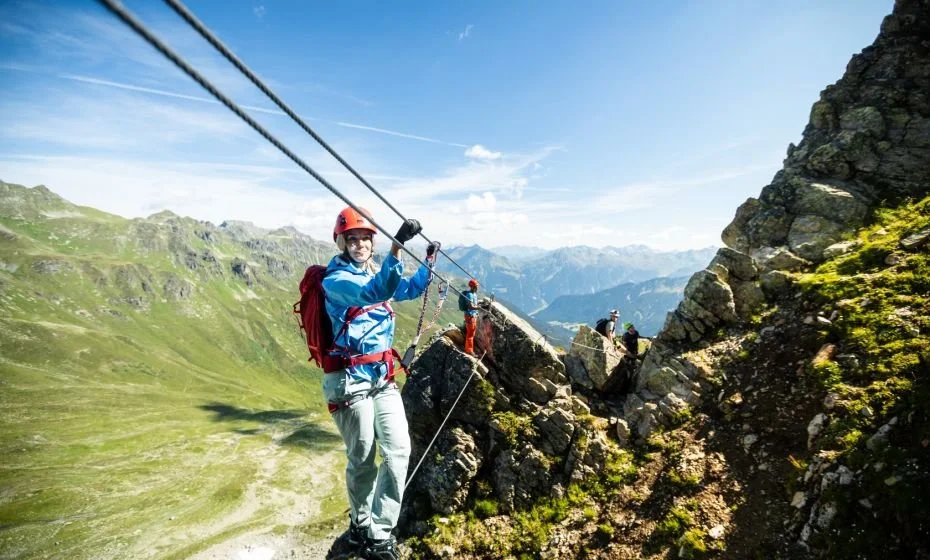
Nestled in the Montafon valley of Vorarlberg, Austria, the Via Ferrata Gargellner Köpfe offers a thrilling and accessible alpine climbing route. With steel cables, well-fixed rungs and vertiginous ridges, the route combines impressive exposure and superb panoramic views of the surrounding Silvretta and Rätikon mountain ranges. The relatively short approach and strong infrastructure make it an outstanding one-day via-ferrata experience.
Trail Overview
Distance: approximately 3.8 km (round-tour).
Elevation gain / loss: about 405 m ascent and 405 m descent between ~2,119 m and ~2,482 m above sea level.
Highest point: ~2,482 m (some sources list 2,559 m for the ridge top).
Duration: 3–4 hours for the via-ferrata segment (excluding arrival and return) for a fit person.
Difficulty: Rated middle/“mittel” – via-ferrata grading around C with variant to C/D for the more challenging line.
Route Description
Access & Approach: Begin from the mountain station of the Bergbahnen Gargellen in the Montafon valley. From there take the gondola or lift to the Schafberg/Hüsli area (~2,130 m) and follow signs toward St. Antönier Joch and the Kristallbahn station. A footpath then leads to the notch and the start of the via-ferrata.
Via-Ferrata Route: At the start you climb a ridge element (grade B/B-C), followed by steeper wall sections (grade C), moving into more exposed terrain. At a junction you have two options:
Variant A (easier): Follows the ridge with moderate difficulty (B/C) up to the summit cross.
Variant B (harder): Branches off to two long rope-bridges (19 m and 23 m), then a steeper, slightly overhanging wall (C/D) before rejoining the ridge.
From the meeting point of both variants, the route continues along a scenic ridge (grades A/B) with fantastic viewpoints. The final ascent involves the “Kristallwand” or crystal wall, a steep cliff section with many fixed rungs and cables, before reaching the peak of the Gargellner Köpfe.
Descent: From the summit cross, descend via a wire-rope secured wall step to the flattening ridge, then continue along a steeper gravel path (requires sure-footedness) past avalanche barriers to the chair-lift station below and back to the mountain station of the Bergbahnen Gargellen in about 15 minutes.
Highlights
The two rope-bridges: these add a distinctive adrenaline-boost and visual spectacle to the route.
Superb panoramic views: from the summit you gaze across the Silvretta and Rätikon mountain ranges — a 360° panorama reward.
The ridge and wall climbing in dark gneiss rock of the Silvretta crystalline zone — the geology adds character to the experience.
A relatively short approach – thanks to the lift station, the via-ferrata begins almost immediately, so you reach high alpine terrain quickly with less hiking.
Difficulty & Required Skills
This route is rated at around C (intermediate via-ferrata) with a variant to C/D (advanced) for those choosing the more demanding line.
Skills and prerequisites:
Comfortable with exposure, vertical via-ferrata terrain and heights.
Good physical fitness: steady climbing, balance, grip on cables and rungs.
Sure-footedness and good head for heights, particularly on the ridge sections and descent gravel path.
Standard via-ferrata gear: helmet, harness, via-ferrata lanyard set, gloves. Proper mountaineering boots with good ankle support are strongly recommended.
Avoid the route when wet or in unstable weather: rock becomes slippery and the exposure increases risk. The official sources warn the route is not recommended when wet.
When to Go
The best season for this via-ferrata is late June through September, when the lifts are operating, paths are free of snow and weather tends to be stable. The route is in high alpine terrain, so conditions may still change, especially early or late in season.
Avoid early season when snow or residual ice may render the approach or via-ferrata unsafe. Afternoon thunderstorms can also pose a risk — plan for morning climbs for best conditions.
Access and Logistics
Location: Gargellen, Montafon valley, Vorarlberg, Austria.
Access by car: From A14 motorway take exit Bludenz/Montafon, continue on L188 to St. Gallenkirch then on to Gargellen. Valley station parking is paid.
Public transport: Regional buses operate and connect via ÖBB rail to Bludenz station; bus line 670 stops at “Gargellen Schafbergbahn”.
Lift access: Take the Bergbahnen Gargellen up to the Schafberg / Hüsli station (~2,130 m) from where the approach trail begins.
Gear rental: Via-ferrata gear can often be rented in the valley station at PME Shop & Rent.
Safety contact: Emergency number Austria: 144 (also 112 works) for alpine emergencies.
Why It Belongs on Every Adventurer’s List
This via-ferrata stands out for combining accessibility, challenge, scenery and variety. It’s not just a climb — it’s an alpine adventure with multiple highlights in one compact outing. The short approach allows you to focus on the technical climbing and exposure rather than an all-day slog. The variant with rope-bridges and the steeper wall appeals to those seeking more thrill, yet the easier line ensures it’s achievable by strong hikers wanting to elevate their experience. The reward is a summit with sweeping alpine vistas few better to capture in the region. For those who crave alpine terrain, steep ridges, and dramatic ascents—but may not want a full mountaineering expedition—this via-ferrata hits an ideal sweet spot.
Whether you’re a seasoned via-ferrata enthusiast or a fit hiker looking to step up, the Gargellner Köpfe route offers a memorable mountain experience with high vibes, strong visuals and adrenaline without committing to multi-day climbs or glacier travel.