Via Ferrata Zimba-nah
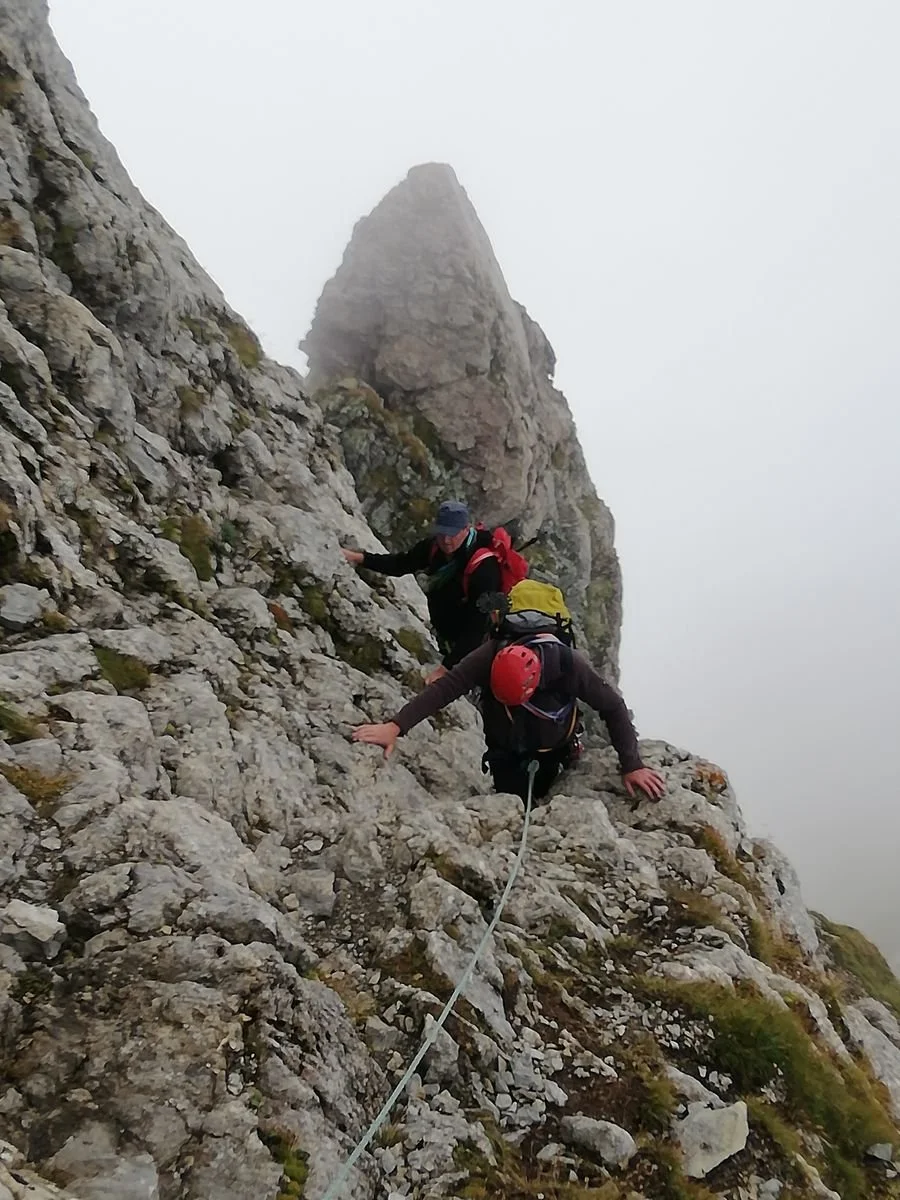
The mountain Zimba (2,645 m) is a striking horn-shaped summit in the Rätikon range of Vorarlberg, Austria. Known locally as the “Matterhorn of Montafon”, Zimba dominates the skyline above the village of Schruns and its south-eastern valleys. A particularly dramatic way to approach or traverse this peak is via the Neyerscharte Klettersteig (via ferrata) which climbs its east wall and ridge, offering a high-alpine climbing experience with fixed cable protection.
Trail Overview
Location: Mountain region Rätikon, Vorarlberg, Austria, between the huts Heinrich‑Hueter‑Hütte and Sarotla‑Hütte.
Type of route: Via ferrata (“Klettersteig”) – a protected climbing path with cables, metal rungs, ladders, and exposed ridges.
Distance / elevation gain: Approximate crossing route: ~4.9 km with +711 m ascent and -858 m descent. Highest point: ~2,405 m.
Difficulty rating: C/D (via ferrata grading), corresponding to T4 (difficult) on the Swiss/Alpine trail scale.
Season: Summer through early autumn, when rock is dry, snow has melted, and huts are open.
Route Description
The usual approach begins at the Heinrich-Hueter-Hütte. From there, a trail leads through the Rellstal valley into steeper terrain, heading for the Neyerscharte pass. The via ferrata section begins at the marked iron path (Eisenweg) on Zimba’s east wall, climbing a dramatic angled slab, traversing steep terrain, and culminating on the ridge between Zimba and the pass.
Once across the ferrata section, the route continues down to the Sarotla-Hütte, or if ascending to the summit of Zimba, the route may continue along the east ridge to the summit (classical climbing required beyond the ferrata). Along the way you’ll encounter exposed sections, narrow ledges, one or more steel ladders or bridges, and spectacular views into the valleys below. The descent is steep and requires good footing; alertness is required especially in wet or late-season conditions.
Highlights
Dramatic panorama from the east wall of Zimba: stands out in the Montafon region as a sharp peak and offers sweeping views of the Rätikon mountains.
The via ferrata section itself, with its mixture of slab climbing, exposed ridges, metal cables and ladders, provides a thrilling alpine experience beyond typical hike-trails.
The sense of wilderness: the setting is remote, the ascent steep, and the ridge traverse rewarding. (The route is used as a hut-to-hut crossing with significant elevation difference.)
For peak-baggers: possibility of extension to the true summit of Zimba, turning the ferrata into a full alpine climb.
Difficulty and Required Skills
This route demands above-average skills and fitness:
Technical difficulty: via ferrata grade C/D – meaning steep, sustained exposure, requiring strength in arms and legs, sure-footedness, and no fear of heights.
Physical condition: the ascent and descent are long and strenuous; 700 m of climb and 800+ m of descent call for good endurance.
Alpine experience: route involves exposed ridges, potential rockfall (especially below slabs), and navigation in high mountain terrain. The fact that some reports note the cable security is “not newest state” should further caution the climber.
Equipment: A via ferrata kit (helmet, harness, two-leg lanyard with energy absorber), gloves, sturdy mountaineering boots, and possibly a rope if continuing to the summit.
Weather sensitivity: rock becomes slippery when wet; some portions may retain late snow or ice; early starts recommended. Rockfall hazard must be respected.
In short: this is not a casual walk. It’s a full alpine route and should be treated accordingly.
When to Go
Optimal months: July through September, when snow has melted on the slabs and ridges, and mountain huts are open.
Avoid early season (June) unless snow conditions are known and you have mountaineering gear.
Late season (October) may bring early snow, shorter daylight, cold conditions and possible closures of huts.
Time of day: Start early for best conditions and to avoid any afternoon thunderstorms. Ensure you’re back down before dark.
Access and Logistics
Getting there: The region is accessible from Austria’s Vorarlberg, specifically the Montafon valley. The trailhead is at or near the Heinrich-Hueter-Hütte; you may access the hut via hiking trail from Rellstal or by mountain bike / shuttle if permitted.
Huts and accommodation: The Heinrich-Hueter-Hütte and Sarotla-Hütte serve as logical bases. Booking ahead is recommended.
Start time: From the hut, allow 1-2 hours approach to the ferrata’s start. Then plan for 3–5 hours for the via ferrata section and descent. Total outing can easily take 6–8 hours or more.
Descent options: If you finish at Sarotla-Hütte, ensure you know how to return (trail, transport) to your base or car. Map and route knowledge essential.
Transport: Depending on where you stay, local bus or shuttle services may exist. Check current local mountain transport schedules.
Safety notes: Check conditions at the hut, especially for rockfall or residual snow. Weather changes rapidly in the Rätikon. Inform someone of your plan.
Why It Belongs on Every Adventurer’s List
The Zimba via the Neyerscharte offers a rare combination of challenge, exposure, and alpine beauty: a route that demands skill but rewards with one of the most spectacular ridges in the region. Climbing the east wall of a mountain often compared to the Matterhorn of its valley gives a visceral sense of alpinism. Unlike many tourist-friendly trails, this one remains real: remote, steep, and requiring focus and respect. When you emerge onto the ridge with the stone horn of Zimba twisting above you, the panorama opens, and you realise you are in true high mountain terrain. For those seeking an unforgettable alpine climbing experience that goes beyond walking, this route ticks all boxes: physical effort, technical demand, raw environment, and lasting memories.