Via Ferrata Ramsauer
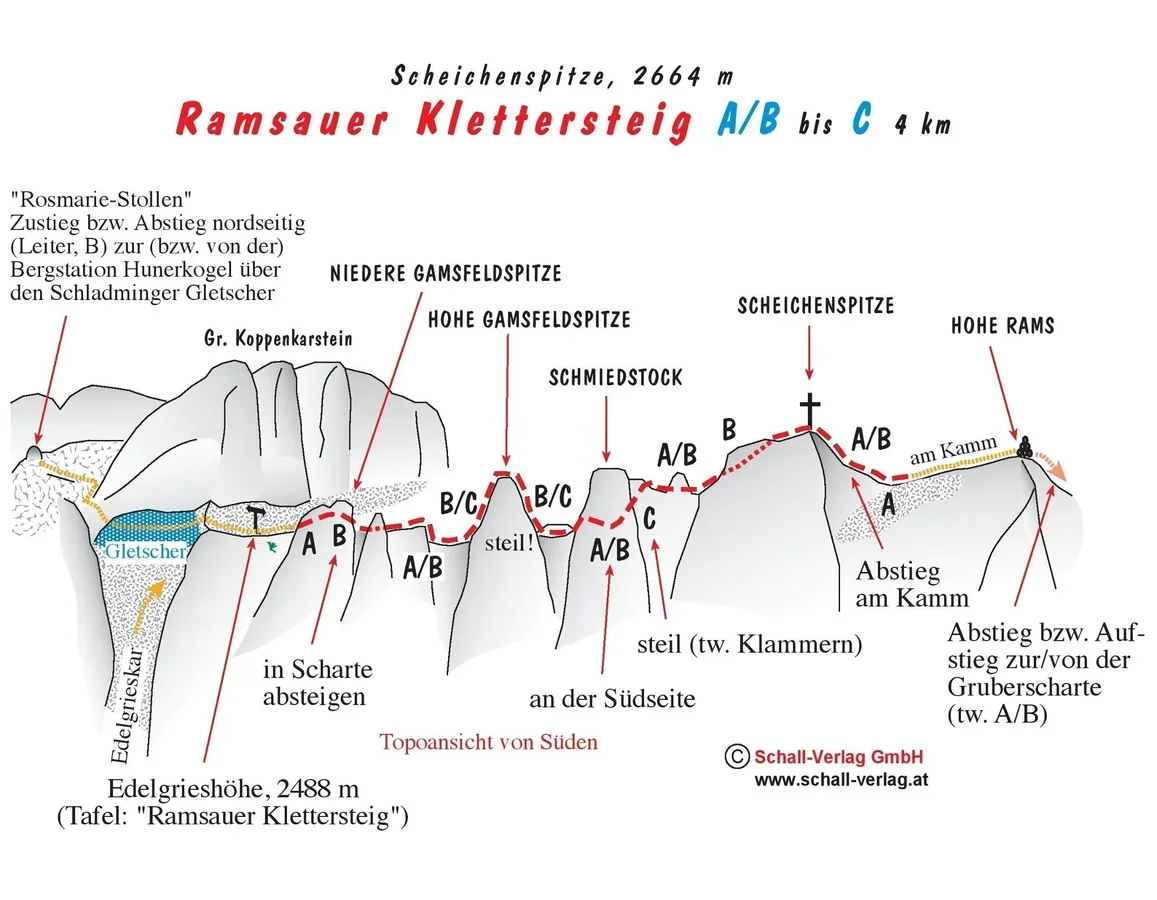
Nestled high in the Dachstein massif in Austria’s Styria region, the Ramsauer Klettersteig presents a thrilling high-alpine ridge traverse that blends climbing exposure with dramatic panoramas. It is less a casual via ferrata and more a serious ridge adventure, offering climbers the rare combination of alpine ridge walking, secured via ferrata steps, and breathtaking vertical drops into the Ramsau plateau below.
Trail Overview
Location: Near Ramsau am Dachstein, Styria, Austria.
Length: Approx. 2.8 km of secured route.
Vertical gain / exposure: Around 650 m of vertical through the via ferrata section.
Total duration: From approach to exit about 7 hours (1.2 h approach + ~3 h ferrata + ~3 h descent) according to local sources.
Grade / Difficulty: Rated C on via ferrata scale; described as “leicht bis mäßig schwierig” (easy to moderately difficult) but with alpine exposure and length requiring good fitness.
Season: Primarily mid-summer to early autumn when snow and rockfall risks are minimized.
Route Description
The experience begins with an approach from the Bergstation of the Dachstein Glacier railway, then via the Walchersteig (trail no. 618) to the Edelgrießhöhe, which serves as the entry to the actual ferrata.
1. Approach
From Ramsau am Dachstein (or the Dachstein cable car base), ascend via the marked trail toward Edelgrießhöhe. This part takes roughly 1–1.5 hours, gaining elevation and preparing you for the exposed ridge.
2. Ferrata Section
At Edelgrießhöhe the ferrata begins: the route runs along the ridge crest of the Dachstein massif, traversing rock slabs, short ladder sections, iron rungs, and airy ridges. The key crux comes around the so-called Schmiedstock, where downward sections add to the exposure. Along the ridge you’ll have views dropping hundreds of metres to the Ramsau plateau below, and over the karst terrain of the Dachstein. The ferrata proceeds to the Niedere Gamsfeldspitze and then to an exit via path no. 618 or via the Rosmarie-Stollen tunnel back to the Hunerkogel station of the cable car.
3. Descent
From the exit point you descend either via marked alpine trails (Wanderweg 673 then 672) back to the valley or take the cable car from Hunerkogel if available. The descent normally takes ~3 hours.
Highlights
Ridge crest traversing: Unlike many via ferratas that climb directly to a peak, this route follows the ridge, allowing constant panoramic vistas in two directions.
Vertical exposure: On the ridge you are very much aware of the sheer drops—this adds adrenaline and unique photo opportunities.
Dachstein massif panorama: You’ll be rewarded with stunning views of the Dachstein Glacier, the Ramsau plateau below, and surrounding alpine terrain.
Quality climbing rock: The limestone ridge offers solid holds, iron rungs, and ladder sections that combine climbing thrill with mountaineering environment.
Sense of achievement: Completing the ridge ferrata gives a real sense of crossing and high-mountain ridgeline exploration, not simply a hike.
Difficulty & Required Skills
Although rated as C (which in via ferrata terms corresponds to “moderate”), this route should not be underestimated. According to local tourism information it is “only recommended for physically strong and experienced klettersteig climbers” due to its length, alpine location, and sporting route direction.
Skills and requirements:
Good fitness and endurance (multiple hours of climbing plus approach/descent).
Surefootedness and no serious fear of heights—exposure is significant.
Competent via ferrata technique: correct clipping, use of lanyards, helmet, and harness.
Good weather sense—route is high, exposed, and can be dangerous in mist, rain, or lightning.
Some mountaineering mindset: although no glacier crossing is required, the terrain is alpine and remote.
Equipment:
Via ferrata set (energy absorber, two carabiners)
Helmet
Glove protection recommended
Good climbing/hiking boots
Pack with food, water, extra clothing
Navigation/trail map for approach and exit
When to Go
The optimal season is typically from late June to early September, when snow has largely melted and the route is dry and secure. Early in the season you may encounter residual snow or wet rock; late in the season risk of thunderstorms and shorter daylight increases. Because of its altitude and exposure it is wise to start early in the day.
Access & Logistics
Starting point: The Dachstein Glacier cable car (Hunerkogel) near Ramsau am Dachstein in Styria.
Parking / transport: Accessible by car via Ramsau am Dachstein; cable car provides rapid access upward.
Accommodation: The mountain hut Guttenberghaus is a recommended base before or after for overnighting.
Approach trail: Trail no. 618 from the cable car station to Edelgrießhöhe.
Exit options: After ferrata, descend via marked trails back to valley or take cable car from Hunerkogel.
Safety note: Check cable car schedules, weather forecasts, and ensure you are downhill before late afternoon if staying in the valley.
Why It Belongs on Every Adventurer’s List
The Ramsauer Klettersteig is more than simply a via ferrata—it is an alpine ridge adventure. It offers the thrill of climbing, the immersion of mountain ridge exposure, and the spectacular scenery of the Dachstein region all in a single day. For an adventurer seeking something beyond standard hiking but not full rock-climbing, this route hits the sweet spot. The combination of scenic reward, physical challenge, and alpine environment makes it a standout. Whether you are ticking off a via ferrata list or simply chasing memorable mountain experiences, this ridge traverse will deliver.