Via Ferrata Anna
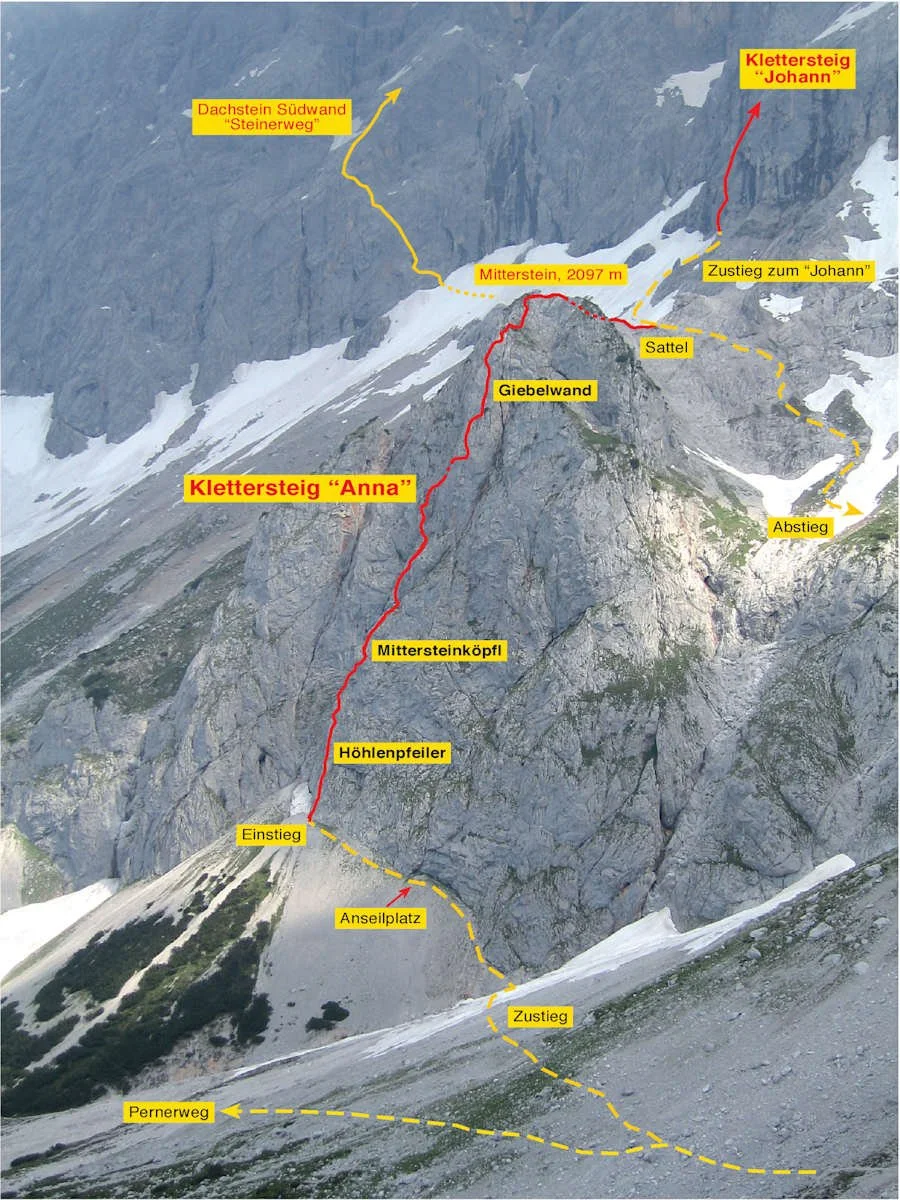
The Anna Klettersteig is one of the standout via-ferrata routes in the Austrian Alps, set high on the south face of the Dachstein massif. It climbs steeply to the summit of the Mitterstein (2,097 m) and forms part of a larger complex of secured climbing routes (including the Johann Klettersteig) that offer a full alpine route experience. The route blends drama, exposure and rock-climbing style movement with the accessibility of via ferrata protections.
Trail Overview
Name: Anna Klettersteig (or “Anna – Klettersteig”)
Location: Dachstein massif, Styria region, Austria
Elevation of summit (Mitterstein): approx. 2,097 m above sea level.
Vertical climb (via ferrata section): ~300–340 m of secured ascent.
Difficulty rating: According to several sources, the route is rated C/D (Schall/Schweizer scale) and includes sustained D-level passages.
Time estimates: Approach ~45–50 min, via ferrata ~2 h, descent ~1h15–1h30 depending on exit option.
Season: Primarily summer through early autumn when snow and ice risk is lowest.
Route Description
The Anna Klettersteig begins with an approach from the Südwandhütte (South Wall Hut) or the Dachstein cable-car top station, ascending the marked trail to the start of the via-ferrata line.
Approach: Following the path from the parking or cable-car station via the Südwandhütte, continue along the Pernerweg or marked trail until the sign for “Anna Klettersteig”. The trail is well marked but includes steep mountain walking.
Via Ferrata Section: Once at the start, the route clings to the south face of the Dachstein, ascending via steel cables, iron rungs, and fixed ladders. The terrain is steep and exposed. The grade starts at C/D, and in places moves firmly to D. A key section is at around 300–340 vertical metres of vertical rise.
Summit Arrival / Exit Options: The route terminates at the Mitterstein summit. From there, climbers have two main exit options:
A) Descend via the simpler route back to the Südwandhütte (which may involve a different grade A/B section).
B) Continue on to the Johann Klettersteig and onwards (for more advanced mountaineers) as part of the “Super Ferrata Dachstein” sequence (Anna → Johann → Shoulder ascent).
Descent: For most climbers continuing on the simpler exit, descent takes around 1h15–1h30 back to the hut or cable-car station. Ensure you have enough daylight for the descent.
Highlights
Spectacular rock face and exposure: The south wall of the Dachstein provides dramatic views and a sense of vertical relief, making the climb highly scenic.
Summit panorama: Reaching the Mitterstein offers rewarding views across the Dachstein massif and surrounding alpine terrain.
Historical context: The route name and tradition tie to local alpine history (the Anna & Johann mountaineering link) — adding a narrative dimension to the climb.
Technical challenge with alpine flavour: Although secured, the route retains alpine character (steep rock, exposure, and route finding) rather than a simple “touristic” via ferrata.
Flexibility for further climbing: For those wanting more, the connection to the Johann Klettersteig opens up the longer, more demanding sequence of ferrata on the Dachstein.
Difficulty & Required Skills
The Anna Klettersteig is not for beginners. Key considerations include:
Grade: Sustained sections at C/D, sometimes touching D or higher. You must be comfortable on exposed vertical rock and using fixed aids (rungs, ladders, steel cables).
Physical fitness: You will ascend ~300–340 m on steep terrain; strong legs and good endurance required.
Technical skills: Proficiency in via-ferrata technique, confident use of a via ferrata set (energy absorber, dual lanyards, carabiners) and comfortable moving on exposed terrain.
Equipment: Helmet, harness, via ferrata lanyard set, gloves, good mountain boots; at times rockfall risk must be considered.
Route-finding & descent: The descent or continuation may involve less secured hiking or via ferrata; orientation and mountain sense are required.
Weather and conditions: Because of exposure, avoid in stormy conditions or when the rock is wet or icy. Late snowfields may linger—check local conditions.
In short: the route is ideal for experienced climbers/strong mountaineers who have prior via ferrata experience and mountain sense.
When to Go
The best time for the Anna Klettersteig is summer through early autumn (roughly June to September), depending on snow conditions. Some details:
After the snow melts and the Südwand (south wall) is clear of snow and ice is the ideal window.
Early summer: may still have patches of snow or ice in north facing parts or shaded gullies—this increases risk and may require crampons or ice equipment.
Late summer/early autumn: generally stable weather, cooler evenings (good for climbing), fewer crowds.
Avoid during or after heavy rain/storms, as rockfall risk and wet rock make the route dangerous.
Check local mountain hut / cable car statuses—depending on year the approach paths or huts may open later.
Access and Logistics
Access point: The Dachstein cable-car system (for example via Ramsau am Dachstein) leads to the top station near the Südwandhütte. From there follow the trail to the hut and onward to the Anna Klettersteig start.
Parking & base: Use the Ramsau/Dachstein region roads; there is paid parking and cable car access.
Approach time: Around 45-50 minutes walk from the hut or from the cable car station to the via ferrata start.
Descent / exit options: As described above: back to Südwandhütte or onward via Johann Klettersteig. Ensure you have map/gps or good signage.
Accommodation: Mountain huts such as the Südwandhütte are good bases; alternatively stay in Ramsau or nearby towns.
Supplies & safety: Carry plenty of water, a headlamp (in case the descent or delays push you into dusk), and check weather forecasts. Inform someone of your plan if you head into longer via ferrata sequences.
Guided option: If you are less confident, local alpine guides can lead the Anna and Johann ferrata routes.
Why It Belongs on Every Adventurer’s List
The Anna Klettersteig occupies a special place for adventurous climbers because:
It blends accessible climbing with serious alpine character — you move from secured cables to summit ridges with panoramic views.
The setting is dramatic: the south face of the Dachstein is imposing, and the climb delivers a strong sense of exposure and mountain achievement.
It offers flexibility: either a challenging single route or as part of the longer “Super Ferrata” sequence on the Dachstein for those wanting more.
It is relatively unique: not every via ferrata gives such a direct ascent to a true summit with classic alpine scenery and mountaineering feel.
For those who love vertical terrain, fixed-route climbing and panoramic summits, this route delivers a memorable alpine experience.
In summary, the Anna Klettersteig is a must-do for experienced via ferrata and mountain enthusiasts. With the right preparation it offers an unforgettable climb, a genuine mountain summit and the thrill of exposure and elevation in one of Austria’s finest alpine settings.