Via Ferrata Mahdlgupf
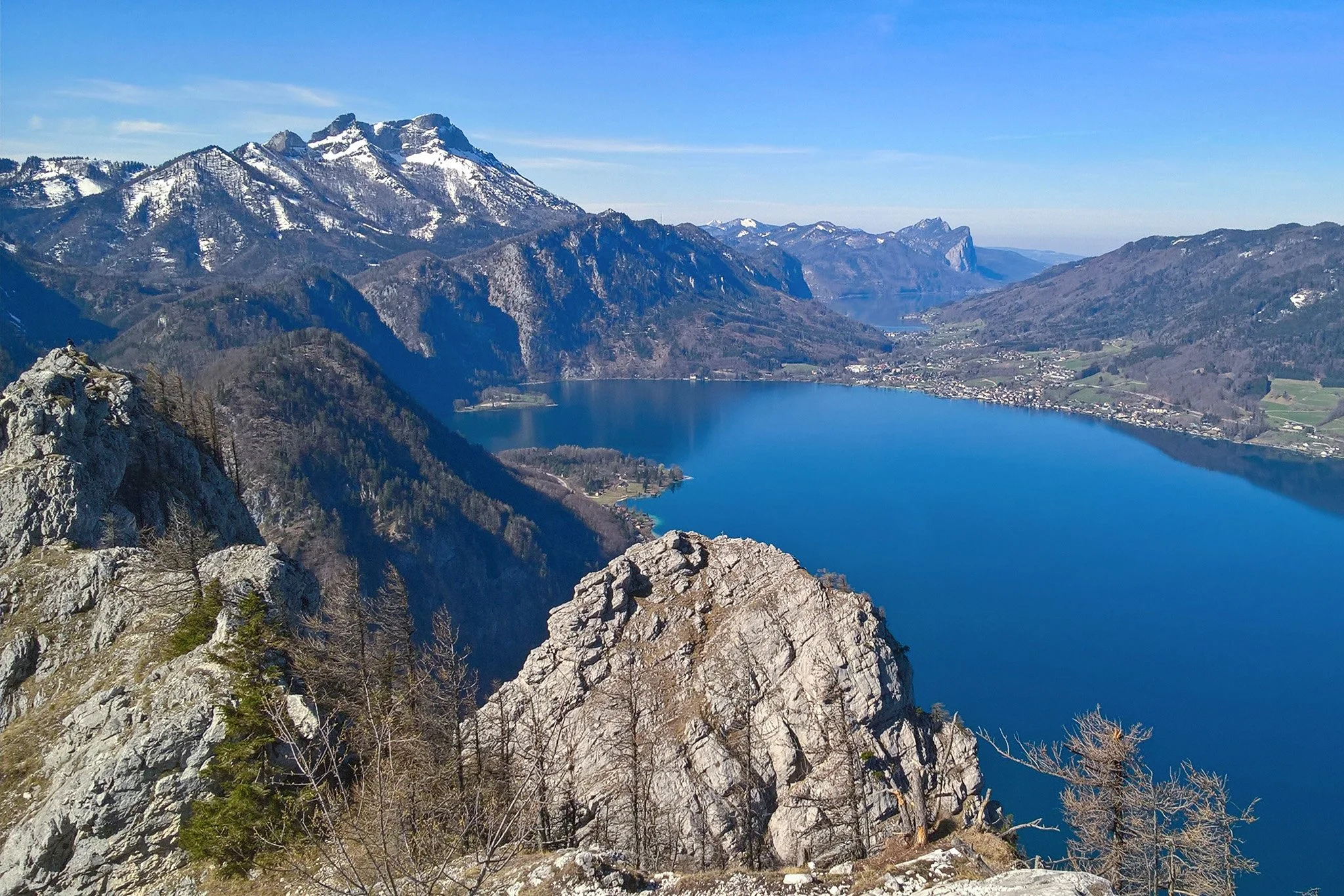
The Mahdlgupf Klettersteig, perched above the beautiful Attersee in the Salzkammergut region of Upper Austria, is a thrilling via-ferrata (Klettersteig) that combines exposed rock climbing with alpine ridge walking and stunning lake views. Opened in 2012, it offers a dramatic alternative to more crowded routes, and challenges both physical endurance and mental composure.
Trail Overview
Location: Weißenbach am Attersee, Upper Austria, Austria.
Approach/Start altitude: Approx. 650 m via the Nikoloweg trail from Weißenbach.
Top altitude (summit): 1,261 m at the Mahdlgupf.
Length & climbing metres: About 1,200 m of climbing cable, vertical gain circa 600–870 m total vertical.
Difficulty rating: Klettersteig grade D/E (with continuous demanding sections, especially after the 2020 modification adding a D/E segment at the start).
Estimated time: Approach ~30 min; via-ferrata ~3 h30; descent ~1 h30; total ~5 h30.
Route Description
The route begins from Weißenbach am Attersee, following the Nikoloweg through forest and steeper terrain until reaching the base of the crag where the via-ferrata starts. The initial section features the newly added D/E entry—steep, powerful, and a surprise for those under-estimating the route’s severity.
After the start you climb past the impressive “Weiße Wand” (White Wall) section, where large vertical limestone slabs dominate and exposure is high. The middle section retains steep climbing, with overhangs, narrow ledges and fewer footholds. Towards the upper portion, after a forested respite, a long ridge section opens up: here you alternate between walking and short via-ferrata steps, with increasingly wide views over the lake. The final wall again becomes technical (grade D) before topping out at the summit of Mahdlgupf.
The descent follows a marked route from the summit ridge, often via the Schoberstein area, then a forest path down to Weißenbach. Because of the route’s length and sustained difficulty, it is commonly treated as a committed outing rather than a “short fun climb”.
Highlights
Spectacular views over Attersee and the surrounding Salzkammergut mountains from the exposed ridge.
Varied terrain: demanding vertical walls, relaxed ridge walking, forested approach—all within one outing.
The “Weiße Wand” section, one of the truly dramatic montane walls that the route ascends.
A less-crowded alternative to more popular via-ferrata routes in the region, giving a more wild and immersive feeling.
Difficulty & Required Skills
This is a challenging via-ferrata and should not be underestimated:
Rated D/E (with D as the base level for the harder sections, and one actual D/E segment at the start).
The route’s length (nearly 1,200 m of climbing cable) means endurance is essential; you’ll need strong arms, good fitness and sure-footedness.
Some rock is loose or brittle, especially in the lower “niche” beneath the White Wall—care with rockfall is advised.
Equipment: full via-ferrata set (harness, helmet, via-ferrata lanyard), sturdy boots, and possibly gloves. Technical climbing shoes are not ideal because of mixed terrain, scree and ledges.
Due to exposure and increased difficulty near the top, it is not recommended for beginners or those without previous via-ferrata experience.
When to Go
Best season: Late spring through early autumn (roughly June to September) when the route is dry and accessible.
Note: The via-ferrata is closed between 1 November and 31 March.
Morning starts are recommended to avoid warming and deterioration of rock or hot sun exposure on the west-facing wall sections.
After heavy rain, the lower parts (especially the niche under the White Wall) can be damp and slippery—so avoid in wet conditions.
Access and Logistics
Starting point: Weißenbach am Attersee (via road or public transport from Salzkammergut region).
From the village, follow the Nikoloweg path to the Jaga-Woferl-Graben and ascend to the via-ferrata start (~30 min).
There are parking options near the village—check local regulations.
Descent returns to the valley—ensure you have planned for return transport or vehicle.
No technical mountain hut required, but bringing water, snacks, and aware of alpine weather is essential.
Ensure you have roughly 5–6 hours for the outing (including approach, climb, descent).
Why It Belongs on Every Adventurer’s List
For those seeking a true alpine challenge with major payoff in scenery and experience, the Mahdlgupf Klettersteig stands out:
It combines serious via-ferrata climbing with ridge walking and panoramic lake views—a rare mix.
The wall sections demand full attention and skill, offering a sense of accomplishment.
The setting above Attersee gives the climb a dramatic backdrop and makes for unforgettable visuals.
Because it is less crowded than many via-ferrata in the Alps, it rewards adventurers who seek immersion rather than popularity.
Completing the route is not just a hike, but a mountaineering-style achievement that remains accessible to well-prepared and experienced non-alpinists.