Via Ferrata Bert-Rinesch
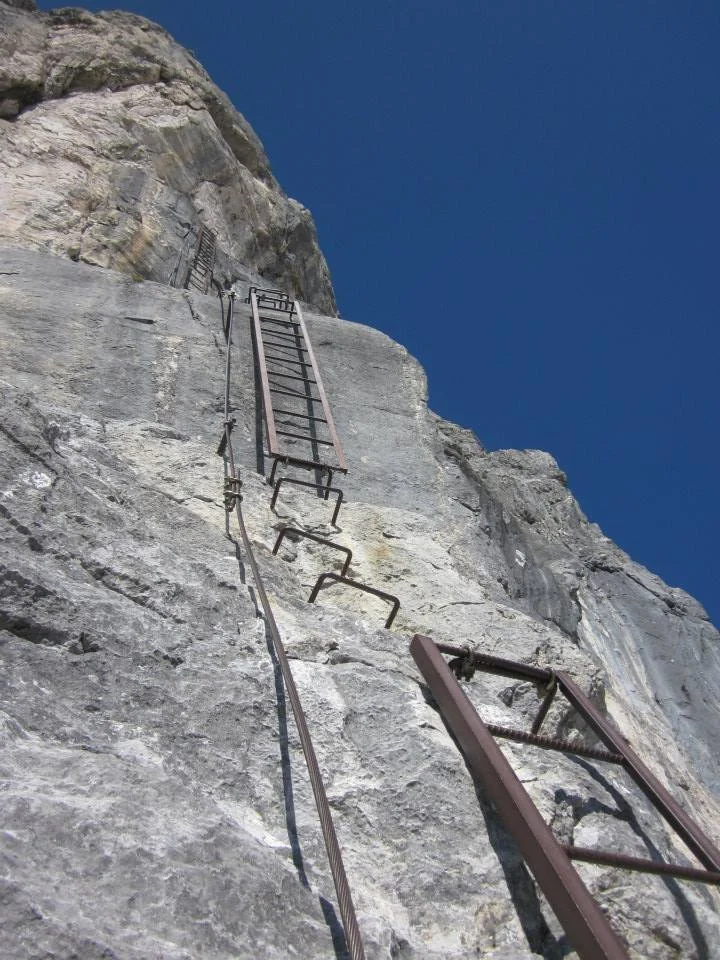
The Bert-Rinesch Klettersteig is a formidable via ferrata route in Austria that climbs to the summit of Großer Priel (2 515 m) in the Totes Gebirge mountain range. It blends steep rock faces, exposed ridges, iron ladders and traverses, demanding high levels of stamina, technique and mental focus. Named after mountain guide Bert Rinesch, this route has become one of the most challenging and iconic klettersteigs in the Eastern Alps.
Trail Overview
Location: Hinterstoder region, Upper Austria, Austria.
Summit target: Großer Priel, 2 515 m.
Approximate vertical difference: ~2 100 m from the valley parking/approach to summit.
Via ferrata section length: ~700 m of secured climbing (some sources say 1 300 m climbing route) with steel cables, ladders and exposed rock.
Difficulty rating: Generally rated as C/D (on the via ferrata grading scale) — meaning very difficult and exposed.
Typical time: Approach ~3–4 h, climbing section ~3–4 h, descent ~3–4 h (total 9–11 h) depending on pace and conditions.
Route Description
Approach: You start from Hinterstoder (or from the parking area at Polsterlucke/Johannishof) and follow marked paths to the mountain hut Prielschutzhaus. From there you continue via marked trail (red markers indicate the ferrata access) to the base of the southeast spur of Großer Priel where the via ferrata begins.
Via Ferrata Section:
Section 1: A southern entry portion leading to the so-called “Lokomotive” where you face steep walls and incoming ladders.
Section 2: A long traverse with overhanging and exposed sections, the most demanding part of the ferrata.
Section 3: A long ridge crest exit toward the summit, somewhat easier (still strenuous) but sustained.
Summit & Descent: After reaching the summit cross, you descend via the normal route (West ridge / Brotfallscharte) back toward Prielschutzhaus or past Kuhkar, depending on conditions. Be cautious of snow-patches in spring or late season.
Highlights
The sheer vertical rock of the Großer Priel’s southeast face offers tremendous exposure and a sense of summit achievement.
Long ladders and traverses add a sense of “via ferrata adventure” beyond a standard hike.
The panorama from the ridge and summit includes wide views across the Totes Gebirge and toward the Austrian Alps.
A route named for a local guide, giving it heritage and emotional resonance in the mountaineering community.
The combination of approach hike, technical ferrata section and long descent makes it a full-day (or more) alpine experience rather than a casual outing.
Difficulty & Required Skills
This route is very demanding and should be approached with respect. Skills and equipment required include:
Solid experience of via ferrata (exposed cables, ladders, vertical climbing) at a C/D grade.
Excellent fitness: the vertical gain and sustained effort mean you’ll need strong legs, good endurance, and will to push through.
Surefootedness and head for heights: many sections are exposed with significant drop-offs.
Proper via ferrata set: harness, approved via ferrata lanyard with energy absorber, helmet, gloves, climbing shoes or good sturdy boots.
Good weather and route-condition awareness: after rain the rock face may be slick; the descent may involve snow or loose rock in spring.
Navigation and alpine descent skills: the descent is not trivial and in some parts may require caution beyond the secured ferrata section.
When to Go
Best season: Summer months (June to September) when the trail and ferrata are free from snow and the approach is safe.
Avoid: After heavy rain or very early in season when snow remains, as the route may be dangerously slick or the descent may involve snowfields.
Time of day: Start early in the morning to ensure plenty of time to complete the ascent, summit and descent before evening.
Weather: Check forecast for thunderstorms – exposed ridges and faces give little protection.
Access & Logistics
Start point: Hinterstoder, Upper Austria. From there drive to the indicated parking (Polsterlucke/Johannishof) or follow route to Prielschutzhaus.
Hut: Prielschutzhaus serves as base/stop before the ferrata approach.
Equipment: Via ferrata gear as above. Backpack with water, food, warm layers, emergency kit.
Descent planning: Make sure you have daylight and energy for the descent; some descent sections may be long or tricky.
Transport: Depending on your base, accessibility by car or public transport to Hinterstoder; plan your return or overnight stay accordingly.
Why It Belongs on Every Adventurer’s List
The Bert-Rinesch Klettersteig stands out because it offers a true alpine challenge rather than a simple scenic walk. It demands skill, strength and commitment, and rewards with summit views, technical climbing experiences and a genuine sense of achievement. For those seeking to push their via ferrata limits, explore the heart of the Austrian Alps and test both body and mind, this route is an iconic climb that ticks all the boxes: technical mastery, vertical exposure, alpine environment and summit panorama. Few via ferratas combine approach trail, vertical ladders, long traverse and summit ridge in such a strong and memorable way.