Via Ferrata Irg
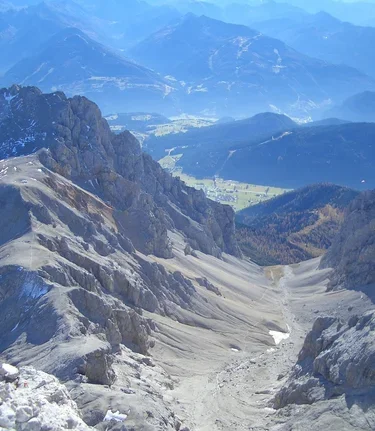
The Irg 2 Klettersteig is a high-alpine via ferrata route located on the south-east face of the Großer Koppenkarstein (2,865 m) in the Dachstein massif of Austria. Constructed in 2016 in honour of mountaineer Georg “Irg” Steiner, the route offers climbers a classic “protected climbing trail” experience — steel cables, fixed rungs and iron pegs guiding along exposed rock faces.
In an environment dominated by glacier, snowfields and steep limestone walls, Irg 2 delivers both majestic alpine views and demanding climbing terrain.
Trail Overview
Location: South-east flanks of Großer Koppenkarstein, Dachstein massif, Styria, Austria.
Length: Approximately 3.1 km for the combined approach, via ferrata section and descent.
Elevation gain/loss: +572 m ascent / −567 m descent according to route data.
Highest point: Around 2,865 m (summit of Großer Koppenkarstein).
Difficulty rating: Via ferrata grade “C/D” with sections of D; original Irg route was rated D, the new Irg 2 is described as “mittel” (medium) but still very exposed.
Recommended time: About 4 h 50 min for the full circuit (approach + via ferrata + descent) in normal summer conditions.
Route Description
From the top station of the Dachstein gondola (Hunerkogel), head eastwards towards the Hunerscharte, traverse the Edelgrieß glacier region and cross the Rosmarie-Stollen tunnel to reach the south side of the Koppenkarstein.
The route begins at roughly 2,585 m elevation; after the entry you climb the south-east spur of the mountain, using fixed cables, pegs, and iron rungs. The early part includes diagonal traverses and steep pillars. The main via ferrata section leads up to the summit ridge at 2,865 m.
For descent, one option is to follow the secured west-ridge Klettersteig (rated B/C) from the summit to the Hunerscharte and then back to the Dachstein gondola station. The descent may include glacier- or snow-covered stretches (depending on season) and requires care.
Highlights
Panoramic summit views: From the ridge of Koppenkarstein you get a spectacular panorama of the Dachstein glacier, surrounding peaks and high alpine terrain.
Exposure and sense of altitude: The via ferrata is situated at high altitude with sections that are very exposed and dramatic — offering a genuine climbing feel.
New route (2016): The Irg 2 is a modern construction replacing the older Irg route, designed with clear routing and good “changing spots” for clipping and unclipping safely.
Glacier approach & alpine atmosphere: The approach across Edelgrieß glacier to the rock face adds a classic alpine mountaineering flavour, increasing the adventure.
Difficulty and Required Skills
This is not a simple walk. While technically a via ferrata rather than a full rock climb, it demands strong climbing-hike experience:
Via ferrata equipment (helmet, harness, lanyard with energy absorber, via-ferrata carabiners) is mandatory.
Scrambling ability and comfort on exposed rock faces required. The grade C/D (with sections of D) means sustained effort, steep terrain and minimal rest.
Good fitness and sure‐footedness necessary, especially given altitude and terrain.
Glacier/snow conditions: in early season snowfields may still block approaches or descents, and crampons may be required.
Navigation & descent: The descent involves additional terrain and may be less secured; understanding alpine descent and conditions is critical.
In short, the Irg 2 is suited to advanced via ferrata climbers or experienced alpine hikers comfortable with exposure, vertical limestone, and high altitude.
When to Go
The best window for climbing the Irg 2 is mid-summer to early autumn (July to September) when snow and ice on approach/exit are minimal and cable car access is reliable. In earlier months the route may still have snowfields or frozen tunnels, making it more hazardous.
Weather can change rapidly at altitude, so aim for a stable forecast, and early start days are advisable to avoid potential afternoon storms.
If you go later in the season, check whether the descent path or tunnel sections remain open and free of ice/snow.
Access and Logistics
Getting there: From the town of Ramsau am Dachstein (Styria, Austria) drive or bus up the toll road to the Dachstein-Gletscherbahn (gondola) at Hunerkogel. From there take the lifts up to the top station.
Approach to route: From the top station, proceed eastwards toward Hunerscharte, cross Edelgrieß glacier or walk along marked tracks and tunnel (Rosmarie-Stollen) to reach the starting point at the base of the via ferrata.
Descent options: After completing the via ferrata, descend via secured West-Grat Klettersteig or by marked alpine path back to the lift station. The descent may involve glacier or snow-covered terrain depending on season.
Equipment & guidelines: A full via ferrata set is required; gloves recommended; helmet mandatory; check cable car schedules (summer timetable) and possible extra cost for transport.
Time needed: Plan for total time roughly 4–6 hours (including approach, climb, descent) if in good physical shape. Buffer extra time in case of snow or weather changes.
Why It Belongs on Every Adventurer’s List
If you seek an alpine challenge that blends high-mountain terrain, technical exposure, breathtaking vistas and the thrill of a via ferrata, the Irg 2 stands out. It offers:
A true high-alpine experience without requiring full glacier-alpinism gear (yet still demanding).
Stunning views of the Dachstein massif at summit level, with an approach across glacier and descent via ridge.
A modern, well-equipped route designed to showcase the rock in its best form — steep pillars, airy traverses, and a sense of achievement at the summit.
For those passionate about via ferratas, the route is a benchmark in Austria’s Northeast Alps: combining technical sections, altitude and alpine access in one package.
Completing Irg 2 is more than a “walk in the hills” — it’s a serious adventure that will leave you with memories of summit elevation, vertical rock, and a real sense of accomplishment on limestone walls high above the glacier.