Via Ferrata Johann
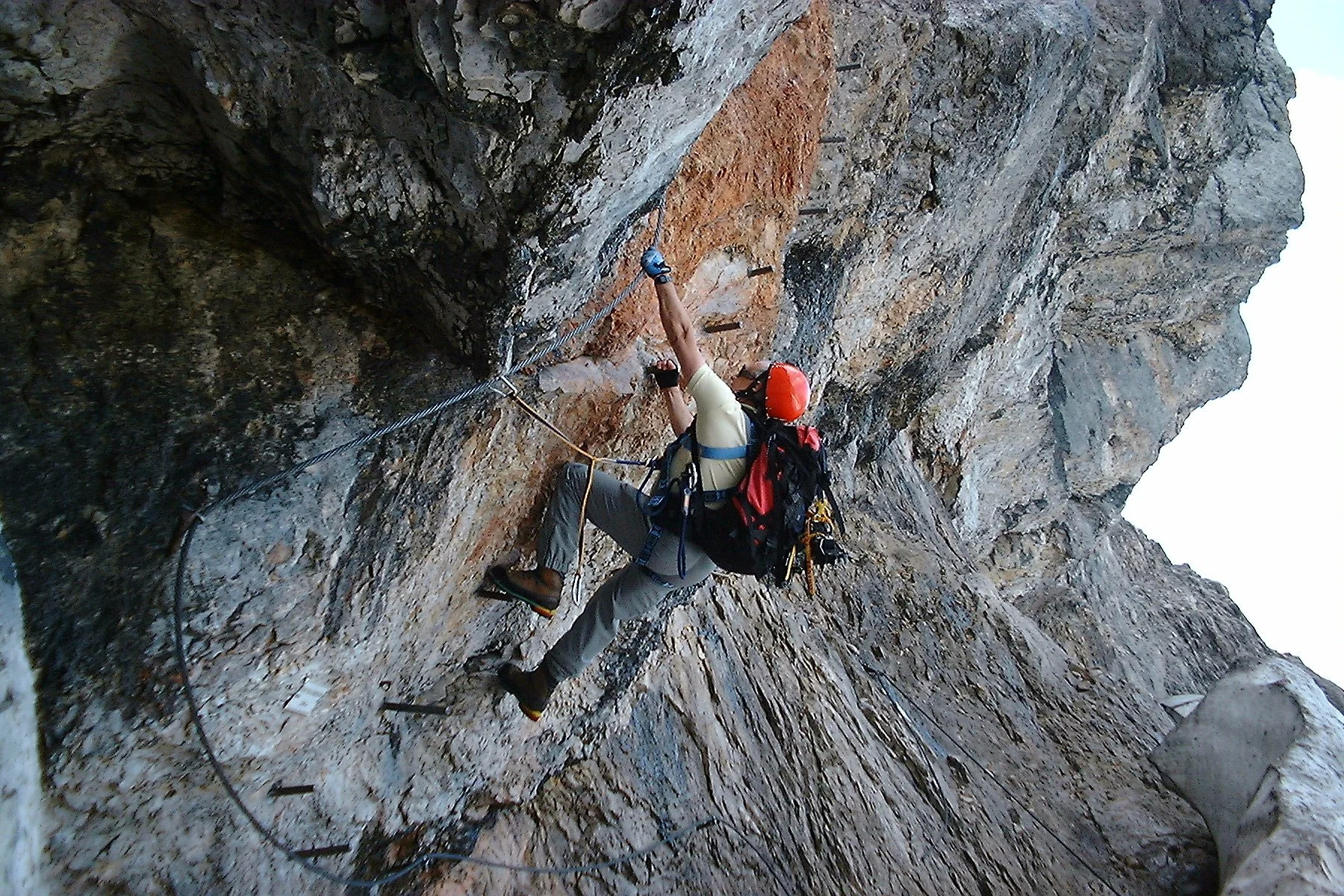
The Johann Klettersteig is a striking high-alpine via ferrata on the southern flank of the Hoher Dachstein massif in Austria. Anchored in steep limestone walls, this route offers a dramatic, exposed climb that merges mountain hiking with real verticality and bold terrain. It appeals to experienced climbers seeking more than a scenic walk—this is an adventure that demands skill, concentration, and physical fitness.
Trail Overview
Location: South wall of the Dachstein massif near Ramsau am Dachstein, Styria, Austria.
Type: Klettersteig (via ferrata) rated D/E in the Austrian/German grading system.
Elevation gain: approximately 560 m on the ferrata section (leading to 2 741 m at the Dachsteinwarte ridge)
Duration: Expect around 4 hours for the ferrata climb itself, with approach and descent adding significantly.
Terrain: Vertical and over-hanging rock walls, steel rungs, fixed cables, exposed traverses and narrow ledges.
Route Description
Approach
You begin by reaching a suitable starting point near Ramsau am Dachstein and then ascending toward the wall of the Dachstein south face. Weather conditions and snow patches may still affect the approach even in summer.
Ferrata Section
The Johann Klettersteig opens with a very steep and demanding entrance: a severe overhang or near-vertical section tests climbers right from the start. This “key section” has caused many to turn back.
Beyond the initial crux, the route continues up large vertical walls and traverses high ledges. Fixed cables and steel rungs help, but the exposure and rock face steepness remain intense. The upper part includes airy traverses with dramatic drop-offs.
Exit and Descent
The ferrata ends near the ridge at the Dachsteinwarte or around the Seethalerhütte area. From here, you descend by the glacier path or high alpine trail back toward the valley or cable-car access point, depending on your exit choice.
Highlights
The sense of vertical adventure: sheer rock walls and high ledges deliver an adrenaline-charged experience.
Spectacular alpine vistas: from the route you’ll look down into the valley and out across the Dachstein’s glaciated ridges.
Exposure and technical features: Overhangs, fixed ladders, and airy traverses combine to make this more than a hike.
A memorable summit area: finishing near the Dachstein ridge gives a gratifying reward for the effort.
Rich alpine atmosphere: the route blends mountaineering history (named after Archduke Johann) with classic limestone terrain.
Difficulty & Required Skills
This is a very demanding via ferrata. Key points:
Grade D/E: high technical and physical challenge.
Good physical condition is essential: long approach, steep climbing, and altitude all factor in.
Strong surefootedness, head for heights, and no fear of exposure are required.
Experience with via ferrata equipment (harness, twin-arms lanyard, helmet) and familiarity with using steel rungs and cables.
Because of the approach and potential snow or rockfall hazards, some mountain-trail experience is beneficial.
Not suitable for beginners, children or those without proper equipment or skills.
When to Go
Summer months (June through early September) are the most appropriate. Snow patches may persist early in the season, so check conditions.
Avoid stormy weather: with high exposure on metal fixtures, the risk in thunderstorms is significant.
If you go later in summer, you may find fewer crowds, though descent routes and huts may begin closing.
Access & Logistics
Nearest village: Ramsau am Dachstein (Styria, Austria) serves as the base.
Transport: From the village you’ll need to reach the starting point by trail or cable car depending on route chosen.
Equipment: Full via ferrata kit (helmet, harness, via ferrata lanyard with energy absorber), sturdy mountaineering boots, gloves, possibly crampons if snow remains.
Descent: After the ferrata climb, descend to the valley or cable car station. Know the exit route ahead.
Time allocation: Approximate total outing including approach, climb, and descent may take 6–8 hours or more depending on route and conditions.
Why It Belongs on Every Adventurer’s List
The Johann Klettersteig is not just a climb—it is an alpine legacy route that pushes you beyond standard hiking into the realm of exposed terrain, steel rungs and mountain air. For those seeking to test themselves in the high limestone Alps, this route delivers an unforgettable mixture of exhilaration, scenery and achievement. The combination of vertical challenge, alpine atmosphere, and stunning vistas makes it a must for seasoned adventure-seekers looking for a real mountain experience.