Via Ferrata Imster
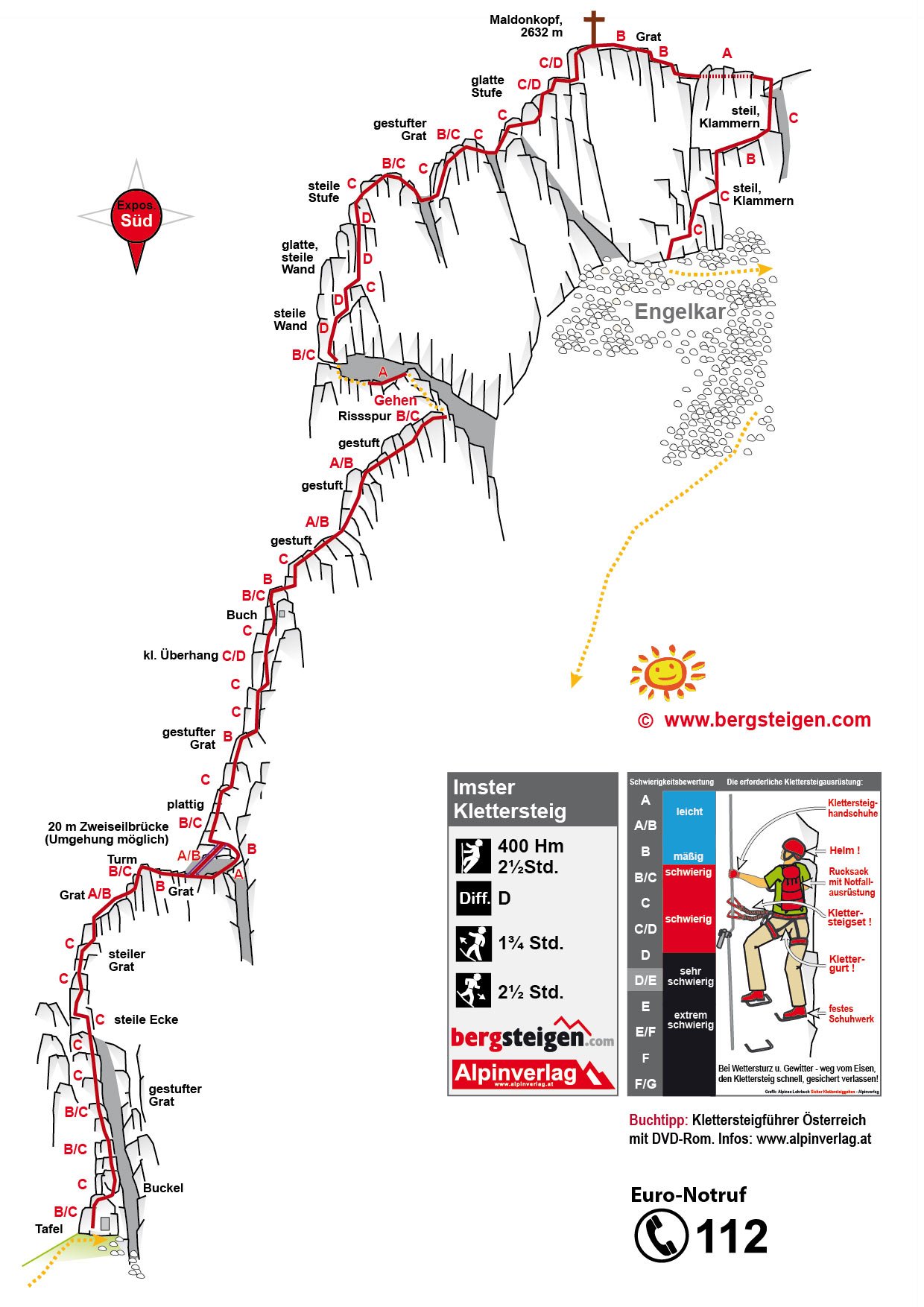
The Imster Klettersteig is a renowned via ferrata route climbing the rugged South Ridge of the Maldonkopf (2,632 m) in the Lechtal Alps of Tyrol, Austria. Known for its dramatic exposure, solid limestone rock and relatively minimal artificial aids, it delivers a pure and demanding alpine climbing experience for those prepared to meet it.
Trail Overview
Location: Hoch Imst / Imst, Tyrol, Austria (Lechtal Alps)
Summit: Maldonkopf, 2,632 m.
Route type: Via ferrata (Klettersteig) climbing a steep ridge and rock face.
Length & elevation: Approximately 800 m of climbing (~400 m elevation gain) according to local sources.
Difficulty/grade: Historically graded D/E in older systems, now often rated D following upgrades.
Duration: Expect around 4 hours for the climbing section, plus approach and descent.
Route Description
Approach:
Start from Hoch Imst (or via the cable chairlift to the Bergstation of the Imster Bergbahnen). From the Bergstation or via a path through the Drischlsteig, make your way to the Muttekopfhütte (1,934 m) — a convenient base before the klettersteig itself.
Start of the via ferrata:
From the Hütte or nearby saddle of the Guggersattel you reach the official start of the Imster Klettersteig. The early section is steep but relatively moderate (grade B/C) allowing you to warm up on grippy limestone.
Main climbing section:
The route then progresses onto exposed ridges and steep faces. The rock becomes increasingly demanding with few artificial aids, requiring scrambling and strong climbing movements. A key feature is a large vertical slab (~50 m) with minimal rungs and significant exposure — often described as the “crux”.
Summit to descent:
After the summit of Maldonkopf, the descent leads steeply down via the Engelkar via ferrata variant and then by marked path back to the Muttekopfhütte or via alternative route to the valley. Note the descent is on loose terrain with rock-fall potential.
Highlights
Exceptional panoramic views from the summit of Maldonkopf over the Lechtal Alps and beyond.
High-quality solid limestone rock and significant exposure make this via ferrata a memorable climb.
Very limited artificial aids (rungs, ladders) add to the climbing experience and make it feel more “natural”.
The setting above the valley, with a mix of ridge climbing, slab sections and airy passages, offers a varied alpine route rather than a pure “sport via ferrata”.
Difficulty & Required Skills
This route is demanding and suited for experienced climbers with good fitness and via ferrata competence:
Grade around D (formerly D/E) in the Austrian scale — steep, exposed, requiring upper body strength and surefootedness.
Very long exposure and sustained climbing sections; not recommended for beginners.
Good via ferrata equipment required: helmet, harness, via-ferrata lanyard set, gloves.
Comfort with heights, ability to deal with scrambling and minimal holds.
Weather awareness mandatory — the ridge is exposed to storms, and descent terrain is loose and potentially hazardous.
When to Go
Best season: June through September when snow has melted from the rock and the cable way and huts are operating.
Avoid early or late season when there may be snow on the ridge or in the Engelkar descent, making it hazardous.
Check the weather forecast: in afternoon hours thunderstorms can build quickly at high elevation — descent early if needed.
Starting early in the day is advisable to ensure you are past the most exposed sections before potential afternoon weather.
Access & Logistics
Getting there: Travel to Imst (via the Inn Valley). From Imst drive to Hoch Imst and park at the tal station of the Imster Bergbahnen.
Lifts: Use the chairlifts (“Imster Bergbahnen”) up to Alpjoch / Bergstation to reduce approach time and get closer to Muttekopfhütte.
Base/hut: Muttekopfhütte at 1,934 m is a logical staging point. If you want to stay overnight, the hut is operated in summer.
Descent: After the summit climb, descend via the marked route through Engelkar, then either back to the Hütte and lift station or return to Hoch Imst. Be aware of trail conditions and rock-fall risk.
Gear: Standard via ferrata kit. Good climbing shoes or sturdy boots recommended. Bring water, weather protection, and check hut times or lift schedules.
Why It Belongs on Every Adventurer’s List
The Imster Klettersteig offers a perfect blend of alpine adventure, climbing challenge and spectacular scenery. It is not simply a “walking via ferrata” but one of the more serious ridge climbs in the Tyrol via ferrata repertoire — combining steep faces, exposure and the summit feeling of a true alpine ascent. For any adventurer seeking to step beyond easy mountain trails and into the vertical world of alpine climbing, this route stands out. The rock is excellent, the exposure real, and the reward from the summit unforgettable. In short — if your ambition is to climb a via ferrata that feels like a genuine alpine objective, the Imster Klettersteig is a must-do.