Via Ferrata Klamml
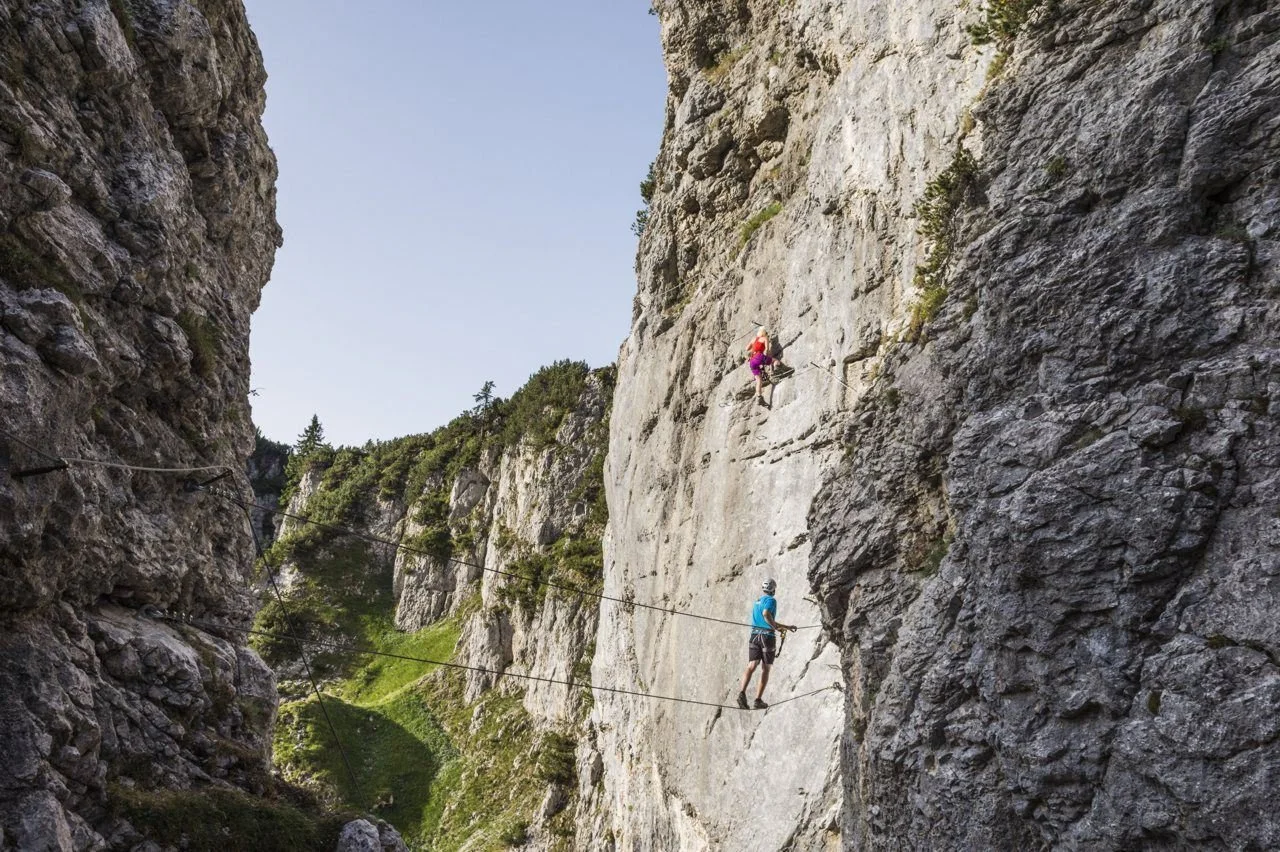
The Klamml Klettersteig, located on the south-side of the Wilder Kaiser mountain range in Tyrol, Austria, is a compact but intense via ferrata route that combines steep rock, exposure and a striking two-rope bridge crossing a gully. First opened in September 2013, it provides a thrilling climb for those comfortable on vertical terrain yet accessible enough for properly equipped and experienced hikers.
Trail Overview
Location: Wilder Kaiser, Tyrol, Austria (between the huts Gaudeamushütte and Gruttenhütte)
Elevation start: Approximately 1,480 m at the via ferrata entrance (after approach).
Vertical gain on ferrata: Approx. 250 m of climbing metres.
Structure: Two sections – Lower section graded B/C; upper section graded D. Exit possible after lower section.
Time required: Approach from Wochenbrunner Alm about 1 h; ferrata itself short (less than 1 h of climbing); descent another 1–1.5 h.
Character: Sport-via-ferrata, steep, dramatic, with significant exposure and a landmark two-rope bridge over a gully.
Route Description
From the base at Wochenbrunner Alm, begin the approach heading uphill via Gaudeamushütte. Follow trail 813/824 or similar signage toward the Gruttenhütte; this hiking approach takes you to the entrance of the Klamml Klettersteig.
Once at the start:
Lower Section (B/C): Begin with a moderately tough climb, traversing rock faces, some vertical steps, but with good protection. Here you build confidence, and at the end of this section there is an optional exit point.
Bridge Crossing: A spectacular two-cable bridge spans a gully; this is the gateway to the upper section, and a dramatic moment in the climb.
Upper Section (D): After the bridge you face steeper terrain, fewer footholds, more exposure, and a short but demanding climb to reach the top plateau near the Gruttenhütte. Only recommended if you handled the first part well.
Descent Options: From the top you can continue to the Gruttenhütte, then descend via hiking paths (trail no. 825 or 14a to 822 or 813/824) back to Wochenbrunner Alm or via Gaudeamushütte.
Highlights
The two-rope bridge crossing — a thrilling section that elevates the climb beyond a simple vertical path.
Panoramic views of the Wilder Kaiser cliffs and surrounding peaks as you ascend high above the valley trail.
Compact yet intense: you get a high-adrenaline via ferrata experience in a relatively short timeframe.
Flexible exit after the lower section means the route caters both to ambitious climbers and those who prefer to play it safe.
Easy access from Wochenbrunner Alm makes it more achievable than longer alpine routes.
Difficulty & Required Skills
This is a demanding via ferrata, suitable for hikers with prior experience on exposed terrain:
The grading: Lower part B/C (moderate), upper part D (very difficult) — the upper section should only be attempted if you are confident in climbing and exposure.
Requirements: Sure-footedness, no fear of heights, good stamina, and the ability to handle vertical or near-vertical rock.
Equipment: Standard via ferrata kit (helmet, climbing harness, via ferrata lanyard), gloves recommended, good shoes with rock grip.
Exposure & risk: Significant exposure especially on the upper section; loose rock risk overhead (above the hikers’ path) so care is necessary.
Rescue or aid: While well-equipped, this is still a mountain route — you should be comfortable with self-reliance, route finding, and aware of weather risks.
When to Go
The route is accessible for much of the year, but best conditions are during the summer months:
Best season: Late spring to early autumn (May to October) for stable weather and minimal snow/ice.
Outside of the high season, weather can be more variable, and rock may be slick or iced in early season — postpone the route in poor conditions.
Avoid storms: as with all via ferratas, metal fixtures become risky in thunderstorms.
Early morning start recommended to avoid afternoon heat on rock walls and to ensure stable conditions.
Access and Logistics
Start point: Wochenbrunner Alm (1,085 m) above the village of Ellmau in Tyrol. From Ellmau drive/park to the Alm (there is a toll road).
Approach hike: From Wochenbrunner Alm follow signposts to Gaudeamushütte then to the Klamml path to the via ferrata entrance (about 1 h).
Finish point: After the ferrata you arrive near Gruttenhütte (c.1,600 m) and then descend either back to Wochenbrunner Alm or via Gaudeamushütte.
Transport: Ellmau is reachable by regional bus/train; parking at Wochenbrunner Alm. Summer hiking/bus links available.
Accommodation: You may consider staying at Gaudeamushütte or Gruttenhütte if you want to extend the outing into a full day in the Wilder Kaiser region.
Safety: Check local conditions at visitor centres; rockfall risk and weather can alter conditions quickly.
Why It Belongs on Every Adventurer’s List
The Klamml Klettersteig delivers a potent combination of adrenaline, alpine beauty and accessibility. It allows you to access a high-mountain experience — steep rock, exposure, a bridge high above a chasm — without the logistical demands of a multi-day trek. For adventurers who want to push their limits beyond ordinary hikes, yet manage a route in a day, this via ferrata stands out. The sense of achievement after negotiating the upper section, the views across the Wilder Kaiser walls, and the thrill of the rope bridge make it a route to remember. Whether you’re a regular via ferrata climber or stepping up from demanding hiking, this route is a perfect blend of challenge and scenery.