Via Ferrata Geierwand
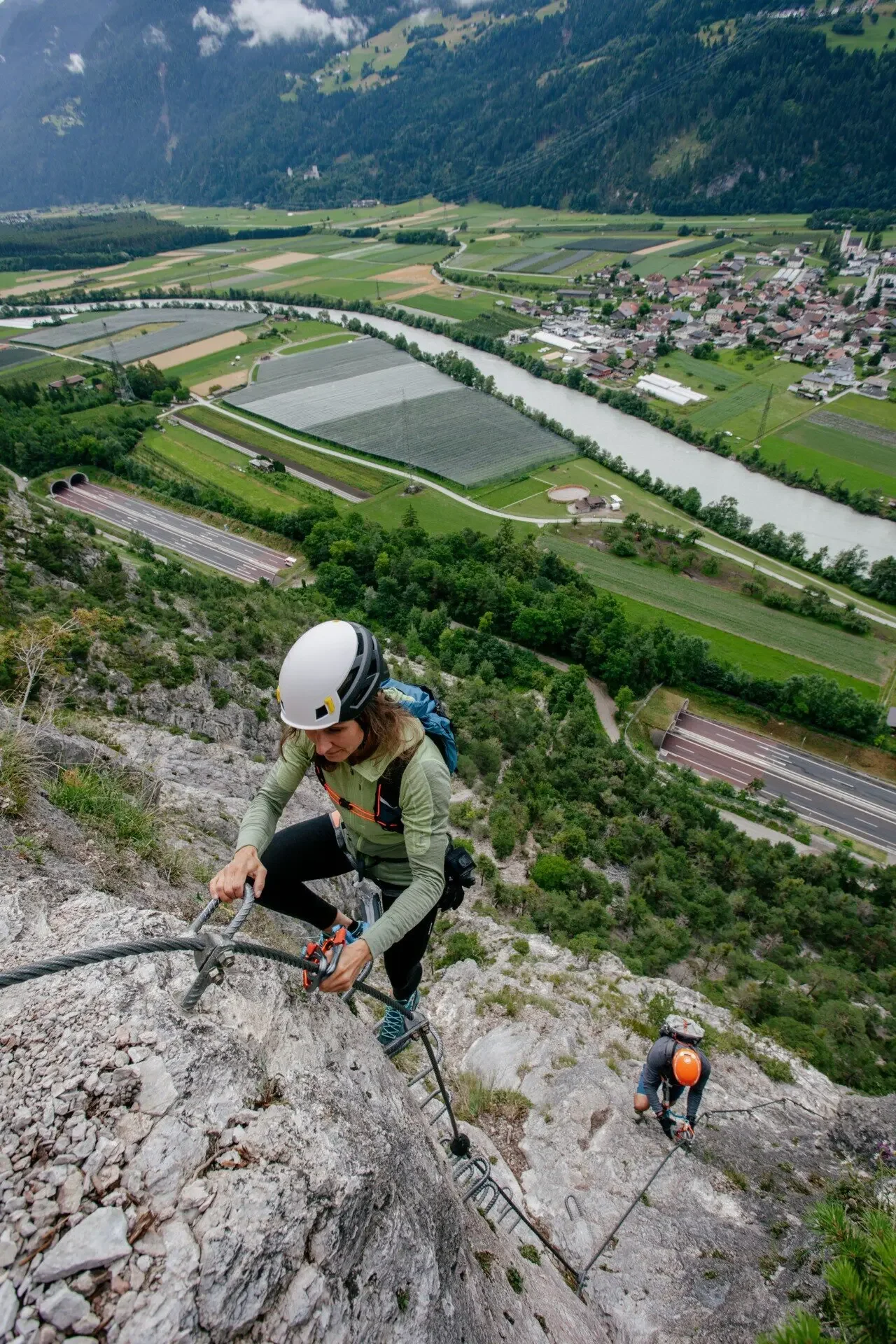
The Geierwand Klettersteig is a striking via ferrata route located near the village of Haiming in the Tyrol region of Austria, on the south-facing slope of the rock face known as the Geierwand. This route offers a compelling combination of exposure, length, and scenic reward—making it a popular choice for climbers who want to experience a high-alpine feeling without committing to full-scale mountaineering. The belay system and fixed equipment are well maintained, making it accessible to climbers with moderate experience, while still delivering thrills and elevation gain.
Trail Overview
Location: Haiming (Tyrol, Austria).
Vertical gain: Nearly 400 m from the base of the via ferrata to the exit.
Via ferrata length: Over 800 m of steel cable route along the rock face.
Overall time required: Approximately 2.5 h for the climb, plus 0.5 h for descent (depending on fitness and route variant).
Difficulty grading: Generally rated between B and C in Austrian/German Klettersteig grading; some sources list up to C with steeper sections.
Season / accessibility: Because of its southern aspect and relatively low altitude start (~660 m), the route can be climbed across much of the year, provided the approach and descent are free of snow and ice.
Route Description
Approach
From the parking area at the Rafting Center (Haiming), follow signage towards the Geierwand climbing garden. The initial approach is short – approximately 10-15 minutes on foot – across a meadow and then via a bridge or underpass beneath the nearby motorway (A12) to reach the rock face base.
Via Ferrata Section
Once at the base, climbers can choose between two lines: a more direct, steeper wall on the left, or a slightly easier line to the right. Both converge later. The route proceeds upward via iron rungs and holds built into the rock, passing shelves and traverses. A highlight is the suspended rope-bridge (“Innschwebe”) offering dramatic views of the Inn Valley.
After the rope-bridge, climbers encounter more athletic climbing – a bulging wall section with grade C difficulty. From there, the terrain eases as one approaches the “Gamsband” traverse, then enters a forested section that leads to the exit point.
Descent
The descent path is steep and marked, starting from near the top of the via ferrata, and leads down through forest to a forest road near the motorway, then returns to the parking area. Some variants via Haiming Alm offer a less steep route but take longer. Caution is required: although fixed cables exist, the descent is somewhat exposed and demands care.
Highlights
Outstanding views: The route gives sweeping vistas over the Inn Valley, with the south-facing wall placing climbers directly above the valley floor.
Length and exposure: At over 800 m of cable and ~400 m vertical gain, this is one of the longer via ferratas in Tyrol — giving a sustained alpine feeling without extreme altitude.
Well-equipped and maintained: The climbing aids (steps, rungs, fixed wires) are systematically placed, making for a secure yet exciting climb.
Year-round possibility: Its sunny orientation and lower altitude mean it can be accessible outside peak summer months — though always check conditions.
Difficulty & Required Skills
While the Geierwand Klettersteig is not among the most extreme routes, it is not trivial and requires specific equipment and competence.
Technical level: Generally B to C — meaning there are moderate climbing sections with iron rungs and some exposure. Some users comment the route feels at the upper end of C in places.
Required skills:
Sure-footedness and a head for heights.
Basic climbing-via-ferrata experience beneficial.
Full via ferrata kit: helmet, harness with via ferrata lanyard, gloves, appropriate footwear. Most sources emphasise this.
Physical demands: The climb is sustained — ~2.5 h of upward movement, with nearly 400 m vertical gain. Fitness and stamina are necessary. The descent also requires attention.
Risk factors: Exposure to the valley, heat (south-facing rock), potential for rockfall near the approach. One source reports rockfall in the zone of the approach.
For beginners, this can be an excellent “step up” route — with care, guidance or a more moderate line used at the start. Some guides recommend it for families with children aged ~9+ if conditions permit.
When to Go
Best months: Late spring through early autumn (roughly May to October) typically offers the best conditions. Given the route’s low starting altitude and southern exposure, it opens early and closes late compared to high-mountain ferratas.
Avoid: Days of heavy rain or heat waves — the south-facing wall can become very hot and dehydration is a danger. Also avoid if the descent path is icy or snowy. One source recommends plenty of drinks on hot days.
Time of day: Early morning is ideal—for cooler rock, fewer other groups, and better conditions for descent.
Access & Logistics
By car: From the A12 motorway (Inn Valley highway), exit at Ötztal / Haiming. Drive into Haiming village, follow signage for the rafting centre (“Rafting Center”) near the Inn river, and park at the dedicated lot near the rafting area.
By public transport: Train to Haiming from Innsbruck (approx. 1 h), then a short bus or walk to the parking/rafter lot near the entry point.
Approach time: From parking to via ferrata base ~10-15 minutes.
Descent return: Via marked path, approx. 30-60 minutes from the top depending on variant. Note downhill path is steep and partially exposed.
Equipment: Helmet, via ferrata set (energy absorbing lanyard), harness, gloves, sturdy footwear. Plenty of water recommended.
Parking & fees: Check local signage; parking near the rafting centre is available. Crossings past the motorway may involve a short walk or tunnel.
Guided options: Some local alpine schools offer guided trips to this via ferrata — beneficial for less-experienced climbers.
Why It Belongs on Every Adventurer’s List
The Geierwand Klettersteig stands out as an exceptional via ferrata for multiple reasons:
Accessibility meets alpine feeling: It delivers the thrill of exposure, a high canyon-like rock face, rope bridges and sustained climbing, yet starts at a low valley altitude within easy reach of Innsbruck.
Length and scale: Many via ferratas are short; this one stretches over ~800 m of cable and ~400 m vertical — delivering a serious climb without committing to high-altitude glacier terrain.
Spectacular scenery: The sweeping view over the Inn Valley rewards climbers with a sense of scale and place rarely found so close to a major transport corridor.
Versatility: Suitable for more experienced via ferrata climbers but also configured so that motivated beginners can participate (with correct gear and planning).
Year-round option: Its southern aspect and low altitude make it feasible for more of the year than many alpine ferratas — extending the experience season.
Value for thrill seekers and nature lovers alike: Whether you’re driven by adrenaline or simply by the desire to experience rock, air and panorama, this route offers both.