Via Ferrata KGerlossteinwand
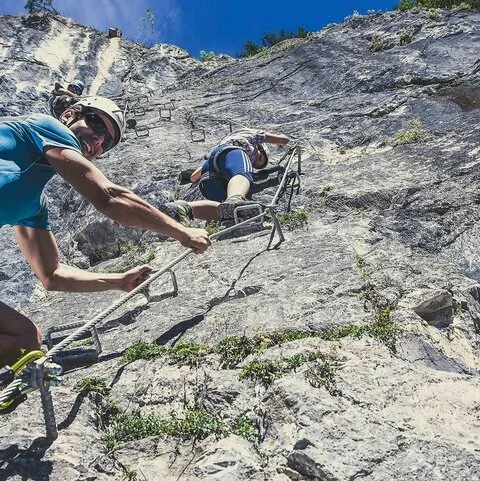
High above the Zillertal Valley in Austria lies the Klettersteig Gerlossteinwand — a thrilling via-ferrata route that threads its way up the steep north face of the Gerlossteinwand peak. With fixed cables, iron rungs, and dramatic exposure, it offers a pure alpine adventure for climbers who seek more than a simple hike. The combination of breathtaking views, technical challenge and alpine terrain make it a standout route for those comfortable with “iron-path” climbing in the mountains.
Trail Overview
Location: North face of the Gerlossteinwand, near Zell am Ziller / Gerlos, Zillertal Arena, Tyrol, Austria.
Length of via-ferrata section: approx. 380 m of route up the rock face.
Vertical gain: around 240 m from start to summit of the ferrata portion.
Start altitude: the entry begins at ~ 1,898 m.
Highest point / summit exit: ~ 2,166 m on the Gerlossteinwand peak.
Difficulty rating: C/D (with sections reaching D), indicating demanding but not extreme via-ferrata difficulty.
Approximate time: the via-ferrata climb takes around 1.5 hours; full approach, climb and descent can total ~4 hours.
Route Description
The adventure begins with a relatively short approach: you ride the cable car up the Gerlossteinbahn to the mountain terminal, then walk about 45 minutes to the base of the rock face.
Once at the entry, the via-ferrata ascends sharply up the steep north wall. The route is equipped with steel cables, rungs and anchor bolts — in total some 450 m of steel cable, 300 hand-holds, 230 clamps and 150 anchor bolts were installed.
You first tackle a steep pillar (rated around C/D) and a horizontal traverse to the “Pfundiger Pfeiler”. From there a sustained section climbs at grade D, before easing to B/C and C sections. Later you face the “Schwarze Verschneidung”, a second key section at D. Finally you traverse the “Rasante Kante” — a steep and partially overhanging finish rated around C/D — and exit to the summit ridge.
After reaching the top, you can descend via the marked mountain trail back to the Bergstation (or choose a longer descent via Heimjoch if you prefer).
Highlights
Spectacular exposure: With the climb on the north-face, the rock drops steeply beneath you and the valley spreads out far below.
Well-equipped route: The abundance of iron rungs, fixed cables and anchors ensures the route is technical but secure for competent users.
Panoramic summit view: Reaching the summit of the Gerlossteinwand provides sweeping views over the Zillertal peaks, including the ice giants of the Zillertal Alps.
Quick access via cable-car: The approach is shortened by the Gerlossteinbahn, making the climb more accessible yet still alpine.
Distinct climbing sections: The route features named key segments (Pfeiler, Verschneidung, Rasante Kante) that give variety and character to the climb.
Difficulty and Required Skills
This via-ferrata is rated around C/D with several sections reaching D, meaning it is demanding and not suited for beginners.
You should have:
prior via-ferrata experience and comfort with exposure
good upper-body strength and stamina for sustained climbing on rungs
surefootedness and head for heights (particularly in the steep, overhanging finish)
the correct equipment: full via-ferrata kit (harness, energy-absorbing lanyard, helmet, gloves)
ability to complete a descent safely after the climb
While the route is well protected, it is shallow in margin for error: wet rock, loose stone or fatigue can increase risk. The route has been described as “not suitable for beginners or small children” in its current grading.
When to Go
The best season to climb the Gerlossteinwand via-ferrata is late-spring to early-autumn, roughly May through October, depending on snow and weather conditions.
Because the route is on a north face, the temperature tends to be cooler than sun-exposed faces — ideal on hot days but also meaning that early season snow or ice may linger. Avoid after heavy rain or in thunderstorms, as exposure makes the climb riskier.
Access and Logistics
Access point: The climb is reached via the Gerlossteinbahn cablecar from Hainzenberg / Gerlos to the Bergstation.
Approach: From the cable-car station it’s about 45 minutes walk to the via-ferrata entry. Some guides note alternative 2-hour approaches if the lift is not used.
Descent: After the via-ferrata you descend via a marked trail back to the Bergstation. The full excursion (approach, climb, descent) can be ~3–4 hours.
Equipment rental / guiding: Local companies offer guided tours including via-ferrata sets. Helmets and full gear are required.
Transport: Use the A12 motorway (exit Zillertal) and then B169 to Zell am Ziller. From there local roads lead to Hainzenberg. Parking at the valley station is available. Public transport via Jenbach train and Zillertalbahn is also possible.
Safety Notes: The route is steep, has sections rated D and is exposed. Check conditions beforehand — some sources report parts closed or undergoing maintenance due to rockfall.
Why It Belongs on Every Adventurer’s List
For those who want to step up from ordinary hikes and taste real vertical terrain, the Gerlossteinwand via-ferrata delivers. It combines alpine exposure, technical via-ferrata challenge, and outstanding mountain scenery into a memorable half-day outing. Unlike easy scenic walks, this climb demands a commitment — which makes the summit view all the sweeter. The fact that you can reach it via a cablecar approach means you spend your energy on the climb, not the slog. Whether you’re already comfortable on C-rated ferratas and want your next step, or an adventurous climber looking for a dramatic alpine wall, this route offers a full-blooded experience without needing full mountaineering gear. The Nordwand setting, the sustained D passages and the alpine finish all combine to put it in the “must-do” category for via-ferrata enthusiasts.