Via Ferrata Gamskogel
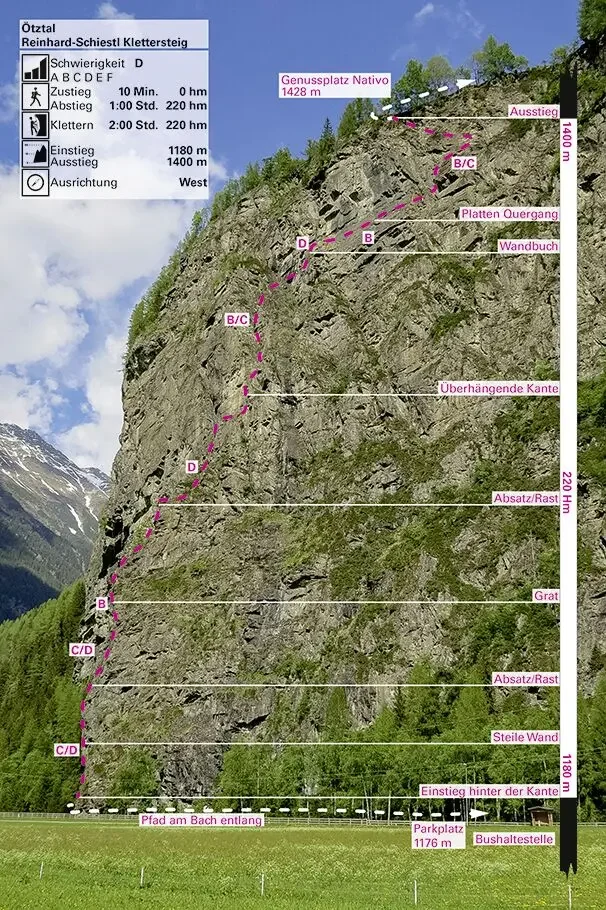
The Reinhard Schiestl Klettersteig on Gamskogel in the Stubai Alps (Austria) offers an exhilarating alpine climbing-experience: a via ferrata that combines high exposure, technical sections and outstanding mountain panoramas. The route follows steep rock faces via steel cables, rungs and ladders, delivering a full-on alpine vibe with less commitment than a full mountaineering expedition, yet significantly more demanding than a simple hiking trail.
Trail Overview
Name: Reinhard Schiestl Klettersteig – Gamskogel
Location: Stubai Alps, Tyrol, Austria (Gamskogel peak region)
Vertical gain: approx. 190 m of climbing on the via ferrata section (total height difference ≈ 240 m)
Difficulty grading: Klettersteig grade D (“very difficult”)
Suggested time: Climbing part ~1h30; total time ~2h20 (including approach and exit)
Orientation: West‐facing rockwall
Route Description
Approach: Begin from the designated parking or trailhead near Längenfeld (or local trail access) and proceed along the valley or forest/rock path until you reach the base of the wall. In some descriptions the approach is minimal (5 min walk) up to the start board near the wall.
Via Ferrata Section: The actual Klettersteig begins at a marked entry point. From here you climb approx. 190 vertical metres via fixed cables, metal rungs and possibly ladder or steep sections. The route is steep and exposed, requiring the use of hands more than a casual hiking path. The grade D indicates sustained difficulty. Expect exposed traverses and steep ascents.
Exit & Descent: After cresting the via ferrata section you exit onto a trail (which may skirt around the summit or descend directly) and return via a walking path back to the starting point or trailhead. According to one profile, the climb time is ~1h30, with ~45 min descent.
Highlights
High exposure: The steel-cable protected wall offers commanding views and a breath-in-your-chest experience.
Compact yet intense: Though the vertical gain is ~190 m, the steepness and difficulty pack in a powerful experience in a relatively short time.
Alpine setting: Being in the Stubai Alps means you’re surrounded by rugged peaks, alpine meadows and sweeping panoramas.
Adventure appeal: With grade D and via ferrata elements, this is not just a walk — it’s a real mountain adventure, suited for those seeking more than a hiking trail.
Difficulty & Required Skills
Fitness: Good cardiovascular fitness and strong legs are essential due to the steep ascent and sustained effort.
Technical confidence: While ropes and climbing gear (via ferrata set, helmet, harness) will secure you, you must be comfortable with vertical or near-vertical rock. Hands will be used for pull-ups, metal rungs, and secure movement.
Exposure & head for heights: This is a high-exposure route. Even though protected, a slip or fall would still be serious; a calm head is vital.
Equipment: Standard via ferrata set (harness + two lanyards with energy absorber), helmet, good rigid hiking or approach boots with grip, gloves recommended.
Experience level: This is for advanced hikers or intermediate mountaineers comfortable with via ferrata grade D. Beginners or inexperienced climbers should not attempt without the guidance of a guide.
When to Go
The optimal season is during the summer months, typically from late June through September, when the rock is free from snow, weather is more stable and daylight hours are long. Outside this window you risk snow, wet rock and early dusk, which increase danger and reduce safety margins. Early morning starts are recommended to avoid afternoon thunderstorms which are common in alpine regions.
Access & Logistics
Start point: Identify the parking/entry near the base of Gamskogel in the Stubai Alps region. One description reports a start near “Ortsende von Längenfeld – Hinweistafel ‘Klettersteigparkplatz’.”
Transport: Reach Längenfeld (Tyrol) by car or regional bus/train. From there proceed to the trailhead.
Trailhead signage: Look for signs indicating “Klettersteig” or “Reinhard Schiestl” to locate the secured entry board.
Return: Once the via ferrata is finished, a walking path leads back to the parking or trailhead. Ensure descent path is clear and noted ahead of time.
Safety check: Always check weather forecasts, rock conditions, and ensure rock is dry. In case of wet rock the route could become much more hazardous.
Why It Belongs on Every Adventurer’s List
This route blends accessible alpine climbing with big-mountain atmosphere. For those who want more than a hike but less than a full alpinist push, the Reinhard Schiestl Klettersteig offers that perfect middle ground: steel-cables and rungs make the rock climbable; the exposure and setting make it memorable. It’s thrilling, scenic, technical enough to feel like a true mountain venture. If you seek one via ferrata in the Austrian Alps that delivers altitude, adrenaline and alpine character in a manageable package, this is it.