Via Ferrata Mayrhofen – Asteggsteig
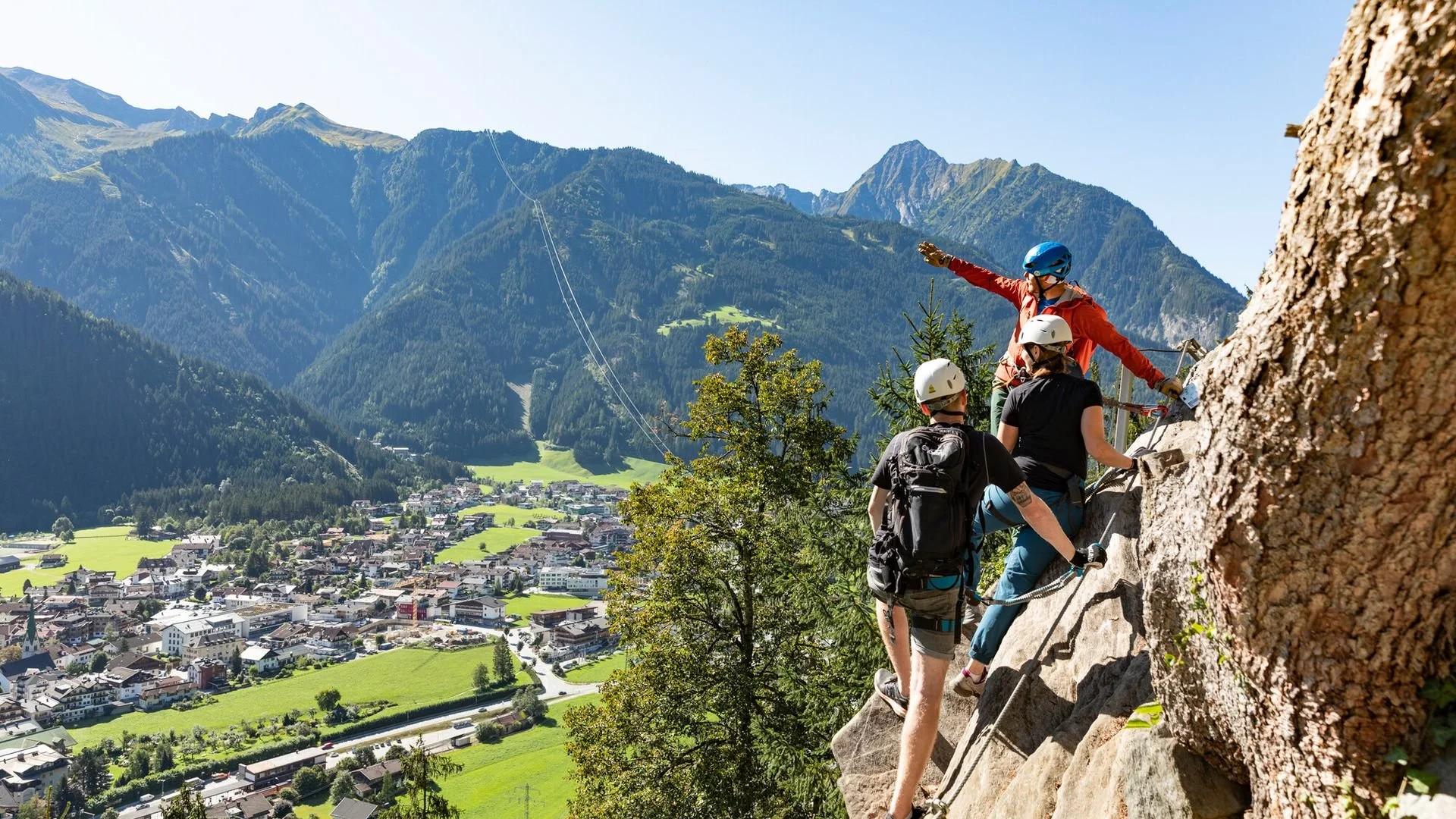
Nestled on the sun-soaked rock faces above Mayrhofen in the Zillertal Alps (Tirol, Austria), the Astegg-Klettersteig (also known as the Astegg Via Ferrata) offers a thrilling and rewarding climb for adventurous hikers who are ready to step beyond ordinary walking trails. With impressive views across the valley floor, fixed steel cables, ladders and exposed sections, this route turns a day in the mountains into a full alpine experience.
Trail Overview
Location: Mayrhofen, Zillertal, Tyrol, Austria
Elevation gain: Approximately 300 m of climbing from the starting wall area.
Length: The via ferrata section is around 290 m of vertical terrain (in the quoted topo) with additional approach and descent time.
Difficulty rating: Generally rated around C/D on the Klettersteig scale, with an optional more demanding variation up to D/E.
Time required: Allow about 1 – 2 hours for the via ferrata section plus approach and descent. The approach may take roughly 1 hour, the climbing section about 45 minutes, and descent about 1 hour.
Route Description
The route begins from a parking area in Mayrhofen near the via ferrata park entrance at Zimmereben. Approaches may vary: some climbers reach the start via the adjacent Pfeilspitzwand Klettersteig and directly transition to Astegg.
Approach – From the parking area, ascend a forest-oriented trail to the base of the wall. About 290 m of ascent through hiking terrain is typical.
Via ferrata section – The climb begins with a ramp or easier wall section, then moves into more exposed rock. Fixed steel cables and occasional ladders assist the ascent. Near the end a vertical wall comes into play: a standard variant with difficulty C and an optional branch of D/E difficulty.
Summit / Exit – The route finishes on a ridge or wall crest from which you can enjoy extensive views of the Zillertal valley.
Descent – A marked path leads down from the exit of the via ferrata to the Gasthaus Zimmereben and back to the valley via trail or the Mariensteig, taking roughly an hour.
Highlights
Panoramic views — From the exposed rock face, you enjoy sweeping vistas over the valley below Mayrhofen, the river Ziller, and the surrounding alpine peaks.
Varied terrain — The via ferrata blends ramp sections, narrower ledges, vertical walls, and the optional D/E variant for the more daring.
Fixed protection & good infrastructure — Well-equipped with steel cables, ladders, and clear route markings, making it accessible to seasoned via ferrata participants.
Accessibility — Positioned near Mayrhofen and accessible without needing a multi-day expedition, it makes for a high-thrill half–day outing.
Alpine atmosphere — The route moves you from the village zone into real alpine terrain, offering the feeling of climbing into the mountains without necessarily committing to a full summit.
Difficulty & Required Skills
The Astegg-Klettersteig is not for casual hikers. Key points to consider:
Minimum required level: Comfortable with via ferrata terrain of difficulty C/D; be comfortable on exposed ledges and with using hands and feet in steep rock-face terrain.
For the optional branch: the D/E variant entails fewer footholds and more overhanging or exposed segments — strong upper body, core stability, and solid via-ferrata technique recommended.
Footwear: Mountaineering or robust hiking boots with good grip. A full via-ferrata kit (harness, helmet, via-ferrata lanyard with energy absorber) is mandatory.
Fitness & stamina: Although relatively short, the steepness and exposure demand a well-conditioned body, a head for heights, and surefootedness.
Weather sensitivity: The route is exposed; avoid in wet, icy or stormy conditions.
When to Go
Best season: Late spring through early autumn (May to September) when the route is snow-free and the weather is more stable. According to local guides, the via ferrata is recommended in these months.
Avoid: Early spring may leave icy patches; late autumn or winter may render it hazardous due to snow/ice on the rock face.
Ideal time of day: Morning start ensures fresher rock, less risk of afternoon thunderstorms, and fewer crowds.
Access and Logistics
Base village: Mayrhofen (Tirol, Austria). Easily accessed by road and regional rail (Zillertalbahn) from Innsbruck.
Starting point: Park at the dedicated “Klettersteig parking” near Zimmereben or at the via-ferrata park entrance in Mayrhofen.
Gear rental / guided options: Local guides in Mayrhofen/Hippach offer via-ferrata tours and rental kits for those lacking equipment.
Return: After finishing the climb, descend towards Gasthaus Zimmereben and follow the trail back to the valley; or link up with public transport if available.
Safety & information: Check local weather, consult mountain guides, and confirm the route’s status before setting out.
Why It Belongs on Every Adventurer’s List
The Astegg-Klettersteig is a compact yet high-intensity alpine adventure—it offers the thrill of vertical terrain, dramatic exposure, and spectacular views—all within reach of a well-equipped day trip. For adventurers seeking to trade a standard hike for something more vertical, more alive, this via ferrata delivers. It earns its place on the bucket list because it balances accessibility with a true alpine challenge, providing an elevated experience without requiring a full mountaineering expedition. For those who crave a memorable alpine adrenaline rush set in one of Austria’s finest valleys, this route stands out.