Via Ferrata Tassilo
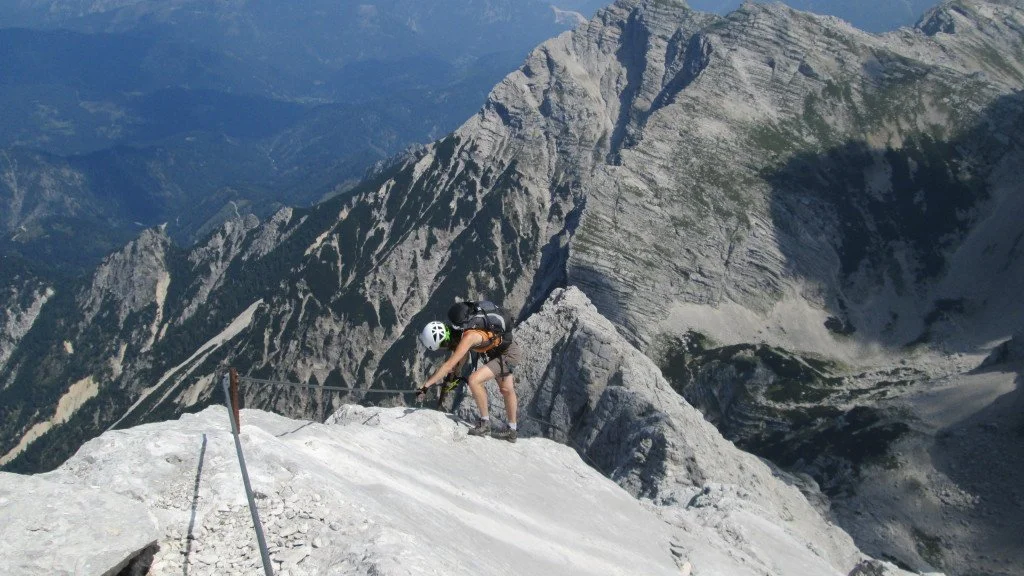
The Tassilo Klettersteig is a high-adrenaline via-ferrata route located on the north face of Schermberg (2,396 m) in the Austrian Totes Gebirge range. It offers one of the most impressive fixed-cable climbs in the Eastern Alps, combining dramatic vertical walls, exposed ridges and superb alpine terrain. While built for experienced climbers, its fame stems from both its physical challenge and its stunning setting.
Trail Overview
Location: Schermberg, Totes Gebirge massif, Upper Austria
Height difference: Approx. 550-600 m of vertical climb from the entry to the summit.
Length of the ferrata section: Roughly 1,400 m of via-ferrata terrain.
Difficulty rating: Generally rated C/D (moderate to difficult via-ferrata) with some short sections reaching D.
Duration: Depends on approach, climbing and descent. Typical climbing time for the ferrata is ~2.5–4 hours, with the full outing (including approach and descent) a full alpine day.
Type of route: Fixed-cable route (Klettersteig) on steep alpine limestone. The ferrata ascends via vertical passages, exposed ridges and traverses.
Route Description
Approach: The typical approach begins from the valley floor via the Almtaler Hütte or Welser Hütte. From the Welser Hütte (approx. 1,720 m) one ascends the marked path towards the Schermberg summit area. In about 20 minutes from the hut one reaches the niche where the ferrata begins.
Via-ferrata section: Once at the start, the route tackles steep rock faces and a combination of A/B pleasure climbing and more technical C/D sections. Early on the climb enters through a cave-like niche and over a ramp. Soon after, there are steeper vertical sections (C/D) and exposures along ridge sections. The climbing alternates between fixed steel cables, pegs/steps and natural rock. Frequent rests are possible on broader ledges.
Summit & Descent: The ferrata leads to the summit of Schermberg at 2,396 m. After reaching the top, descent is by the normal mountain route (not the ferrata) back down to Welser Hütte. The descent crosses karst terrain, loose rock and requires sure-footedness.
Highlights
Impressive height and exposure: The north face of Schermberg rises sharply, and the route exploits its steepness and verticality—offering a genuine alpine experience.
Alpine ridge and plateau views: After the climb, the summit presents wide views over the Totes Gebirge plateau and neighbouring valleys—panoramas that reward the effort.
Fixed-route infrastructure: A well-equipped Klettersteig, offering a blend of adventure and safety (for properly equipped individuals) in high-alpine setting.
Unique terrain: From forested approach paths to limestone cliffs, ridge traverses and summit meadows, the variety of terrain is remarkable.
Less frequented classic: Despite its quality, the route sees fewer crowds than some more famous via-ferrata in the Alps, adding to its appeal for those seeking solitude with challenge.
Difficulty & Required Skills
Technical requirement: The route contains sustained sections rated C and multiple short D passages. A climber must be comfortable on vertical/overhanging terrain, exposed ledges and ridge traverses.
Physical fitness: Good endurance required—climbing 550–600 m and descending through alpine terrain demands stamina, strong legs and cardiovascular fitness.
Mountain skills: Sure-footedness, head-for-heights, competence on rock and in changing alpine conditions. The descent and approach traverse loose karst terrain and require alertness.
Equipment: Full via-ferrata set (harness, helmet, via-ferrata lanyard), sturdy alpine boots, gloves, weather-proof clothing and a day-pack with essentials (water, snack, first aid). Weather in high-alpine terrain can change quickly.
Route finding: Though the ferrata is equipped and marked, the approach/descent require decent navigation in mountain context; it is not trivial.
When to Go
Best season: Late June through September is optimal when snow has melted, huts are open, and fixed cables dry. Early June may still have snow or ice; later in autumn weather may become unstable.
Time of day: Start early in the morning to ensure climbing in stable weather and to allow time for descent before dark. Afternoon thunderstorms in summer are a risk in alpine terrain.
Weather considerations: Check forecast carefully—wet rock, lightning risk, fog or storms significantly increase danger on via-ferrata. Avoid in rain or post-rain conditions.
Access & Logistics
Starting point: Typically based from the Welser Hütte or Almtaler Hütte in the Totes Gebirge region of Upper Austria. The valley access is from Grünau im Almtal. Use either bus or mountain-road access to the hut trailhead.
Transport: By car or public transport to Grünau im Almtal, then trail to the hut (~1.5–2 h).
Accommodation: Overnight stay in Welser Hütte recommended to get an early start.
Route markers: The ferrata itself is fixed-cable. Approach and descent follow marked mountain paths.
Safety/rescue: Being in remote alpine terrain, reliable mobile coverage may be limited. Inform someone of your plan, check hut/bus schedules, ensure you have extra time buffer.
Descent logistics: After the summit, descent by normal route to the hut, then hike back to valley or transportation point.
Why It Belongs on Every Adventurer’s List
For those seeking a genuine alpine via-ferrata experience—steep walls, exposed ridges, rugged terrain and panoramic summit views—the Tassilo Klettersteig delivers in spades. It combines physical challenge with reward: reaching the summit of Schermberg after traversing a dramatic fixed-cable route gives a sense of achievement few other routes match. The setting—in the Karst landscape of the Totes Gebirge—is wild yet accessible. It’s the kind of adventure that broadens one’s mountaineering horizons, builds confidence on rock, and creates memories of an alpine day carved into stone and steel cable.