Via Ferrata Arlberger
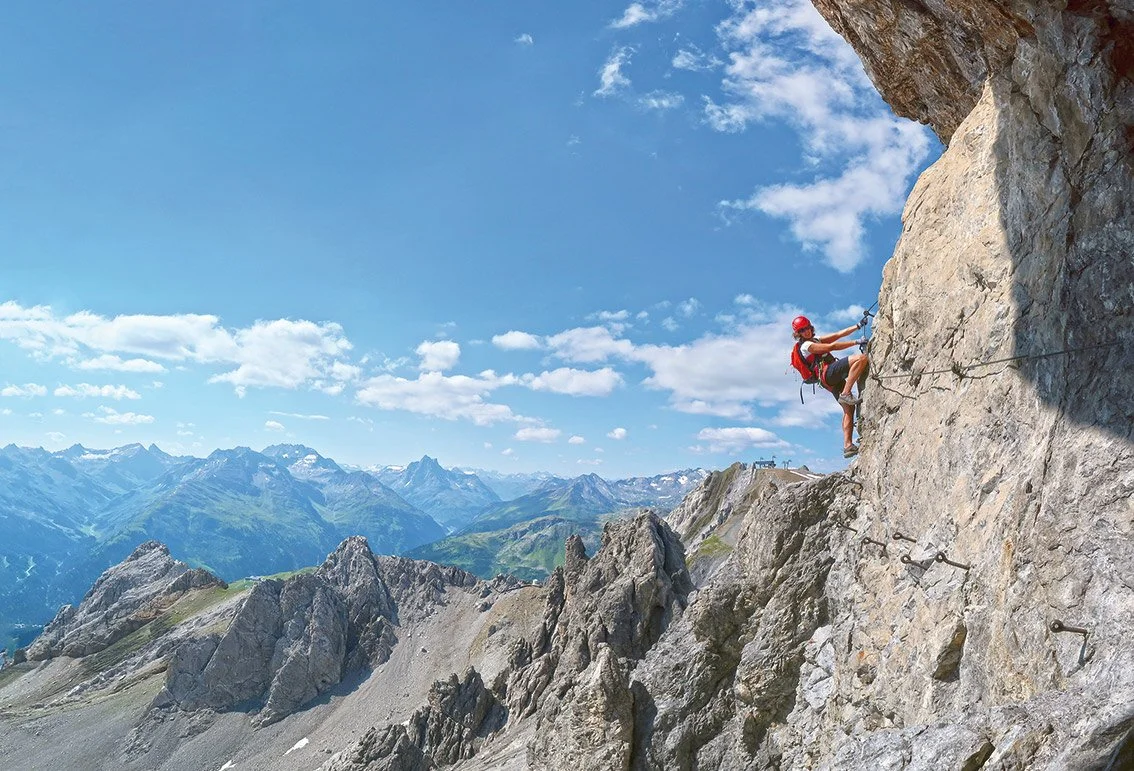
High above the village of St. Anton am Arlberg in the Tyrolean Alps, the Arlberger Klettersteig stands out as one of the most thrilling and exposed via-ferrata routes in the region. Donning a harness and via-ferrata set, you follow steel cables, climb over vertical towers, traverse ridges, and finally reach the summit of the Weißschrofenspitze (2 752 m). With dramatic views, high altitude exposure and demanding terrain, this is not a casual walk — it is a full alpine adventure for experienced mountaineers and via-ferrata enthusiasts.
Trail Overview
Name: Arlberger Klettersteig (also “Arlberg Via Ferrata”)
Location: Lechtal Alps, Tyrol, Austria (above St. Anton am Arlberg)
Length of via-ferrata section: Approx. 2.8 km along ridgeline.
Elevation Gain / Loss: Starting from around 2 580 m, traversing towers and ridges, up to 2 752 m at Weißschrofenspitze.
Difficulty: Classified as D on the via-ferrata grading scale (in places C/D) — very exposed, alpine terrain.
Approximate Duration: 4–6 hours for the full route, including approach & descent.
Season: Summer, typically June through October when the route is free of snow and the lifts/cable cars are operational.
Route Description
From the top station of the cable-car system (for example the Vallugabahn to Vallugagrat at 2 646 m) you descend briefly and make your way to the official start of the via ferrata underneath the first tower.
The route begins relatively gently (sections B) until you hit the first major vertical drop: a 20 m descent off a tower that immediately demands full focus (C/D). You then ascend swiftly to the summit of the Knoppenjochspitze (≈ 2 680 m) via steep rock, before continuing along the ridge over the Lisunspitze and the iconic “Haizähne” (shark’s teeth) rock formations.
The final stretch leads to the summit of Weißschrofenspitze at 2 752 m, from where you’re rewarded with sweeping alpine views. The descent is not trivial — either follow the ridge to the Bergstation Kapall or return via scree slopes toward Vallugabahn, depending on your chosen exit.
Highlights
Ridgeline exposure: The long traverse along the ridge ridge presents one of the Alpine’s finest via-ferrata experiences — steel cables, towers, spiky ridges (Haizähne) and dramatic drops.
Panoramic views: From the summit you can look out toward the Lechtal Alps, the Allgäu region, the Verwall and the Ötztal ranges.
Complete alpine feel: Despite being a “via-ferrata route”, the Arlberger Klettersteig feels like a mountaineering traverse: long, sustained, high-altitude.
Technical variety: Mixes climbing up, traversing exposed ledges, descents on vertical rock, and airy ridges — keeps both mind and body engaged.
Difficulty & Required Skills
This route is challenging and for experienced mountaineers:
High degree of exposure: frequent drops of hundreds of metres beneath you.
Technical grading: C to C/D in many sections; the full route is graded D.
Solid fitness and secure footing required: you’ll be climbing, descending, traversing ridges for hours.
Equipment: via-ferrata set (harness + energy absorber), helmet, gloves, sturdy alpine boots.
Navigation & route-finding: although the route is marked and fixed, alpha conditions (snow, rockfall, weather) can complicate progress.
Weather dependency: thunderstorms or sudden change in weather make the ridgeline extremely dangerous. Descent paths may be exposed scree.
Not suitable for beginners — a previous via-ferrata experience is strongly recommended.
When to Go
Best months: June to October. The route opens when cable-cars are running and snow has cleared from key segments. s
Avoid: Early season when snow remains on ridges or after heavy rainfall (rockfall risk). Also avoid late season if the lifts are not running.
Start early in the day: To give yourself sufficient daylight and margin for descent; afternoon thunderstorms are common in the Alps.
Weather check essential: Choose a day of stable high-pressure, minimal wind, no thunderstorms predicted.
Access & Logistics
Base village: St. Anton am Arlberg (Tyrol, Austria).
Lift access: Take the Galzigbahn or Vallugabahn up to Vallugagrat (2 646 m) – this dramatically reduces approach time.
Approach path: From Vallugagrat head East to the Mattunjoch saddle (2 543 m) and follow trail signs to the via-ferrata entrance.
Descent options:
Via Bergstation Kapall (via ropeway)
Return via Vallugabahn (longer route)
Using emergency escape routes (Notausstieg) from Lorfescharte for safety.
Transport: St Anton accessible by train or car; parking available and lift tickets required.
Accommodation: In St. Anton or surrounding villages — plan evening ahead as you might be tired after the route.
Gear rental/guides: For less experienced via-ferrata climbers you may consider hiring a certified mountain guide.
Why It Belongs on Every Adventurer’s List
For those who crave a true alpine challenge, the Arlberger Klettersteig offers:
A full-on high-adventure via-ferrata in one of the most scenic alpine settings in Austria.
A route that blends mountaineering, climbing and ridge traverse into one seamless experience.
The perfect marriage of adrenaline and alpine beauty: you’re not simply walking — you’re climbing, exposed to the elements, high above the world.
A sense of accomplishment: completing the Arlberg Klettersteig means mastering one of the tougher via-ferrata ridges in the Alps.