Via Ferrata Stuibenfall
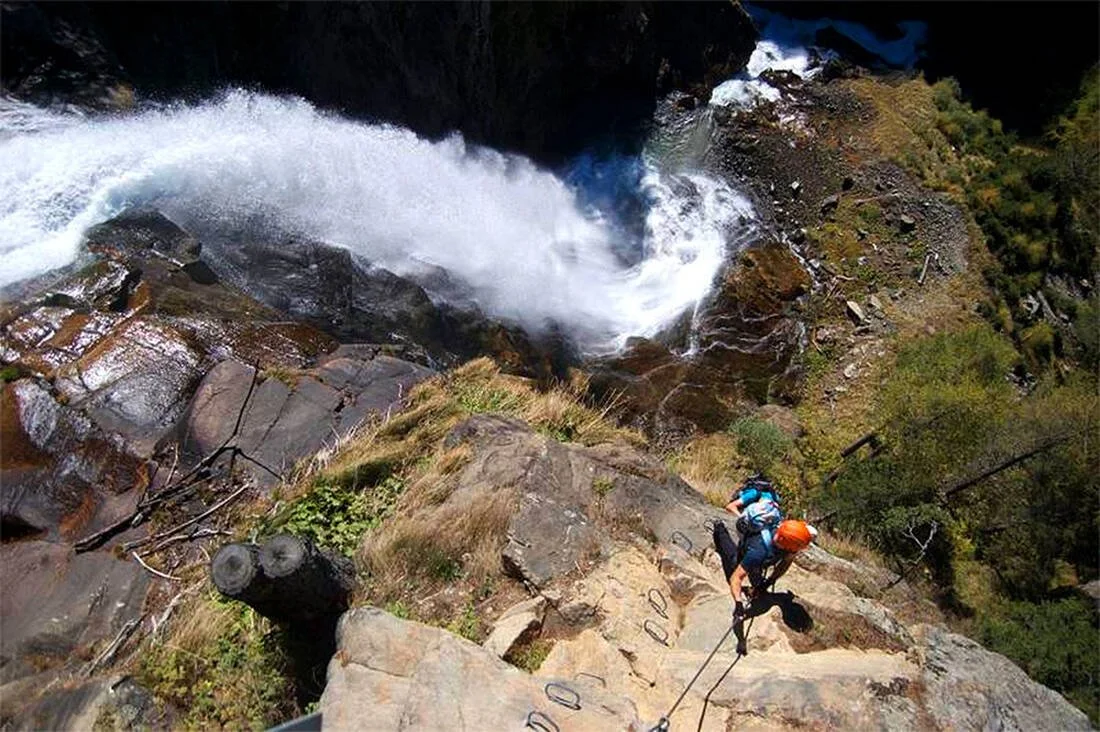
Tucked into the dramatic landscape of the Ötztal Valley in Tyrol, Austria, the Klettersteig Stuibenfall offers a unique via-ferrata experience alongside one of the region’s most impressive waterfalls. The route takes you up the rock face directly beside the mighty Stuibenfall—Tyrol’s tallest waterfall—giving climbers an immersive sensation of adventure, height, and nature’s power. For those ready to step off the hiking trail and into something more thrilling, this route blends accessibility with alpine drama.
Trail Overview
Location: Near Umhausen in the Ötztal Valley, Tyrol, Austria.
Route length: Approximately 300-450 m of climbing length depending on variant.
Elevation gain: Roughly 162 m of vertical ascent with an approach of ~25 minutes.
Difficulty rating: Generally graded C (moderate) in via-ferrata classification. Some parts drop into B/A territory.
Typical duration: 1.5–2 hours of climbing plus approach and descent; total outing often 3–4 h.
Setting: Directly adjacent to the Stuibenfall waterfall (approx. 159 m high) with remarkable views and a highlight rope-bridge crossing.
Route Description
Approach – From the car park at Bischofsplatz in Umhausen you follow signage toward the waterfall. The path takes you past the café “Stuböbele” and through forested terrain until the base of the falls. Time: ~20-30 minutes.
Start of ferrata – The route begins with a dramatic element: a steel rope footbridge that crosses near the lower reaches of the waterfall. From here you move into the via-ferrata proper.
Climbing section – The wall rises beside the waterfall. The first section is forested and moderate (A/B grade), then it steepens. Many irons and footholds are installed, making it manageable.
Key traverse and overhangs – Mid-way, you encounter a more exposed section (grade C) with a suspended rope over the gap and strong vertical orientation. The steel cable runs the full length.
Final ascent & rope bridge – Near the top you reach an airy rope bridge spanning part of the waterfall’s drop—a signature moment. Then you reach the exit platform.
Descent – From the finish you follow the marked path down via the platforms and viewing decks beside the waterfall. The descent offers superb views and ends back near the start.
Highlights
Climbing right beside Europe’s dramatic waterfall (Stuibenfall): the mist, roar, and close proximity amplify the adventure.
The suspended rope/footbridge crossing – a thrilling traverse that elevates the experience.
Excellent vantage points: from high on the rock you look deep into the valley and down the falls.
Family-friendly segments: Although rated moderately, large sections are accessible and equipped for less experienced climbers.
Well-secured route: modern anchors, good maintenance, clear sections for a via ferrata experience that balances safety & thrill.
Difficulty & Required Skills
Difficulty grade: C – considered moderate. While some parts are easier (B/A), the exposure and height mean it demands respect.
Skills required:
Sure-footedness and comfort with heights.
Basic via-ferrata technique: correct use of a via-ferrata lanyard, carabiners, harness, helmet.
Physical fitness: the climb is sustained and vertical in places. Especially the rope-bridge section demands focus.
Minimum stature: Minimum height recommended circa 1.40 m (for children) given foothold spacing.
Not a walk: Though approachable, this is not a simple hiking route—exposure and technical parts exist. Beginners should have some via ferrata experience or go with a guide.
When to Go
Best season: Late spring through early autumn, typically May to September. In this period the route is clear of snow and conditions are stable.
Avoid: Heavy rainfall, thunderstorms (risk with exposed sections), early spring when water volume may be extreme and rock wet/slippery, or late autumn when closures may start.
Timing: Mornings often fewer crowds, better light for photos; afternoon mist from waterfall may reduce visibility but adds atmosphere.
Considerations: The waterfall is strongest in late spring/early summer when snowmelt is high—an added visual bonus but also may make rock surfaces wetter.
Access & Logistics
Starting point: Parking lot “Bischofsplatz” in Umhausen (Ötztal Valley) is the main access. Fee parking; signs to Stuibenfall.
Public transport: Train to Ötztal Bahnhof, then bus to Umhausen; from there follow signage on foot.
Equipment rental: Via-ferrata sets, helmets etc often available at entrance area.
Descent route: After the ferrata finish, descent via marked hiking trail with platforms and steps down beside waterfall—adds scenic value.
Facilities: Café Stuböbele before access, restrooms, parking. Some waiting may occur during busy times.
Safety: Always use complete equipment, check weather (especially storms), maintain spacing on via-ferrata and be alert for falling rocks/wet surfaces.
Why It Belongs on Every Adventurer’s List
The Klettersteig Stuibenfall is more than just a climb—it’s a visceral encounter with mountain power, engineered via-ferrata fun, and alpine beauty in one compact experience. Here’s why it stands out:
Unique setting: Climbing beside a thunderous waterfall is rare—this route offers nature’s spectacle plus adventure.
Accessible thrill: It’s doable by many who have basic skills, offering a “big wall” feel without full mountaineering commitment.
Photogenic and memorable: Rope bridges, sheer cliffs, roaring water, misty spray—all make for images and memories that last.
Flexible for families / groups: With proper guidance and gear the route accommodates adventurous beginners, families with older children, and seasoned climbers alike.
Adventure in one half-day: You don’t need to commit to a whole mountain expedition—this excursion delivers intensity, views, and reward in a manageable timespan.