Via Ferrata Roda de Vaèl
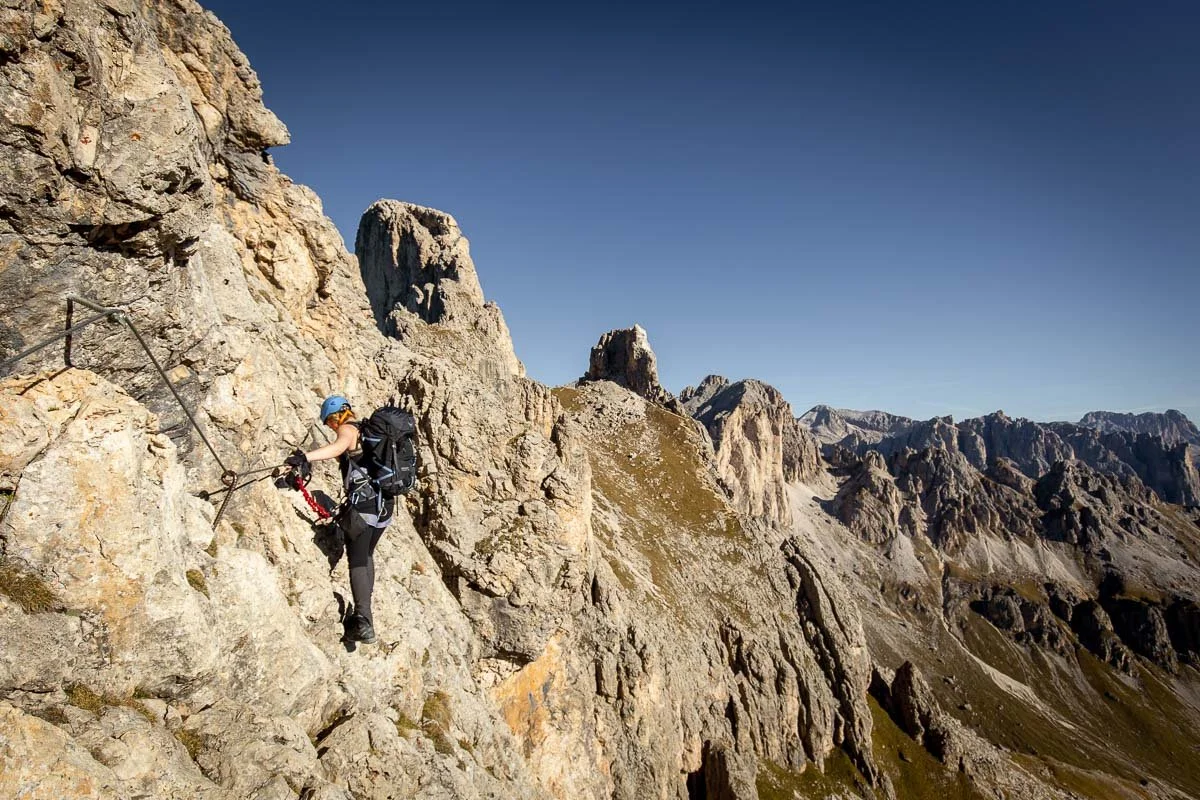
The Via Ferrata Roda de Vaèl is one of the most iconic protected routes in the Catinaccio/Rosengarten massif of the Dolomites. Known for its panoramic ridgelines, traditional alpine character and striking red-tinged rock walls, this route offers a balanced mix of athletic climbing, scenic traverses and classic Dolomite atmosphere. It is a memorable experience for intermediate ferrata enthusiasts who want a high-quality, technical but accessible adventure in one of Italy’s most celebrated mountain groups.
Trail Overview
Duration: 5 to 7 hours round trip, depending on pace and crowding.
Difficulty: Medium to Hard (rated C/D in sections).
Best for: Intermediate to experienced via ferrata climbers seeking a long, varied route with sustained exposure.
Exposure: High, especially along ledges and ridge crests. Vertical sections are present but not extreme.
Required Gear: Standard via ferrata kit (EN-certified helmet, harness, lanyard with energy absorber, gloves), sturdy hiking boots, and optional lightweight via ferrata leash for added stability.
Route Description
The route typically begins at the Paolina lift station or the Carezza Pass, leading first along a well-marked trail toward the Roda de Vaèl refuge. After a warm-up ascent on hiking terrain, climbers reach the base of the ferrata equipment.
The initial section climbs steep slabs and short vertical passages equipped with cables and stemples. The route then transitions to a long series of ledges that traverse the flanks of the Roda de Vaèl tower, offering wide panoramas into the Val di Fassa. Midway, a distinctive ridge section provides airy exposure and photogenic views of the surrounding Dolomite towers.
A more technical upper segment follows, bringing climbers through chimney-like passages and narrow rock corridors. The final stretch ascends a steep face before topping out on the summit ridge, where the panorama opens toward the Rotwand and Catinaccio group.
The descent follows a marked trail leading hikers back to the refuge and eventually to the lift station or the starting point.
Highlights
Classic Dolomite atmosphere with red and golden rock typical of the Catinaccio massif.
A varied route that combines ledges, slabs, short vertical walls, and ridgelines.
Excellent summit views toward Latemar, Marmolada, and the Val di Fassa.
Possibility to combine with nearby trails or additional ridge traverses for a full-day outing.
Good infrastructure, with a well-placed refuge and clear access trails.
Difficulty and Required Skills
Roda de Vaèl is rated C/D in its harder sections, making it suitable for climbers with previous via ferrata experience who are comfortable with sustained exposure. Although the route is technically moderate, it requires secure footing, efficient use of the cable and iron steps, and confidence in exposed environments.
Essential skills include controlled movement on steep terrain, proper clipping technique, and the ability to manage fatigue on a long, continuous route. Weather awareness is crucial, as thunderstorms in the Dolomites can form quickly and significantly increase risk.
When to Go
The best season is typically June to late September, depending on snow conditions. Early summer may present residual snow patches on access trails, while autumn offers calmer crowds and clearer air. Always check weather forecasts and lift openings before planning the ascent.
Access and Logistics
Starting Points: Paolina lift station (Karerpass/Carezza) or direct trail from Passo Costalunga.
Nearest Towns: Vigo di Fassa, Nova Levante, and Carezza.
Approach: 45–75 minutes from the lift station to the start of the ferrata.
Maps: Standard Dolomites hiking maps include the route; signage is generally excellent.
Descent: Marked hiking trails lead back toward the Roda de Vaèl refuge and onward to the lift station or pass.
Public transport links through Val di Fassa and the Carezza area make access convenient for travelers without a car.
Why It Belongs on Every Adventurer’s List
Via Ferrata Roda de Vaèl combines the essential elements that make Dolomite ferratas world-renowned: dramatic scenery, sustained but achievable climbing, and a strong sense of alpine immersion. It’s adventurous without being extreme, scenic without requiring technical mountaineering, and long enough to feel like a true mountain journey. For climbers who wish to experience the authentic character of the Catinaccio group, this route is an exceptional choice.