Via Ferrata Masarè
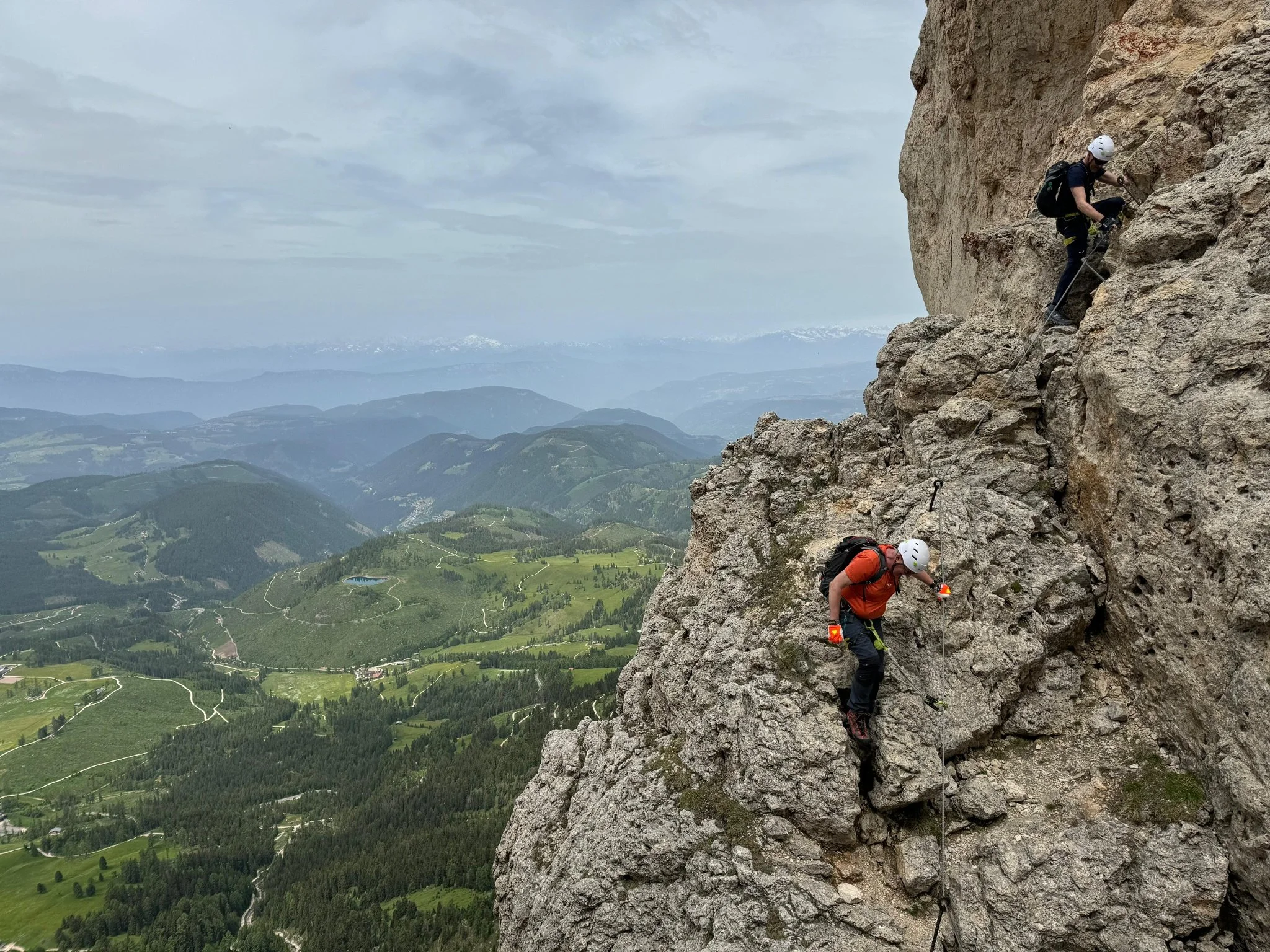
Via Ferrata Masarè is one of the classic fixed-rope routes on the Catinaccio/Rosengarten massif in the Dolomites, offering exposed traverses, panoramic ledges, and dramatic views over the Latemar and Val di Fassa. This is a route designed for confident climbers who appreciate airy passages without requiring extreme technical skills. It is often paired with the neighboring via ferrata Roda di Vaèl, making it an excellent choice for a full day in the heart of Dolomite limestone.
Trail Overview
Duration: 3 to 4 hours for the via ferrata section (5 to 7 hours total with approach and descent).
Difficulty: Moderate (Grade C on the Italian VF scale). Expect vertical steps, airy ledges, and long traverses, but nothing overly technical.
Best for: Intermediate via ferrata climbers comfortable with exposure; ideal for those seeking a classic Dolomite ridge experience.
Exposure: High. Much of the route crosses steep walls and narrow terraces with significant void beneath your feet.
Required Gear: Certified via ferrata kit (harness, lanyard with energy absorber), helmet, gloves, sturdy mountain boots, optional via ferrata-specific footwear, weather-appropriate clothing, and sufficient water.
Route Description
The approach begins from Rifugio Paolina, reached via the Paolina chairlift from Passo Costalunga (Karerpass). A well-marked path leads to the base of the Masarè buttresses in about 45 minutes.
The route starts with an immediate series of metal rungs climbing onto the lower ledges of the wall. From here, the ferrata continues along an impressively exposed horizontal traverse carved into the limestone. The cable guides you around spires and ridges, alternating between short vertical steps and airy traverses.
Midway, the route rises onto broader terraces with sweeping views over Val di Fassa. The final section consists of steeper, more physical steps that lead toward Forcella Masarè, where the ferrata officially ends. Many climbers choose to continue along the ridge toward Roda di Vaèl, creating a rewarding loop.
The descent follows marked hiking paths back toward Rifugio Paolina.
Highlights
Iconic Dolomite architecture with jagged pinnacles and dramatic walls.
Long, airy traverses offering constant exposure and panoramic views.
A well-equipped, classic route suitable for ferrata enthusiasts without requiring advanced climbing skills.
Possibility to link with Via Ferrata Roda di Vaèl for a full-day tour.
Difficulty and Required Skills
Via Ferrata Masarè is rated moderate (Grade C), suitable for intermediate climbers. While the route does not present extreme technical challenges, the exposure is constant, and confident movement on steep terrain is essential. Climbers must be comfortable with vertical steps, traverses, and managing safety gear efficiently. Good balance, sure-footedness, and a basic understanding of ferrata techniques are required. Weather awareness is critical due to the exposed nature of the route.
When to Go
The optimal season runs from June to late September, depending on snow conditions on the high ridges. Early morning starts are recommended to avoid storms, which frequently develop in the Dolomites during the afternoon. The route should be avoided in wet or icy conditions due to slippery limestone and high exposure.
Access and Logistics
Starting Point: Passo Costalunga (Karerpass), accessible from Val di Fassa or Bolzano.
Lift Access: Paolina chairlift shortens the approach and is usually operational from late spring to early autumn.
Nearest Refuges: Rifugio Paolina and Rifugio Roda di Vaèl.
Parking: Designated parking at Passo Costalunga.
Navigation: The trail is well signposted; standard Dolomite markers guide the approach, ferrata start, and descent.
Why It Belongs on Every Adventurer’s List
Via Ferrata Masarè captures the essence of Dolomite mountaineering: exposure, scenery, and the feeling of moving along improbable lines carved into vertical walls. It’s an iconic route that balances challenge and accessibility, making it an essential experience for anyone building their collection of classic Italian via ferratas. The combination of panoramic views, airy traverses, and proximity to other renowned routes makes it a highlight of the Catinaccio massif.