Via Ferrata Alleghesi (Civetta)
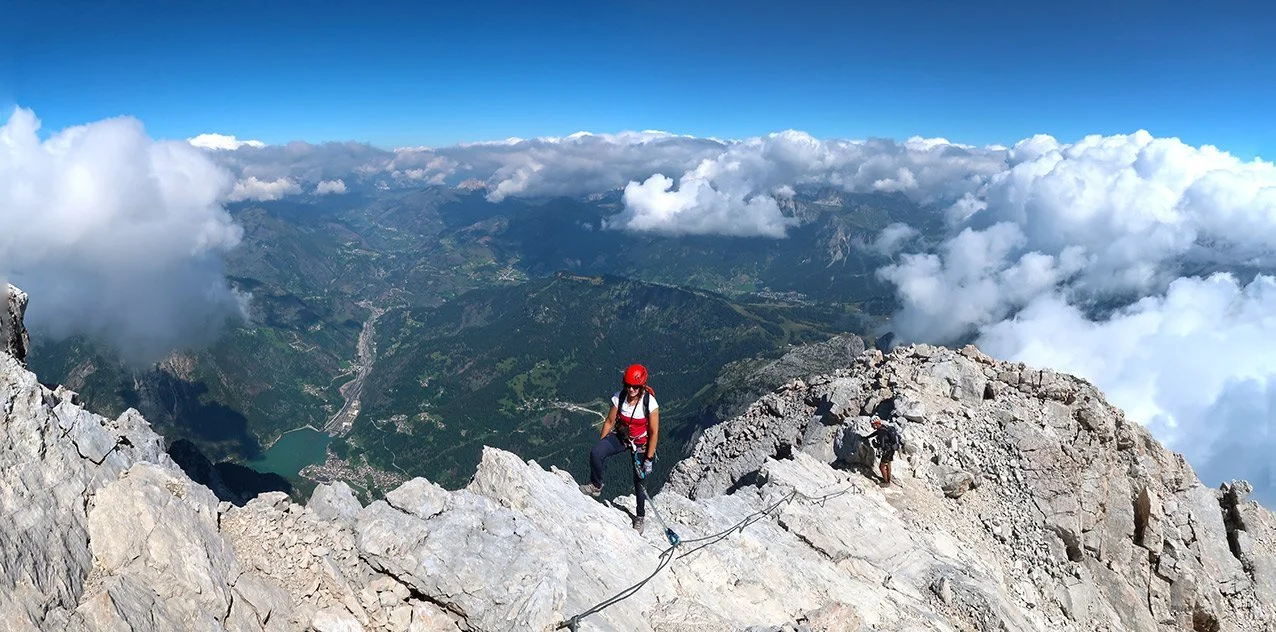
The Via Ferrata Alleghesi is one of the classic and most celebrated routes in the Dolomites, climbing the imposing northern wall of Monte Civetta. Known for its sustained exposure, high alpine setting, and beautiful limestone architecture, it offers a full-day mountaineering experience that blends physical challenge with dramatic landscapes. This is a long, serious ferrata suited for experienced climbers who want to ascend one of the most iconic peaks in the region.
Trail Overview
Duration: 8 to 10 hours for the full route (ascent only), depending on fitness and conditions. Full round trip typically requires 10 to 12 hours.
Difficulty: High. Graded D to D+ on the via ferrata scale, with long vertical sections, exposed ridges, and sustained climbing.
Best for: Experienced ferrata climbers, mountaineers, and confident hikers with excellent endurance who want a major alpine challenge.
Exposure: Constant and severe exposure along vertical walls, airy ledges, and sharp ridges. Not suitable for beginners.
Required Gear: Standard via ferrata kit (helmet, harness, lanyard with energy absorber), climbing gloves, sturdy mountaineering boots, layers for high-altitude conditions, headlamp, and sufficient water and food. A map and GPS track are recommended. In early season, ice axe and crampons may be necessary.
Route Description
The ascent typically begins at Rifugio Coldai or at the trailhead in Palafavera. The initial approach leads toward the base of the Civetta massif, slowly revealing the sheer structure of its northern face. After reaching the start of the ferrata, the route immediately commits to steep and exposed climbing.
The first section consists of vertical walls equipped with cables and ladders, setting the tone for the remainder of the ascent. Climbers gain height rapidly through chimneys and narrow gullies before traversing ledges that cut across the face. The middle section is defined by a series of long, exposed rises where stamina and concentration are essential.
As the route approaches the upper ridge, the terrain becomes more mixed, combining rock scrambling with fixed-cable segments. The final section follows an airy crest leading directly to the summit of Monte Civetta. The panorama from the top is one of the most impressive in the Dolomites, offering views of the Marmolada, Pelmo, and the vast Belluno region.
Descent is commonly made via the Normal Route (Via Normale) toward Rifugio Torrani and back to the valley, requiring careful attention and energy reserves.
Highlights
A world-class alpine ferrata climbing one of the Dolomites’ most iconic peaks.
Exceptional exposure and uninterrupted views throughout the ascent.
A sense of true mountaineering adventure with sustained height gain.
The summit of Monte Civetta (3,220 m), renowned for its dramatic surroundings.
A varied route combining vertical walls, chimneys, ridges, and ledges.
Difficulty and Required Skills
Via Ferrata Alleghesi is a demanding route requiring excellent physical fitness, strong head for heights, and prior experience on difficult ferratas. Climbers must be comfortable with prolonged exposure, vertical climbing, and high-altitude environments. The length of the route adds to the challenge, making pacing and energy management essential.
Technical understanding of ferrata progression, secure footwork, and efficient use of gear are necessary. Early-season snow or ice can significantly increase the difficulty, requiring mountaineering skills and additional equipment.
When to Go
The best period is mid-July to mid-September, when the route is generally free of snow and temperatures are stable. Early summer may still present snowfields or icy sections, especially near the summit. Afternoon storms are common in the Dolomites, so an early start is strongly recommended.
Access and Logistics
Most climbers start from Alleghe or Zoldo Alto. Access to Rifugio Coldai or the Palafavera area provides straightforward approaches to the base of the route.
Accommodation is available at several mountain huts in the area, with Rifugio Coldai and Rifugio Torrani being the most commonly used for staging the climb. The descent via the Normal Route requires careful navigation, and returning to the trailhead often completes a long loop.
Transport and parking options vary depending on the valley used, and summer shuttle services may be available in peak season.
Why It Belongs on Every Adventurer’s List
This route represents the essence of Dolomite mountaineering: long, committed, exposed, and profoundly rewarding. It offers a full alpine experience that demands both physical strength and mental focus, while rewarding climbers with exceptional views and the chance to stand atop one of Italy’s great peaks. For those seeking a benchmark ferrata and a memorable high-mountain achievement, the Via Ferrata Alleghesi is a standout choice.