Via Ferrata du Roc du Vent
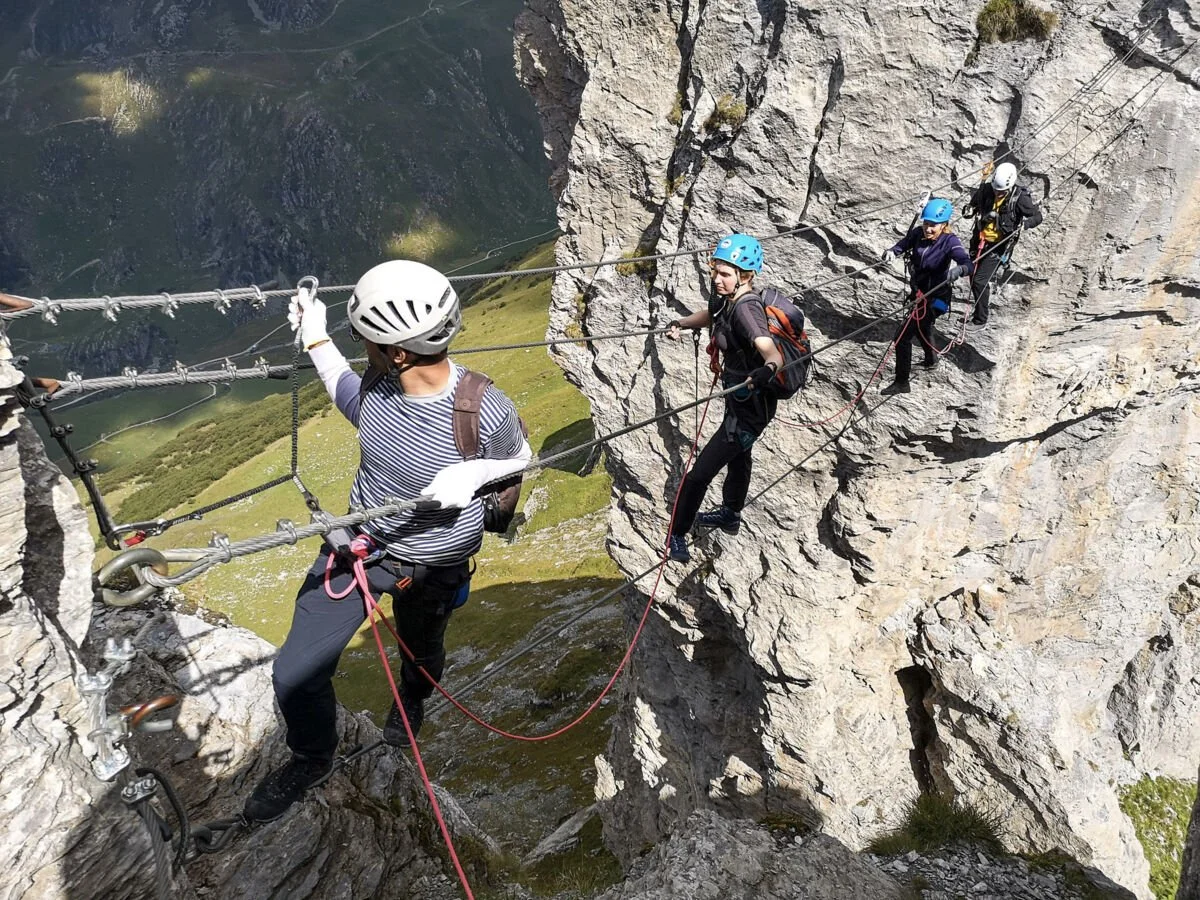
Perched high in the Beaufortain massif of the French Alps, the Via Ferrata du Roc du Vent offers a thrilling mix of alpine scenery, adventure, and accessibility. Overlooking the lakes of Roselend and La Gittaz and with views toward the Mont Blanc range, this via ferrata combines mountaineering sensations with spectacular panoramas.
Whether you’re a motivated hiker or an intermediate climber, this route gives you a memorable day in the mountains.
Location & Setting
Region: Beaufortain, Savoie, French Alps
Start altitude: Approx. 2,050 m above sea level.
Top (finish) altitude: Approx. 2,360 m.
Access point: Park at the Refuge du Plan de la Lai (near the Cormet de Roselend) and hike ~45 minutes to the via ferrata start.
Landscape: The route climbs along the Rocher du Vent rock, above the reservoir of Lac de Roselend, with steep rocky slabs, ridges, a canyon tower, a Nepalese (monkey) bridge, and even a tunnel.
Route Description & Key Sections
The route is composed of several distinct parts, offering varied terrain and exposure:
Approach: ~45 min walk from parking area to the base of the via ferrata. The trail is marked and ascends through alpine pasture and rock.
Ascending rock slabs and ledges: The early section includes slabby rock faces with metal rungs and cables, interspersed with natural holds.
Summit crest & ridge path: After the rock slab, the trail ascends to a grassy summit of Rocher du Vent, then traverses a ridge and leads into a narrow gorge (geological cleft) between towers.
Tower & monkey-bridge (Nepalese bridge): One of the most memorable sections: climbing a tower with metal supports then crossing a suspended bridge connecting two rock pillars with a dramatic drop below.
Descent through canyon & tunnel: After the monkey bridge, you descend via a gully and then go through a tunnel (former military/road project) to reach the path back to the car.
Technical Data & Difficulty
Length of the via ferrata section: ~800 m (some sources up to ~850 m).
Vertical gain (altitude difference): ~310 m.
Grade / Rating: In French grading terms: AD (assez difficile / fairly difficult).
Total duration: Roughly 4–5 hours including approach, via ferrata, and descent.
Alternative values: Some sources say climb ~2 h30 plus approach and descent.
Season / Opening: Typically open from early summer (June) to autumn (October) depending on snow and weather.
Required Equipment & Safety
Given its alpine nature and exposure, you’ll need proper equipment:
Helmet (risk of rockfall)
Via ferrata harness with twin lanyards and shock absorber for via ferrata use
Gloves (construction-style or via ferrata gloves)
Appropriate footwear: good grip, solid hiking boots preferred for approach and descent.
Headlamp if you intend to go through tunnel in a light condition (tunnel may be dark)
Good weather check, because storms or wet rock increase hazard of rockfall/slipping.
If inexperienced, consider hiring a mountain guide. Many local guide offices offer guided ascents.
Who Is It For?
Suitable for hikers with some mountaineering experience or via ferrata experience. It is accessible, but the grade AD and exposure mean it’s not for complete beginners with no experience.
Vertigo-sensitive individuals should take caution: the monkey bridge, tower ascents and ridge exposure may prove challenging. One AllTrails review flagged the tunnel & drop as not ideal for those “prone to vertigo”.
Families with older children (~12 +) may be able to do it if well equipped and accompanied; check local guide/conditions.
Why Choose This Via Ferrata?
Stunning panorama: the setting above Lac de Roselend, with reflections, alpine pastures, and Mont Blanc in the distance, gives a 360° view.
Variety of terrain: not simply a vertical climb. You’ll traverse slabs, climb towers, cross a bridge, go through a tunnel—all in one outing. This variety earns praise:
“I have rarely done such a varied route, both in terms of the route and the view.”
Adventure with accessibility: though full of thrills, the fixed cable and rungs make it doable for many motivated people, and its loop-type descent path means you don’t necessarily need return the same way.
Less crowded than major alpine peaks: while popular, it tends to be calmer compared to high-traffic tourist trails. A GoPro video described it as “very underrated … landscapes among the best …”
Logistics & Planning Tips
Access: From Beaufort or Arêches-Beaufort drive up to the Plan de la Lai refuge car park (before the Cormet de Roselend pass). Then hike 30-45 minutes to start.
Parking & permit: Ensure you check parking regulations &/or any seasonal closures.
Timing: Start early in the day to avoid afternoon storms and to guarantee return in daylight.
Weather: Mountain weather can change fast—check forecasts, bring layers and waterproofs, avoid the via in heavy rain or strong wind.
Descent route: After finishing the via ferrata, descent path is a rocky trail; good footing is required.
Guides: If you’re unsure of equipment, conditions, or your ability, joining a guide adds safety and local knowledge.
Insurance/skills: Basic good fitness, no major fear of heights, and some experience of exposed terrain recommended.
Season window: June to October usually safe. In early season snow patches may remain; in late season snow or ice might shorten or affect route.
Other considerations: Bring plenty of water, sun protection (alpine sun is strong) and perhaps a snack to enjoy at the summit view.
Summary & Verdict
The Via Ferrata du Roc du Vent stands out as a fantastic alpine day-adventure: thrilling yet accessible, scenic yet technical enough to feel real. If you’re looking for a via ferrata in the French Alps that combines strong visual impact with adventure, this is a prime choice.
It offers a full alpine experience—rock, ridge, exposure, views—without demanding full mountaineering gear or multi-day planning. With the right preparation it makes for an unforgettable outing.