Via Ferrata de la Bastille
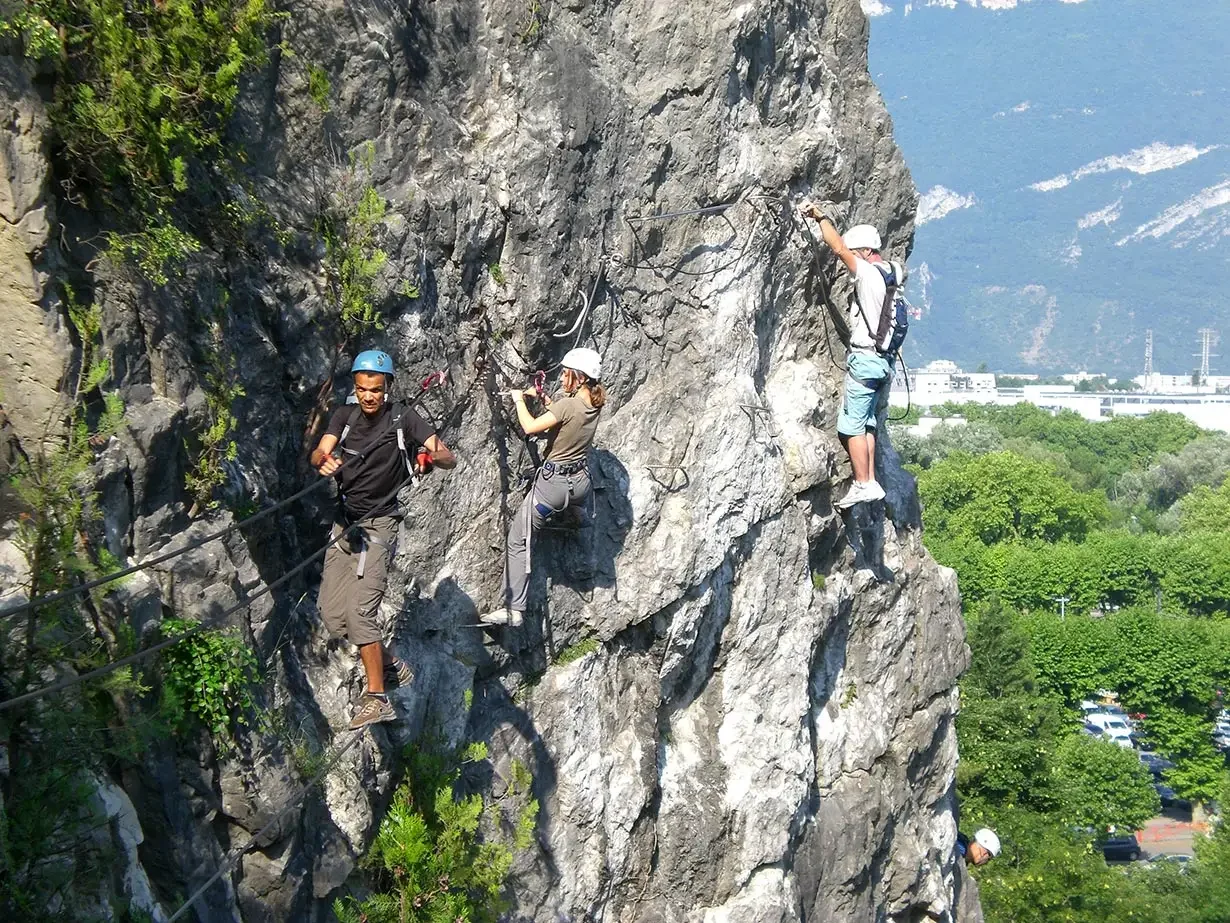
Located above the city of Grenoble in the French Alps, the Via Ferrata Les Prises de la Bastille is notable for being the only urban via ferrata in France.
It offers climbers and adventurous hikers a unique mix of alpine exposure, engineered climbing features (monkey bridges, foot-bridges, overhangs), and sweeping views of the city below and surrounding mountains.
The route is accessible directly from Grenoble’s city centre (just minutes from the Esplanade / Porte de France).
Route Description & Structure
The via ferrata is divided into three main parts, spanning approximately 950 metres in length (with roughly 400 m of rock climbing and 550 m of path/link terrain).
Part 1 (Lower Section – Vicat Cliffs)
Elevation gain: ~120 m.
Length: ~250 m of climbing plus ~400 m of transitional path.
Time: ~45 minutes for the climbing section, ~15 minutes for the path.
Difficulty rating: AD+ to D (“Assez Difficile +” to “Difficile”) for this first part.
Features: Vertical pillar start, then a long traverse across the Vicat cirque with beams, monkey bridge and Nepalese bridge for thrills.
Part 2 (Upper Section – Bastille Cliffs)
Elevation gain: ~110 m. Length: ~300 m.
Time: ~45 minutes.
Difficulty rating: D to TD (“Difficile” to “Très Difficile”). Two escape routes are available for those who wish to exit early.
This section is physically demanding, with overhanging terrain and limited rest opportunities. Ideal for climbers with good strength and confidence.
Part 3 (Final Link & Exit)
Elevation gain: ~10 m. Length: ~30 m. Time: ~5 minutes. Difficulty: F (Facile) — an easy final link.
This leads to the parapets of the historic fortress of the Bastille, providing panoramic views.
Practical Info & Logistics
Location & Access: The start is located at 22 Route de Lyon, approx. 100 metres from the Porte de France in Grenoble.
Public transport options: Tram or bus to Esplanade, short walk from station.Equipment required: Helmet, harness, via-ferrata lanyard are mandatory.
Additional gear: good hiking or approach shoes, gloves, water bottle, check weather.Timing & Duration: Doing both climbing parts typically takes around 1.5 to 2 hours, plus approach and descent. The guide sites estimate ~2 h to 3 h for full outing including walk.
Best time / season: The via is accessible most of the year, but weather conditions (rain, rock wetness, heat) can affect availability.
Cost: While the route itself is free (public cliff access), guided sessions or equipment rental may cost (~45-50 €/person) depending on provider.
Difficulty & suitability:
Part 1: accessible to many with basic fitness and no fear of height.
Part 2: recommended for those with better fitness, upper-body strength, and confidence on exposed terrain.
Beginners can opt to stop after part 1 or choose the easier variant in part 2 (escape routes).
Views & Unique Selling Points: Climbing almost from urban surroundings gives a unique “city-meets-mountain” experience. From the summit you get sweeping views of Grenoble, the Belledonne and Vercors mountain ranges.
Safety & Considerations
Always check weather beforehand: storms or heavy rain can make the route unsafe (wet rock, lightning risk). L
The first climbing section is reported to be quite patinated (worn / polished from many users) and can be slippery. Comments mention caution.
Signposting between parts is reportedly sometimes unclear; some users noted difficulty finding the start of the second section.
In hot summer midday sun the rock may become very hot; earlier morning or late afternoon might provide better conditions.
Although urban, exposure and verticality are real; treat the route with respect as you would any via ferrata.
Why Choose This Via Ferrata?
Unique urban setting: Almost no other via ferrata starts within such close proximity to a city centre, offering both accessibility and alpine ambiance.
Flexible difficulty: With a “beginner-friendly” lower section and a tougher upper section, it offers options for many skill levels.
Panoramic views: The final sections and summit deliver dramatic vistas of Grenoble and surrounding massifs — a reward in itself.
Half-day activity: For travellers staying in Grenoble or the region, this via offers a high-impact mountain experience without needing a full mountain day or remote travel.
Cultural and historical context: The route ends at the historic fortress of the Bastille, blending sport with heritage.