Via Ferrata de Tolla
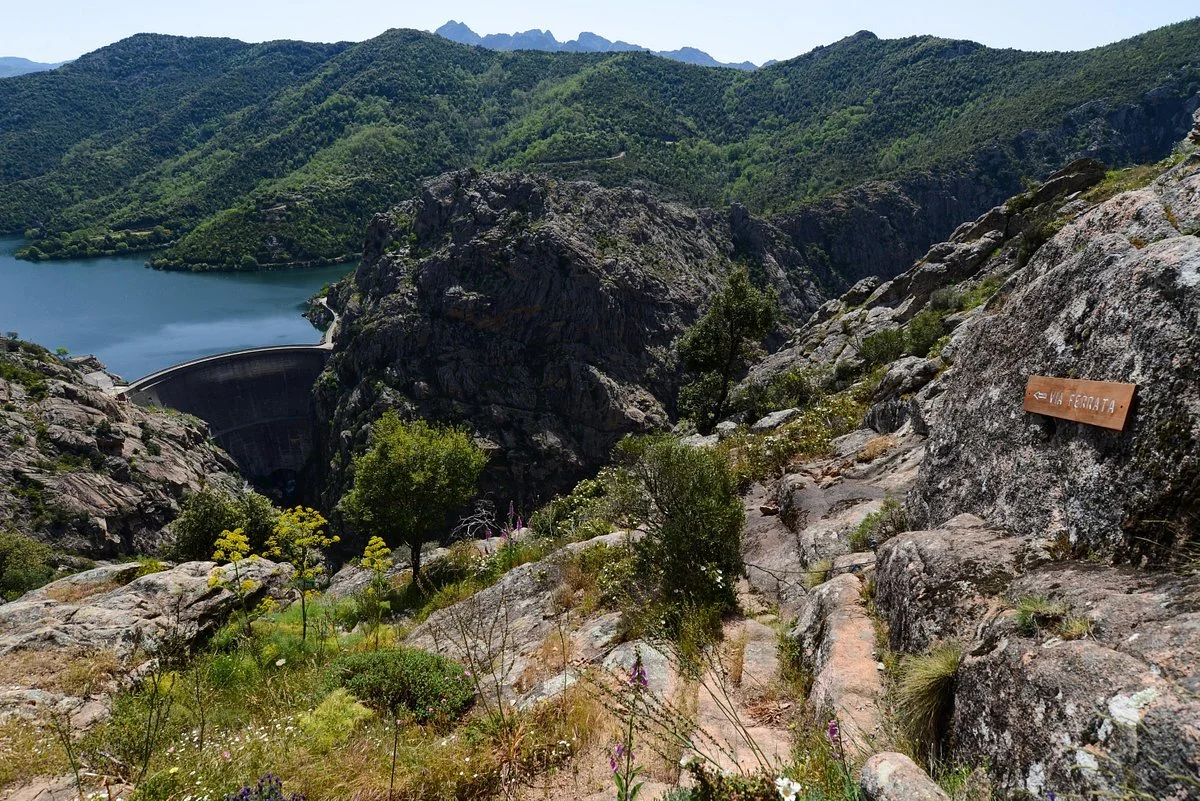
High above the valley of the Vallée du Prunelli in southern Corsica, the Via Ferrata de Tolla offers a thrilling and scenic route that blends adrenaline with wild mountain beauty. Climbing through cliff-faces, over cables, and across steel rungs and a suspension bridge, this route is a spectacular playground for adventure-seekers. For anyone looking to break away from standard hiking trails and embrace a vertical experience in a truly Corsican setting, it belongs on the list.
Trail Overview
Location: Valley of Prunelli, near the commune of Tolla, Corse-du-Sud, France.
Length: Approximately 1 km of equipped climbing.
Elevation gain: Around 430 m from the start to the highest point.
Difficulty rating: Graded “C” on the via ferrata scale (moderately difficult).
Typical time to complete: Between 1.5 and 3.5 hours for the via-ferrata section, plus approach and descent.
This is not a casual stroll: the route has vertical sections, exposure, and requires via-ferrata equipment (harness, via ferrata lanyard with energy absorber, helmet, gloves) and confident movement on rock faces.
Route Description
Approach: From the parking area near the D3 road in the Prunelli valley, follow the marked path that ascends to the base of the via ferrata. The walk-in takes about 30 minutes.
Main Via Ferrata Section:
The ascent begins on a vertical cliff wall fitted with steel rungs and cables. You’ll secure yourself to the fixed line and ascend steadily.
Midway, you cross a suspension (Tibetan) bridge that spans a gorge: a thrilling and memorable moment.
The climbing continues along exposed rock, with the valley dropping steeply beneath you. Some steps are designed for tall persons so adjust accordingly.
Exit & Descent: After the top of the equipped section the trail transitions to a marked hiking descent back into the valley, roughly 15 minutes down.
Total route loop: Including approach, via-ferrata, and descent, plan for ~2–4 hours, depending on fitness and comfort with exposure.
Highlights
Dramatic exposure & cliff views: The route ascends high above the gorge of the Prunelli River — the sense of height and space is exceptional.
Suspension bridge crossing: A standout moment of the climb, great for photography and for the thrill factor.
Panoramic vistas of Corsican landscapes: Looking over the valley, forests, and distant ridges as you climb.
Accessible yet wild: While technically demanding, its length and ease of access make it more achievable than high alpine ferratas, combining wilderness with accessibility.
Unique terrain in Corsica: This via ferrata brings a different dimension to Corsican hiking, linking mountain sport and adventure with typical Mediterranean scenery.
Difficulty & Required Skills
Difficulty: Rated C (“moderately difficult”) on the via ferrata grading system — meaning significant exposure, some vertical or overhanging sections, and requires physical effort and confidence.
Skills required:
Comfort with heights and narrow ledges.
Good balance and strength to ascend steel rungs and cables.
Ability to use via ferrata equipment correctly (double‐lanyard system, helmet, gloves).
Basic rock-hiking after the ferrata section for descent.
Not recommended for: Beginners without supervision; children should only attempt with experienced guide and proper gear. Some users flagged that younger children found parts “very difficult” due to steps and heights.
Safety considerations: Check weather — metal fittings become hazardous in wet or stormy conditions. Ensure you have good footwear and stay clipped in.
When to Go
Best months: Late spring through early autumn (May to October) — when weather is stable and rock is dry.
Avoid: Winter and early spring when snow or ice may linger in the gorge, and the metal structure can be slippery.
Timing tips: Arrive early in the day to avoid crowds, especially in peak summer; afternoon thunderstorms in Corsica are possible — aim to finish the route by early afternoon.
Weather watch: The route is exposed; in case of rain or high winds, postpone or abandon due to risk of slipping or falling debris.
Access & Logistics
Getting there: Drive from Ajaccio in about 35 minutes via the D3 road into the Prunelli valley to the village of Tolla.
Parking: Small parking area near the col or roadside off D3 near the starting point of the approach path.
Equipment rental / guide: In peak season local outdoor centres may rent via ferrata kits or offer guided ascents — especially recommended if you’re not experienced.
Descent & transport: After descending back to the valley floor, you can return by walk or local road to the starting point. Ensure you factor in transport time if staying elsewhere.
Accommodation: Stay in Tolla village or nearby places in the Prunelli valley or Ajaccio for easier logistics.
Map / navigation: The route is way-marked for the ferrata section, but the approach/descent path requires map or local guide familiarity.
Why It Belongs on Every Adventurer’s List
The Via Ferrata de Tolla is more than just a climbing route — it is an adventure that marries wild mountain terrain with accessible adrenaline. You ascend via metal rungs carved into sheer Corsican rock walls, walk over a hanging bridge, and gaze out across a valley that few trails reach. It stands out because:
It’s a compact yet intense experience — achievable in a half-day, yet delivering full alpine exposure.
It bridges the gap between hiking and climbing, offering a "step up" for hikers seeking more.
The setting is uniquely Corsican — Mediterranean climate, limestone cliffs and a dramatic gorge, distinct from the more crowded Alpine ferratas.
It makes for excellent photography and storytelling — the suspension bridge, vertical walls, and sweeping valley views create powerful visuals for your blog or adventure channel.