Via Ferrata de Chisa
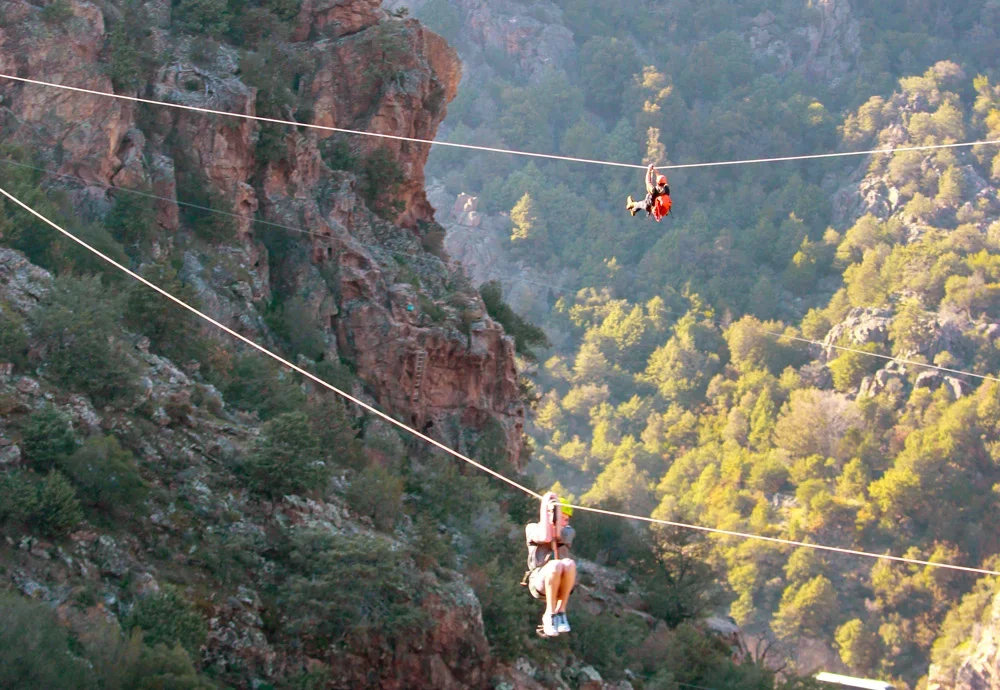
Perched above the village of Chisà in Haute-Corsica, the Via Ferrata de Chisa is an adrenaline-charged and beautifully engineered route that blends hiking, climbing and fun elements into one unforgettable mountain experience. With full suspension bridges, net crossings, zip-lines and exposed vertical sections, this route delivers thrills, spectacular views and a taste of Corsican rock and wilderness.
Trail Overview
Location: Chisà, Haute-Corsica, France.
Elevation gain: approx. +300 m (from ≈ 380 m to ≈ 690 m) across roughly 400 m of climbing route.
Length: the via route is around 400 m of equipped climbing, plus access and descent paths.
Rating: Difficulty D (on the via-ferrata grading scale, meaning “difficult” with vertical and exposed sections) with some parts reaching C/D.
Opening: The site is open year-round by reservation.
Route Description
The adventure begins with a short approach from the village of Chisà, ascending a footpath (approx. 25–30 minutes) to the base of the via ferrata.
Once at the start you will face a series of distinctive features:
A steep initial wall with fixed rungs leading into the route.
Two “monkey bridges” (narrow rope/wooden bridges) spanning gaps.
Three Himalayan suspension bridges, one of which is over 50 metres in length.
One “spider-net” style section: a horizontal net you walk across suspended over the void.
Four zip-lines/tyroliennes, including a final one of approx. 230 metres that brings you down after the climbing section.
After the final section you transition to the descent path which leads you back to Chisà (or you may arrange a shuttle/back to village).
The overall time for the via ferrata section is typically 3 to 4 hours, depending on group size, weather, and your pace.
Highlights
Full spectrum of via ferrata features: rock faces, rungs, bridges, zip-lines — few routes pack so many “fun engineering” features in one.
Exposed views over the Corsican landscape: the route faces south-west and offers sweeping vistas of the surrounding forested slopes and the Travo valley. B
The final 230-metre zip-line: a thrilling finish that adds a unique reward at the end of your effort.
Accessible yet challenging: while demanding, it remains more approachable than classic high-alpine ferratas, making it a great “step up” for adventurers.
Beautiful rock and setting: the Corsican granite and Mediterranean backdrop bring a warm, scenic twist compared to many alpine ferratas.
Difficulty & Required Skills
This route is rated D (on the via ferrata scale), with some parts at C/D — meaning you will face steep, exposed terrain, suspended bridges and require good physical condition.
Fitness: You should be comfortable with several hours of sustained movement, have good arm-strength (especially for the zip-lines and some upper-body demanding sections). One reviewer noted: “you have to be in good physical condition and not be afraid of heights. Because on the zip lines you have to finish them with arm strength.”
Technical skills/equipment: Standard via-ferrata set (helmet, harness, via-ferrata lanyards with shock absorber, gloves) is required. Although the route is well-equipped and secured (anchors, cables, ladders), you still need to be comfortable with exposure and vertical terrain.
Not recommended for absolute beginners or those with fear of heights. Some sections are quite exposed and the fun-features (bridges, zip-lines) demand good balance and coordination.
When to Go
The via ferrata is open year-round by reservation, though summer months are most popular.
Spring/early summer: cooler temps, fresher conditions, possibly more shade.
High summer: warmer, but be mindful of midday heat in Corsica and start early to avoid the hottest hours.
Late summer/early autumn: quieter, good lighting for photos.
Avoid during thunderstorms — exposed metal, and safety concerns with lightning. Some users report previous closures due to thunder risk.
Access & Logistics
Nearest village: Chisà (Haute-Corsica, France).
How to get there: From the coast (e.g., Ghisonaccia), follow road D645 to Chisà (~15 km) as per one route description.
Parking: Likely available in/around Chisà; check local signage.
Booking: Reserve the via ferrata in advance. Equipment rental may be required (many via agencies). The site has contact numbers listed.
Equipment: Bring or rent a proper via-ferrata kit, sturdy shoes (mountain/hiking shoes with grip), gloves, water (at least 1–2 L), snacks, sun protection (sunscreen, hat).
Timing: Allow approx. 30 minutes for the approach, 3-4 hours for the via route itself, 15-30 minutes for descent.
Guide/solo: While you may go solo if confident and properly equipped, many recommend doing it with a guide if unfamiliar with via‐ferrata or unfamiliar with the region. Some operators offer guided sessions.
Why It Belongs on Every Adventurer’s List
If you’re looking for a route that blends mountain climbing, adrenaline features and breathtaking nature — without going into full alpinism — the Via Ferrata de Chisa ticks all boxes. It offers:
A unique Mediterranean mountain setting, different from the classic Alpine ferrata experience.
Variety and excitement: from fixed ladders to suspension bridges and zip-lines — each section brings something new.
Achievement: finishing the final zip-line after a demanding climb gives a real sense of reward.
Photogenic and memorable: the rock, the panorama, the exposure - all combine to create lasting memories and fantastic content for travel/Instagram etc.
A stepping stone: If you’re building your via-ferrata experience, this route offers a high-quality challenge without entering the territory of extreme alpine ferratas (which may require rope/ice gear).