Via Ferrata de Saint-Guilhem-le-Désert – La Bastide
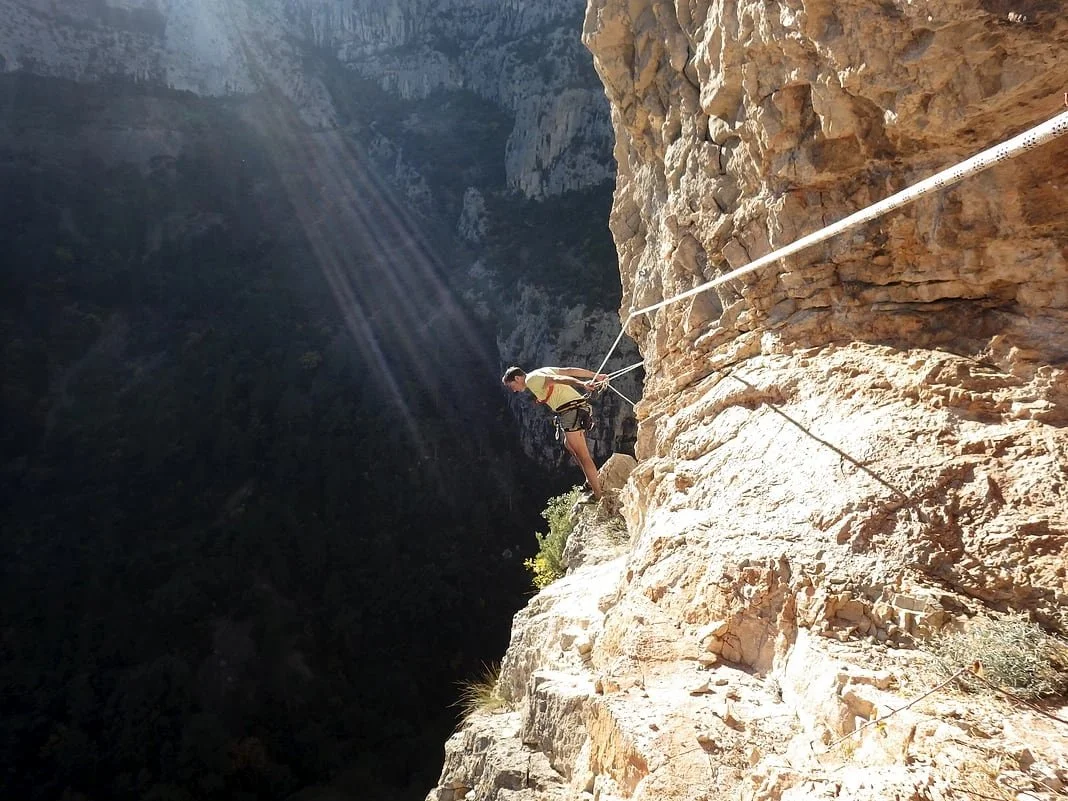
Nestled in the wild limestone massif of the Massif de Saint‑Guilhem‑le‑Désert in southern France, the Via Ferrata at La Bastide offers an exhilarating fusion of hiking, climbing and vertical adventure. Just a short drive from Montpellier, this route guides you along rocky cliffs, over cables and ladders, and around dramatic gorges — all in a setting of Mediterranean shrubland, ancient villages and geological drama.
For adventurers seeking more than a standard walk but less than full technical mountaineering, this via ferrata is a perfect “step-up” experience.
Trail Overview
Location: Near the village of Saint‑Guilhem‑le‑Désert, Hérault department, Occitanie region, France.
Type: Via ferrata / vertical hike combining secured cable systems, metal rungs and natural rock features.
Estimated duration: Approximately 4.5 to 7 hours, depending on variation and pace.
Altitude & terrain: Limestone cliffs, gorges, some steep vertical sections; exposure to height and rock faces.
Season & weather window: Warmer months, when access and equipment rental is available; summer season recommended.
Route Description
The route begins from the trailhead at La Bastide (or nearby access point) and proceeds roughly as follows:
Approach: A walk from the parking/entry zone through forest or rocky path leads you to the start of the via ferrata. Expect a warm-up on a path, crossing small gullies or ledges.
Beginning of the ferrata: You clip into the steel cable, ascend via rungs and short ladders, and traverse sections of rock face. Some parts feel like a steep scramble, others resemble light climbing.
Mid-section: The route winds around the gorge walls, with dramatic drops below, and views opening out over the Hérault valley or gorges. At some point you may traverse horizontally on metal steps or walk narrow ledges.
Optional variations: Some operators mention variations including zip-line, abseil sections, or final scramble to return.
Exit and return: After the main vertical section you arrive at a higher ledge or plateau; from there you follow a descent path back to La Bastide or to the village of Saint-Guilhem-le-Désert. The descent path often involves walking rather than clipped-in climbing.
Total route feel: For many the whole experience (including approach and descent) spans 4½-7 h, offering a full morning or afternoon of vertical adventure.
Highlights
Vertical drama: Climbing directly on cliff faces with the gorge plunging beneath gives a thrilling sense of exposure and scale.
Spectacular scenery: The limestone massif of Saint-Guilhem-le-Désert, dramatic gorges of the Hérault, Mediterranean vegetation and historic village views create a rich visual contrast of nature and heritage.
Unique format: Combining hiking, via ferrata, sometimes zip-line or abseiling, it’s more adventurous than an ordinary hike but accessible compared to full technical climbs.
Cultural context: Starting (or finishing) near the charming medieval village of Saint-Guilhem-le-Désert adds cultural flavour—lots of atmosphere, cafés, and the abbey of Gellone in the background.
Accessible thrill: For those used to alpine treks and looking to diversify into vertical terrain in a gentler climate and geology, this is a standout.
Difficulty & Required Skills
Fitness level: Good general fitness required — you will be climbing, carrying a harness, helmet and other safety gear, moving at height for hours.
Technical skills: No full rock-climbing skills required, but you must be comfortable with height, exposure and clipping into steel cables. Basic via ferrata technique (using Y-lanyards, harness, carabiners) is necessary.
Equipment: Standard via ferrata kit — helmet, harness, via ferrata set (shock absorber + twin lanyards), gloves recommended, good footwear (trail or approach shoes with grip). Some sections may require descending gear if the operator includes abseil.
Exposure & navigation: While the route is equipped, you must be confident on vertical terrain. The route is not fully sheltered and some parts may have drop-offs or require good concentration. Weather conditions (wind, rain) can increase difficulty.
Supervision options: For less experienced participants, guided groups are available; for solo experienced adventurers, ensure you’re comfortable with via ferrata format.
When to Go
Best season: Late spring through summer and early autumn (roughly May to October) when weather is warm and the route is open. In high summer heat consider early start to avoid midday sun.
Avoid if: Heavy rain forecast (rock can become slippery), or outside the supervised season when equipment rental may not be available.
Time of day: Start early in the morning for cooler temperatures, better light, fewer crowds. Late afternoon can also be stunning but check return light and descent time carefully.
Crowds & logistics: Mid-week in shoulder-season may offer the best balance of tranquillity and access. Peak summer may see more visitors.
Access & Logistics
Getting there: Reach the village of Saint-Guilhem-le-Désert via car from Montpellier (approx. 45-60 minutes) or by regional transport options. La Bastide access point located close to the massif.
Parking: There are parking areas near the village; from there a short approach on foot leads to the start.
Equipment rental / guides: Local guides and agencies (for example operating in the Hérault gorges area) offer via ferrata packages, equipment rental and supervision.
Duration & timing: Plan for half a day (4.5-7 h) for the full experience. Include time to approach, do the vertical section and descent.
What to bring: Water, snacks, sun-protection (the region is Mediterranean), gloves for gripping cables, light day-pack for equipment. Verify safety instructions and guidelines from the operator.
Exit & services: After the descent you return to the village, where cafés and amenities await. It’s also possible to combine with other outdoor activities (hiking, canyoning) in the same area.
Why It Belongs on Every Adventurer’s List
This via ferrata at La Bastide offers a compelling mix of adrenaline, scenery and accessibility. Unlike remote alpine climbs that demand days of commitment and technical gear, this route gives that same spirit of vertical adventure in a more compact, accessible format. The dramatic limestone walls and gorges create a striking backdrop that few other day-outfit experiences deliver.
For someone building an adventure portfolio—who already hikes trails like the classic alpine crossings of the Alps—this is the kind of route that bridges trail-walking and pure mountaineering. It stretches comfort zones, delivers breathtaking views, and leaves you with an elevated sense of achievement.
If you travel to the south of France and want to “step up” from trails into the realm of vertical exploration—while still being within reach of a beautiful village, warm climate and diverse terrain—this via ferrata is an exceptional choice.
In short: climb the steel ladder of adrenaline, walk the ridge of experience, and emerge with memories that elevate your adventure game.