Via Ferrata Seewand
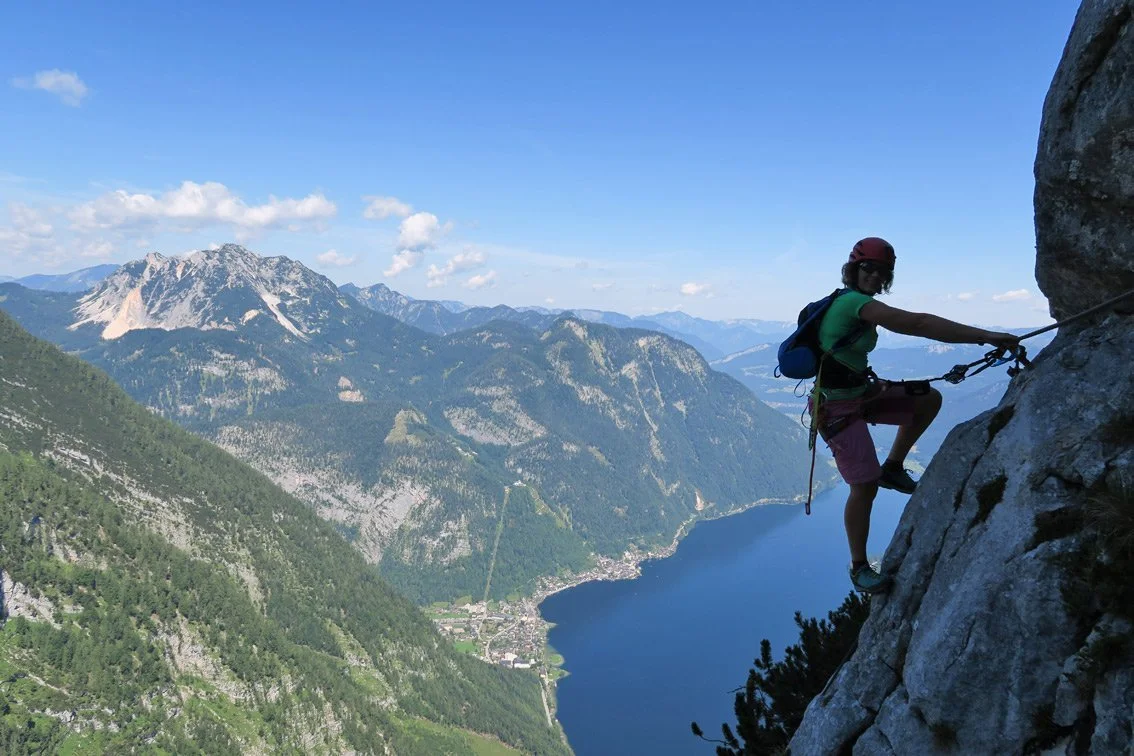
The Seewand Klettersteig is located in the heart of Austria’s Salzkammergut region, tracing a dramatic limestone wall above Lake Hallstatt. It is widely regarded as one of the most demanding via ferrata (fixed-rope climbing) routes in the Alps. With exposure, length, and vertical gain that push climbers to their limits, this route is crafted for those who seek a serious alpine challenge.
Trail Overview
Name: Seewand Klettersteig
Location: Above Lake Hallstatt, near the village of Obertraun, Upper Austria
Vertical gain: Approximately 750 m to 800 m depending on the variant.
Length: Roughly 1 km of via ferrata terrain (plus approach and descent) with ~1 350 m of overall elevation change mentioned in some sources.
Difficulty rating: D/E on the international via ferrata scale — “very difficult to extreme”.
Time required: The climbing section takes around 4-6 hours; with approach and descent, a full day is realistic.
Period: Generally open from late June to mid-October, depending on weather/snow.
Route Description
Approach:
The trailhead begins at the “Kessel” parking area between Hallstatt and Obertraun. From there, a marked path leads up through forest and alpine terrain to the Hirschaualm (approx. 30-60 minutes) where the via ferrata begins.
Via Ferrata Ascent:
Once you reach the start of the Seewand climb, you’ll face a steep initial wall rated C-D, followed by a continuous sequence of highly exposed sections. Key features include “the double roof” (a double overhang rated D/E), a narrow ramp, and a near-vertical pillar known as the “100-metre Pfeiler”. Through these you ascend on solid limestone, often overhanging, with fixed cables, iron steps and little room for error.
Exit & Descent:
After the major vertical section, the climb ends near the Gjaidalm (around 1 700-1 800 m elevation), where climbers can rest. From there, descent options include the marked trail down or the cable car from Krippenstein. The descent is steep and can be tiring after the climb.
Highlights
Spectacular panoramic views over Lake Hallstatt and the Dachstein massif from exposed rock faces.
Extensive vertical climbing in one of the longest continuous via ferrata settings in Austria.
A mix of rock-climbing ambience and alpine terrain: from iron-fixed steps to natural ledges, this route blends high adventure with nature.
The exit area near Gjaidalm provides a rewarding alpine hut experience after a strenuous climb.
Difficulty & Required Skills
This is a serious undertaking. Key considerations:
Technical rating D/E means the route has very steep, exposed sections, overhangs, limited resting opportunities and high physical demands.
You must have excellent via ferrata experience: mastery of clipping/unclipping lanyards, dealing with exposure, stamina to climb for hours, and ability to turn back if conditions deteriorate.
Fitness must be high: long steep approach, intense climbing, and challenging descent.
Equipment required: full via ferrata set (energy-absorbing lanyard), helmet, gloves, sturdy approach shoes or lightweight climbing boots. Carry water and snacks.
Conditions matter: wet rock, loose stones or late-season snow can drastically increase risk. Some sources emphasise rescues of inexperienced climbers each year.
When to Go
Late June to mid-October is the usual season — when the wall is free of snow and cable car operations support descent.
Start early in the morning to avoid afternoon thunderstorms or rockfall. Weather in alpine environments can change quickly.
Avoid days after rain: the limestone can become slippery, especially in the exposed ramp or roof sections.
Late summer or early autumn likely offers fewer crowds and stable weather.
Access & Logistics
By car: Drive to Hallstatt, then follow the road to Obertraun. Park at the “Kessel” area near Lake Hallstatt (check for height/vehicle restrictions).
By public transport: You can reach Hallstatt by train/ferry combination, then walk or take local transport to the start point.
Approach trail (~30-60 minutes) leads to the Hirschaualm where the via ferrata begins.
Descent options: From the top you can walk down to Gjaidalm and take the Krippenstein cable car, or descend by foot. Cable car times should be checked in advance.
Timing & equipment: Reserve a full day. Ensure you have the correct climbing kit, check weather/conditions, and plan for enough daylight for descent.
Why It Belongs on Every Adventurer’s List
The Seewand Klettersteig stands out because it combines pure climbing intensity, alpine scenery and a dramatic location above one of Austria’s most iconic lakes. It pushes you beyond a typical via ferrata into something more akin to alpine rock-climbing in exposure and stamina. The reward is not only the view but the sense of accomplishment that comes from having mastered one of the Alps’ toughest fixed-rope routes. For seasoned mountaineers it’s a benchmark, and for anyone seeking the next level of adventure, it offers exactly that.
If you’re the type of adventurer who doesn’t simply tick boxes but wants to feel the rock, hear the cables hum with wind and gaze down at a shimmering alpine lake as you ascend, then this route is one of the most memorable experiences you can find in the Alps.