Via Ferrata Innsbrucker
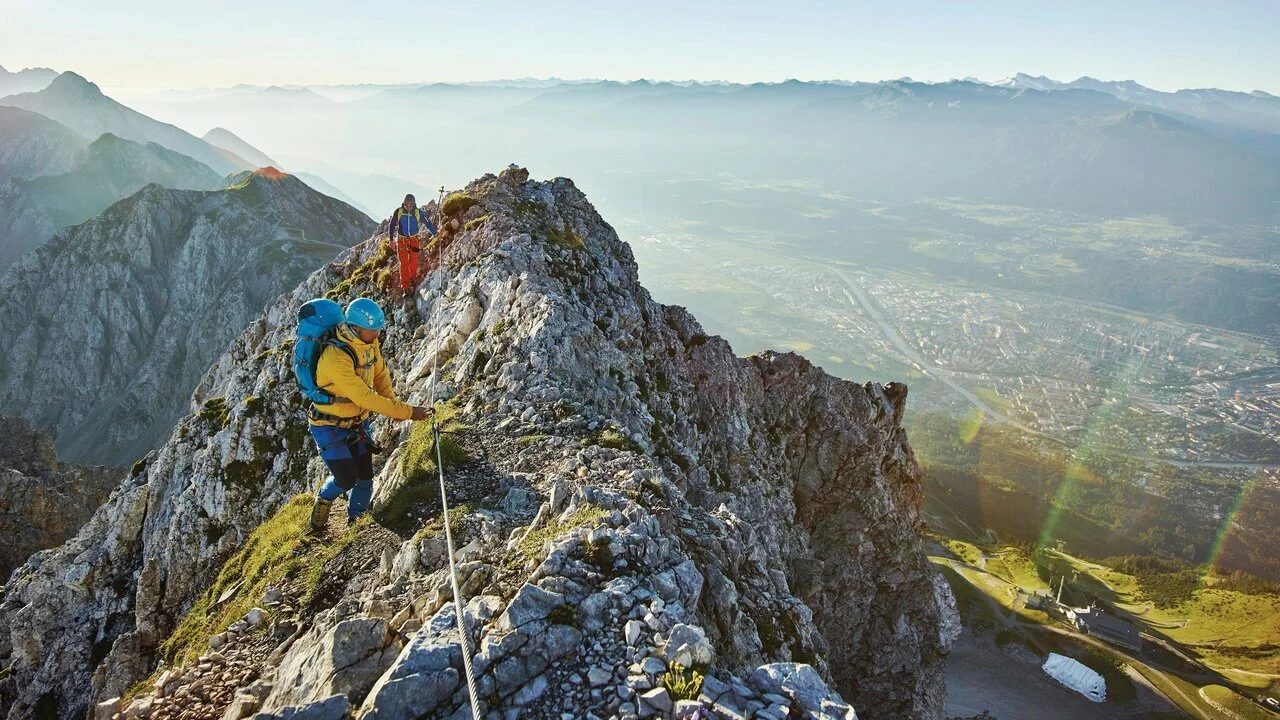
High above the city of Innsbruck in Tyrol, Austria, the Innsbrucker Klettersteig offers a breathtaking alpine experience. Traversing the dramatic ridge of the Nordkette (North Chain) in the Karwendel mountain range, this via ferrata combines long ridges, vertiginous exposures and panoramic views that reward those willing to commit. Originally established in 1986, it has since become one of the classic ridge climbs in the region.
Trail Overview
Location: Karwendel / Nordkette above Innsbruck, Tyrol, Austria.
Difficulty Grade: approx. C / C-D (via ferrata grade) — with the second section reaching up to C/D.
Length & Elevation: Roughly 3.0-3.5 km of via ferrata surface, with ascent sections over many peaks of the ridge; highest point around 2,480 m (Kemacher).
Typical Duration: ~5 to 7.5 hours including approach and descent if doing both sections; some guidebooks allow 4-5 hours for the first section only.
Season: Generally from late June through mid-October (weather permitting).
Route Description
The Innsbrucker Klettersteig is divided into two main sections, though many adventurers choose to tackle the full route for maximum payoff:
Section 1 (Easterly to the “Langer Sattel”)
Begin at the top station of the cable car at Hafelekar (≈ 2,269 m) after ascending via the Nordkette lift system. A short walk from the station leads you to the via ferrata start. From here, the route proceeds along the ridgeline via Seegrubenspitze and the three Kaminspitzen to the summit of Kemacher (≈ 2,480 m). Then follows the descent to Langer Sattel (≈ 2,258 m). The terrain is predominantly ridge walk with via ferrata sections (Grade C) including ladders, cable, and one suspension-bridge part.
Section 2 (From Langer Sattel to Frau Hitt Sattel and descent)
If you continue past Langer Sattel, the challenge ramps up. This section runs from Western Sattelspitze (≈ 2,339 m) to the Frau Hitt-Sattel (≈ 2,200 m) and includes more exposed rock towers, steeper wall passages and tougher moves (Grade C/D). From here you descend via the Schmidhubersteig path back to Seegrube station for the cable car return.
Descent options
If you stop at Langer Sattel: descent to Seegrube station and cable car descent.
If finishing Section 2: descent from Frau Hitt via marked trail path to the Seegrube station or Hopffering Alm / Höttinger Alm then cable car.
Highlights
Panoramic views above the Inn Valley and city of Innsbruck: one side dropping almost 2,000 m into the valley, the other climbing toward the glaciated peaks of the main Alpine ridge.
Ridge traverse over seven summits of the Nordkette range, making it a true high-altitude experience without needing full mountaineering gear.
A suspension bridge incorporated along Section 1 adds an element of thrill and iconic imagery.
Quick access thanks to the cable-car system (Nordkettenbahn and Hafelekarbahn) meaning you can approach without massive uphill slog, reserving your energy for the ridgeline itself.
Difficulty & Required Skills
Technical Difficulty: Rated C to C/D on the German/Austrian via ferrata scale. This includes steep walls, narrow ridges, exposed sections and ladders/fixtures.
Fitness/Endurance: Requires very good cardiovascular fitness and endurance to sustain continuous climbing and ridge walking for multiple hours.
Sure-footedness and no fear of heights: Many sections traverse narrow ridges dropping steeply on both sides.
Proper gear: Via ferrata set (harness, shock absorber lanyard, helmet) mandatory. Gloves recommended. Rental available at Seegrube station.
Route finding & weather awareness: Exposure means weather must be stable; thunderstorms would make the route extremely dangerous. The descent path requires sure navigation or following marked trails.
Not suitable for beginners: While the approach is lifted by cable car, the actual ridgeline work is advanced enough that less experienced via ferrata climbers should either skip or do only Section 1.
When to Go
Best season: Late June to mid-October, when the via ferrata is fully snow-free and the cable car is operating.
Time of day: Aim for early start (before 10:00) to ensure you complete descent before cable car closure and avoid afternoon thunderstorms; rental gear cut-off is around 10:00 at Seegrube.
Avoid: Late spring when snow still lingers on ridges, or late season when weather becomes unstable. Conditions on the ridge can deteriorate rapidly.
Weather window: Choose a clear day with stable weather and no forecast for storms. High exposure means you must minimize risk.
Access & Logistics
Getting there: From Innsbruck city centre take the Hungerburgbahn funicular up to Hungerburg, then continue on the Nordkettenbahn (two sections: Seegrube and Hafelekar) up to the Hafelekar mountain station (≈ 2,269 m). This gives quick access to the start of the via ferrata.
Rental gear: At the Seegrube station building you can hire via ferrata equipment (harness, set, helmet) for about €25/day. Book beforehand online. Gloves not included.
Trailhead: From Hafelekar station the via ferrata begins within minutes of following marked footpath to the "Einstiegswandl" (entry wall).
Descent: Option A – from Langer Sattel descend to Seegrube station. Option B – continue Section 2 and descend from Frau Hitt to Seegrube or Höttinger Alm and then cable car. Ensure you know cable car last departure times.
Accommodation: Innsbruck offers wide lodging choices; staying near the Hungerburg/Nordkette area can give early access.
Safety & permits: No special permit beyond via ferrata ticket and cable car ticket. Ensure you check cable car operation times and weather forecast.
Why It Belongs on Every Adventurer’s List
Unique Alpine Access: Rarely can you reach such high ridgelines with views of city, valley and glacier from a via ferrata so accessible.
Stunning Contrasts: The juxtaposition of Innsbruck’s urban setting below and wild Karwendel peaks above makes the experience unforgettable.
Ridgeline Traverse: Covering seven summits of the Nordkette gives a full-mountain experience that few via ferratas provide — it’s part climb, part high-mountain hike.
Thrill and Elegance Combined: The via ferrata blends exposure, technical climbing sections and panoramic beauty — perfect for those who crave adventure with alpine finesse.
Accessible Yet Serious: Thanks to cable cars, it’s achievable in a day by fit climbers — offering a full alpine route without overnight equipment, yet still demanding and rewarding.