Via Ferrata HTL-Steig
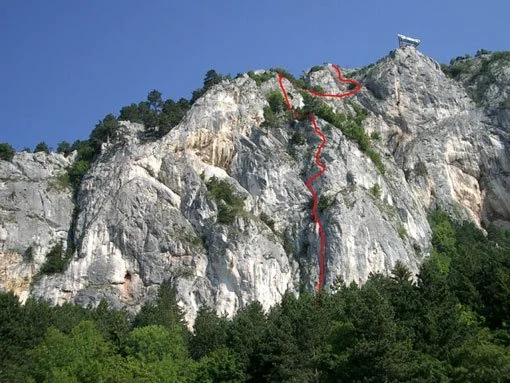
The HTL-Steig on Hohe Wand is one of Austria’s more demanding via ferrata experiences, offering bold terrain, dramatic rock faces, and superb alpine views. Positioned on the scenic cliffs of the Hohe Wand ridge in Lower Austria, this route blends serious exposure with a unique atmosphere of adventure. Originally installed in connection with the 125th anniversary of the HTL Wiener Neustadt, the route has since been upgraded and renamed the ÖTK Klettersteig, but it is still commonly known as the HTL-Steig.
Trail Overview
Name: HTL-Steig (also ÖTK Klettersteig)
Location: Hohe Wand, Gutensteiner Alps, Lower Austria, Austria
Vertical gain / elevation change: Approximately 210 m from the base of the route.
Difficulty rating: D/E on the standard via ferrata grading scale — meaning very demanding.
Total duration: Climbing time ~2 h; total route including approach and descent ~3 h.
Setting: Steep limestone cliffs, overhangs, exposed traverses, significant use of arms and upper body strength.
Route Description
Approach: From the Sonnenuhr-parking (at Hohe Wand toll road) you ascend via meadow and forest path (~15 min) to the “Wandfußsteig” (base path below the cliff). Then walk rightwards for a few minutes to reach the start of the HTL-Steig.
Via Ferrata Section: The route splits into three major parts. The initial section immediately presents the hardest climbing — a steep pillar rated D/E with overhangs and exposed moves. Following this is a smooth ramp, then a traversing section to the right along the rock face. Finally, after a short forested shelf, the final push leads to the exit near the Skywalk viewing platform on the Hohe Wand plateau.
Descent: From the exit you descend through the plateau path (or via the Völlerin-Steig) back to the parking area. Some guides suggest combining descent with the nearby “Blutspur” via ferrata (even harder) for experienced climbers.
Highlights
Dramatic exposure: The HTL-Steig runs high on the south/south-east cliffs of Hohe Wand, offering bold views of the valleys below and a strong sense of vertical drop.
Key pillar: The steep vertical/overhanging starting pillar is the standout moment of the route — a physical and psychological challenge.
Scenic plateau exit: The finishing point at the plateau near the Skywalk gives a rewarding panorama back over the route and across to the Vienna Basin.
Alpine environment close to Vienna: Although technically demanding, the setting is comparatively accessible from the Austrian capital, making it a high-adrenaline option within day-trip reach.
Difficulty & Required Skills
This route demands strong upper-body strength, solid endurance, and confident technique on exposed terrain. According to route information:
Difficulty rating D/E implies high challenge: steep to overhanging rock, minimal holds sometimes, long arms-work, significant exposure.
It is not recommended for beginners or children — the route description warns that those who struggle to climb the first pillar safely should turn back.
Equipment required: via ferrata kit (harness, lanyard with energy absorber, helmet), gloves recommended, strong climbing shoes, and perhaps a short rope if unconfident in descent sections. Because the route demands arms and upper body strength, prior experience on routes rated at least C/D is advisable.
Conditions: rock can be slick in wet or icy conditions; the approach path in forested section may have pine-needles and loose debris.
When to Go
Best season: Late spring through early autumn, typically from May to October, when the via ferrata is dry and free of snow. The ridge is south-facing, so summer direct sun and heat can add fatigue — early morning start helps.
Avoid: Early spring (due to snow/ice on rock) and late autumn when weather deteriorates, daylight shortens, and descent paths become slippery.
Conditions to monitor: After heavy rain the rock may remain damp; strong winds across the plateau can affect safety at the exit.
Access & Logistics
Getting there: On the A2 motorway take the exit for Wiener Neustadt West, then follow signs to Hohe Wand. The toll road leads to the Sonnenuhr-parking area at the base of the climbing routes.
Public transport: Train to Grünbach am Schneeberg, then limited bus service up the hill to the park entrance. Because bus frequency is sparse, verify timetables in advance.
Parking & fees: The road up to the plateau is a toll road; parking at Sonnenuhr is subject to park fee/toll.
Safety considerations: Because of the difficulty level, climbing with a partner or group is advisable, and basic rescue/contact plan should be in place (mobile phone coverage may be patchy on the cliff).
Time planning: Allocate about 4–5 h overall: 15 min approach, 2 h climbing, 30-45 min plateau exit, 1-1.5 h descent. Start early to avoid late-afternoon sun or dwindling light.
Why It Belongs on Every Adventurer’s List
The HTL-Steig is a classic example of “serious via ferrata” near a major European city (Vienna) — combining accessibility with a high level of technical challenge. For those seeking to push beyond simple hiking or easy ferratas, it offers a full-on vertical experience without committing to multi-day alpine climbs. Its dramatic cliffside setting, the physical demands of the key pillar, and the spectacular views from the plateau combine to make it a true adventure route. For climbers who want to test themselves, engage with exposure and strength, and experience a peak adrenaline dose in a half-day format, the HTL-Steig delivers.