Via Ferrata Hoher Dachstein
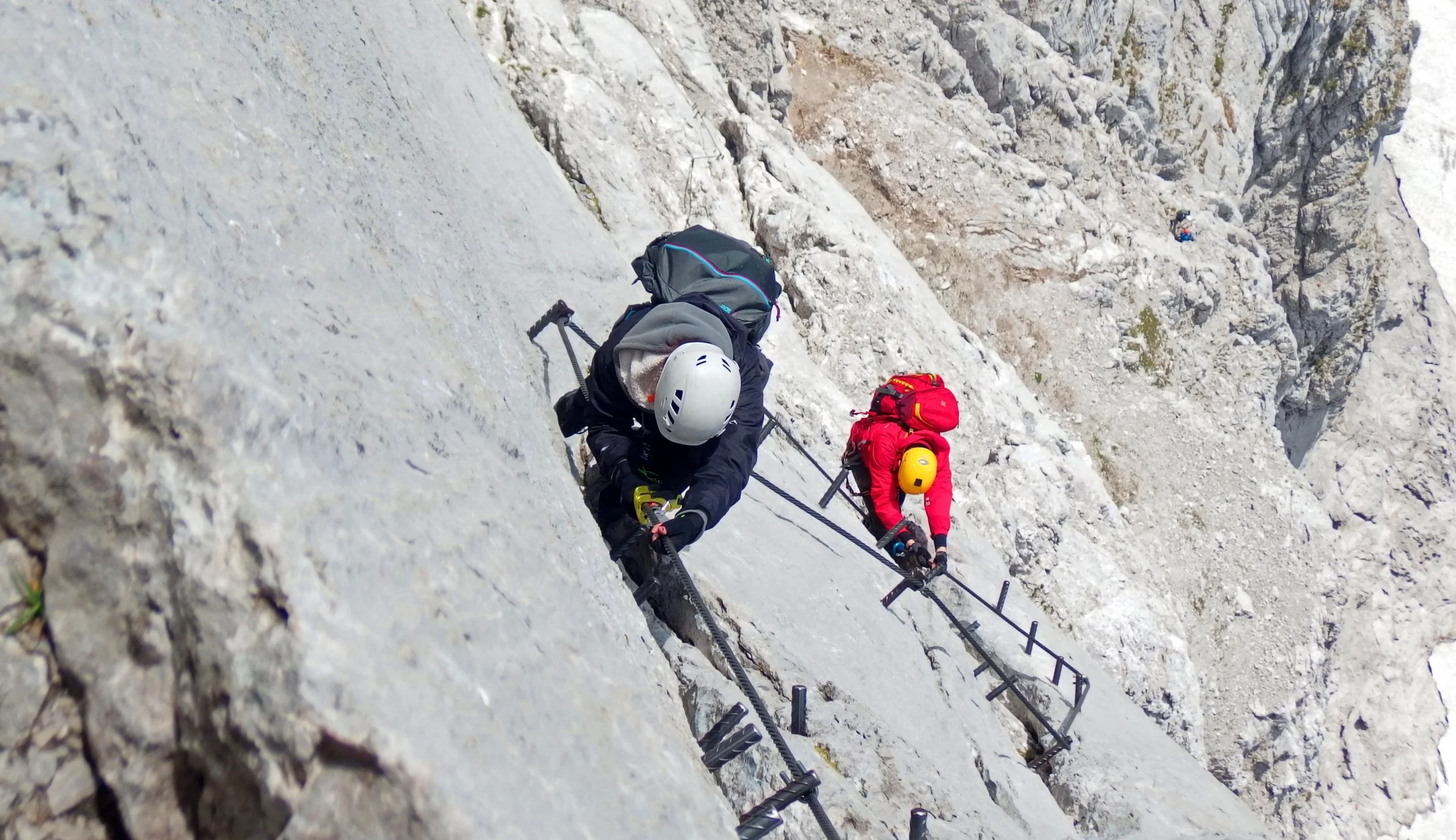
Perched at 2,995 metres on the border of Upper Austria and Styria, the Hoher Dachstein dominates the Dachstein massif and remains one of the most iconic summits of the Northern Limestone Alps. What makes the ascent truly special is the historic via ferrata route known as the Randkluftsteig (also described as “Summit Cables” or “Randkluft/Schulter Klettersteig”). First equipped in 1843, this route is widely regarded as the oldest via ferrata in the world.
Although accessible via cable-car to reduce approach time, the route still traverses glacier terrain, exposed ridges and alpine rock—making it a high-altitude adventure with all the drama and reward of a true mountain experience.
Trail Overview
Name: Randkluftsteig / Schulter-Randkluft Klettersteig (Hoher Dachstein)
Location: Dachstein area, Austria — summit of Hoher Dachstein (2,995 m)
Type: Via ferrata (fixed cables, steel rungs, protected climbing route) combining glacier approach and exposed rock ridge.
Total altitude gain (approx): From glacier level (~2,600–2,700 m) to summit (~2,995 m)
Difficulty rating: Generally described as Klettersteig grade B on the standard Austrian scale for the ferrata section. But due to glacier terrain and exposure it effectively sits higher and demands alpine competence.
Typical duration: 4–6 hours (approach + via ferrata to summit + descent); depending on conditions.
Season window: Mid‐summer (when glacier and snow retreat safely) until early autumn, in good weather conditions.
Route Description
Approach to the Simonyhütte / glacier base – Most hikers begin from the Dachstein cable-car (Dachstein Südwandbahn) which significantly shortens the approach. From the upper station one proceeds across glacier/snowfield terrain towards the starting point of the Randkluftsteig.
Glacier crossing & the “Randkluft” zone – The route traverses a glacier or snowfield beneath the steep Northeast flank of Hoher Dachstein. The course then enters the “randkluft” (rock-ice crevasse under the cliff) where steel cables and fixed rungs assist the climb. This section requires care due to crevasses and potential ice.
Via ferrata ridge and summit cables – After the glacier zone, the route transitions to a rock ridge equipped with cable and rungs. The climb follows the ridge to the summit cross. The terrain is exposed with steep drops on either side.
Descent – Often the descent follows the same route in reverse, or you may choose an alternate route depending on conditions. Glacier retreat or late-season snow can affect the return path.
Notes on conditions – Because of glacier melt and shifting rock, the route condition can vary markedly. Some passages may become more difficult or unsafe after heavy snow melt or late in the season.
Highlights
Historic significance: The Randkluftsteig on Hoher Dachstein is reportedly the world’s first via ferrata route, installed in 1843 by Friedrich Simony.
High alpine environment: Standing at nearly 3,000 metres, the summit offers panoramic views of glaciers, dramatic limestone faces and the surrounding alpine world.
Exposed and rewarding ridge climb: The final via ferrata ridge section offers airy traversal, steel cables, and a sense of climax as you emerge onto the summit cross.
Glacier approach adds alpine flavour: The mix of snow/glacier, fixed cables and alpine rock makes the experience diverse and memorable, not just a scramble.
Relative accessibility: With the cable-car assistance, the route becomes an alpine summit experience with less approach, making it more accessible for well-prepared climbers.
Difficulty & Required Skills
Technical skills: While the fixed cable and rungs reduce technical climbing, you must be competent in via ferrata technique (using a harness, via-ferrata kit, helmet, two lanyards) and be comfortable on exposed terrain.
Alpine skills: Glacier travel (crevasses), snow patches, rock fall risk, and high mountain awareness are all part of the route. Loud warnings note that this is high alpine terrain and “must not be underestimated.”
Physical condition: Good fitness is required—strong legs for altitude, steady pace, and ability to handle 300–400 m of climb in rugged terrain.
Mental & safety readiness: No fear of heights, good sense of balance, sure-footedness, and ability to assess conditions (weather, rock stability, glacier state).
Equipment required:
Via ferrata kit (harness, helmet, shock-absorbing via-ferrata lanyard)
Good mountaineering boots
Crampons/ice axe may be required early in season if snow/ice remain in glacier section.
Navigation/altitude awareness, weather-proof clothing.
When NOT suitable: For beginners without alpine experience; when late season with unreliable snow/ice; when weather is unstable.
When to Go
Best months: July through early September – when snow has retreated, glacier crossings are safer, and huts/trails are open.
Early in season (June): Possible, but expect heavier snow, potential ice, and increased risk in the glacier section.
Late season (September): Quieter, but colder, shorter daylight, and possibility of early snow—check conditions.
Time of day: Start early for best light, fewer crowds, and safer descent. Afternoon storms and rock-fall risk become greater.
Weather window: A stable high-pressure day is essential. The exposed ridge and glacier sections leave little margin for poor weather.
Access & Logistics
Starting point: The Dachstein Südwandbahn (cable-car) from Ramsau am Dachstein / Obertraun area gives access to the high starting zone. The cable-car reduces approach trekking time significantly.
Hut accommodation: Staying at Simonyhütte (or similar) gives earlier start and safer timing.
Approach trail: From the upper station, cross the glacier area towards the start of the via ferrata—check ropeways and glacier status.
Permit / fees: Cable-car ticket, via ferrata is open (no dedicated permit) but a guided ascent is recommended if uncertain.
Descent & return: Return via same route or via cable-car descent if available. Always check last descent times.
Safety / rescue: Alpine terrain means rescue services may be delayed; carry mobile or radio and check valley station info.
Equipment rental & guides: Kits may be rented locally; mountain guides available for this route.
Best access time: Early morning start aligns well with cable-car schedules and allows safe descent before afternoon hazards.
Why It Belongs on Every Adventurer’s List
This route blends history, high alpine drama and summit reward in one unforgettable experience. The Hoher Dachstein via ferrata is more than a climb—it’s an entry into the world of classic alpine mountaineering with the aids of modern via ferrata. The combination of glacier approach, steel cables, exposed ridge and panoramic summit sets it apart from more casual hikes. For any adventurous hiker or ferrata enthusiast seeking a “full-on” mountain day, this stands among the greats.
Once you clip into the summit cables and climb to the cross at nearly 3,000 m, you’ll know why the Dachstein holds such a place in alpine lore. Conditions may vary, but the sense of achievement and the view from the top remains timeless.