Via Ferrata Grimming
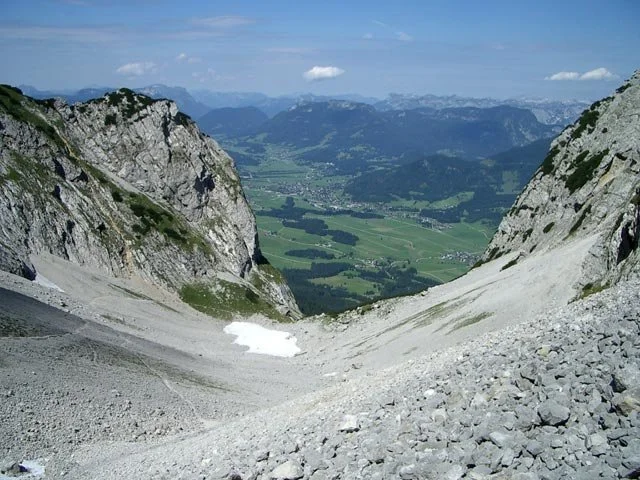
Rising as a majestic limestone massif in Styria, Austria, the Grimming stands out in the landscape of the Dachstein region. The via ferrata known as the Klettersteig Süd-Anstieg (South Ascent) on the Grimming offers a thrilling combination of long alpine terrain, dramatic exposure and spectacular panoramic views. This route is technically moderate but demands stamina, commitment and alpine awareness. The reward is the summit of a free-standing mountain with sweeping vistas of the Totes Gebirge and the surrounding valleys.
Trail Overview
Name: Grimming Süd-Anstieg Klettersteig
Location: Grimming massif, Donnersbachtal / Styria, Austria
Summit Elevation: ≈ 2 351 m
Via Ferrata Section: approximately 700 m (vertical) of ferrata-protected terrain.
Overall Elevation Gain (ascent): around 1 850 m (depending on approach)
Difficulty Rating: Grade B (easy to moderate for via ferrata standard)
Type: Mountain via ferrata, essentially part of a long mountain tour.
Duration: Expect several hours of approach, ferrata section and descent — total day tour.
Route Description
The route begins from a parking area near the village (often Niederstuttern or the Grimminghütte approach) and follows the marked path to the Grimminghütte (~966 m) and further uphill towards “Au” and the base of the via ferrata.
From the start of the ferrata, you climb via ladders and secured sections rated A/B, traversing steep terrain and climbing the southeast flank of the massif. The ferrata leads you through plate-like rock terrain and steeper sections — always with fixed cables, rungs and ladders.
After the technical sections you emerge onto the open mountain plateau of the Grimming, traverse grassy slopes, perhaps short exposed ridge sections (rated A), up to the summit ridge (Multereck ~2 176 m) and then to the summit.
The descent is usually by the same route (out and back) although there is a possible alternative descent via the north side (A/B), which transforms the route into a full traverse.
Highlights
The sense of true alpine isolation: the Grimming is a solitary, free-standing rock massif with panoramic views in all directions.
The ferrata section gives the excitement of exposed rock climbing in a protected environment.
Sweeping views over the Totes Gebirge, Niedere Tauern and the Donnersbachtal valley.
The change from secured steep rock to open high alpine plateau provides a dynamic variety of terrain.
A less frequented route compared to high tourist zones, hence offering a more solitary and authentic mountain experience.
Difficulty & Required Skills
Although rated B, which suggests moderate difficulty for a via ferrata, several factors elevate the seriousness of this route:
The ascent is long and the total elevation gain (≈ 1 850 m) demands strong physical fitness.
The terrain moves from secured climbing to alpine terrain; surefootedness, head-for-heights and a stable step are essential.
The climb is on exposed rock, and although technically “easy”, the length and altitude multiply the challenge.
Appropriate equipment is mandatory: via ferrata set (energy absorber), helmet, harness, gloves, good boots.
Weather and conditions matter: if wet or snow remains, the climb and descent become hazardous.
In short: Suitable for confident hikers with prior via ferrata experience, but not for beginners or those unfamiliar with alpine environment.
When to Go
Best season: Summer months (roughly June to September) when the snow has melted from the upper slopes and the ferrata is safe and dry.
Avoid: Early season when snow remains, or after heavy rain when rock may be slippery. The route description warns that in wet or light snow conditions ascent or descent is very unpleasant.
Time of day: Start early in the morning to avoid afternoon weather changes and to allow plenty of time for descent while daylight remains.
Access & Logistics
Access by car: Take the A9 motorway to Selzthal or the A10 to the Ennstal exit, then the B146 to Niederstuttern.
Public transport: Train to Stainach-Irdning, then bus (line 900) to Niederstuttern.
Approach path: From parking, follow the trail through the village, continue to Grimminghütte, then the route marked “Grimming via Multereck” up to the first ladder of the ferrata.
Descent: Same route back; for a more ambitious tour you can descend the north side (A/B) if you have arranged transport or second vehicle.
Time estimate: Approach ~1h 30min; ferrata section and summit several hours; descent similar duration — allow full day.
Why It Belongs on Every Adventurer’s List
This route offers the pure essence of alpine adventure: it blends rock climbing thrills (via ferrata style) with the grandeur of high mountain terrain, and it does so in a setting that is both wild and accessible. The Grimming has a distinct character — dominating its surroundings, isolated, and offering sweeping panoramas rarely matched. For those seeking a route that is more than just a hike, but less than a full technical climb, this ferrata is an excellent choice. The reward at the top is not just the summit, but the journey: the ladders, the cables, the exposure, the shifting terrain and the open mountain plateau. For an adventurer who values solitude, variety and true alpine spirit, the Grimming Klettersteig is a worthy destination.