Via Ferrata Fallbach
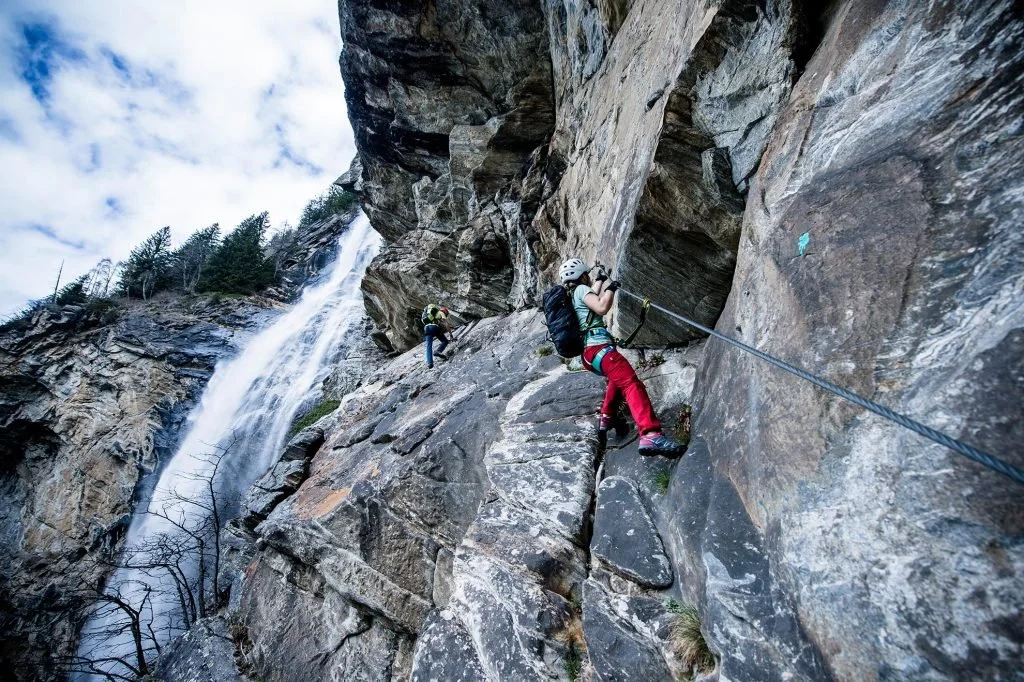
The Fallbach Klettersteig is an extraordinary via-ferrata route situated alongside the dramatic Fallbach waterfall in the Maltatal valley in Carinthia, Austria. With steep granite walls, roaring cascades and a serious vertical component, it stands out as one of the most powerful and exposed Klettersteige in the region. It is designed for climbers who embrace height, exposure and the full alpine experience.
Trail Overview
Location: Maltatal Valley, Carinthia (Kärnten), Austria.
Elevation gain / vertical climb: Approximately 250 m of vertical via ferrata on the rock face of the waterfall.
Difficulty grading: Rated around D/E on the typical German/Austrian Klettersteig scale, indicating high difficulty.
Approximate time: Expect around 2–3 hours overall (including approach and descent).
Type: Sport via ferrata (fixed cables, rungs, steel steps) next to the waterfall, with exposed vertical sections and a suspension bridge.
Route Description
The route begins from a parking lot near the base of the Fallbach waterfall. The approach is relatively straightforward: a short walk to the waterfall and the foot of the cliff where the via ferrata begins.
Section 1: The first part of the Klettersteig is steep, often rated around D. It follows the rock wall adjacent to crashing water. Climbers navigate vertical plates, metal rungs and a well-secured cable system. There is an optional exit around the “Kanzel” viewing platform for those who wish to stop early.
Section 2: After the viewing platform, the route crosses a steel-cable suspension bridge, increasing the sense of exposure and drama. Then the trail progresses into the top half of the waterfall wall and is rated almost continuously E — very steep, demanding, with reliance on metal fixtures and strength in the arms and legs.
Descent: From the top of the ferrata there is a marked path, partially protected, that leads you back to the trailhead. Be aware that the descent path may involve sections of exposure or fixed protection.
Highlights
Waterfall backdrop: The entire climb is beside one of Carinthia’s highest free-fall waterfalls, providing constant drama, sound and spray.
Exposure and verticality: The sheer wall and vertical sections offer a pure alpine climbing sensation, with significant vertical meters in short horizontal distance.
Suspension bridge feature: The swing-bridge adds an adventurous element, offering both thrill and photographic perspective.
Views over the Maltatal: From higher on the route you gain superb sights across the valley and rock walls, a reward after the physical effort.
Well-equipped route: Metal rungs, cables and protection are well installed, allowing a via-ferrata without full climbing ropes but still requiring serious commitment.
Difficulty and Required Skills
This is a demanding route and not suitable for beginners. Key points:
Climbing grade is around D/E, meaning very steep rock, difficult moves, significant exposure.
You must be sure-footed, have strong upper body endurance, and comfortable with exposure and vertical terrain.
Proper via-ferrata gear is essential: harness, helmet, via-ferrata lanyard with energy absorber, gloves, and sturdy boots.
Due to its nature, the route should not be attempted in wet conditions or when the rock is slippery. Safety notices emphasise this.
Some prior via-ferrata experience is highly recommended — this is a “sport” via ferrata rather than a leisurely scenic climb.
The descent path may involve mixed terrain; orientation and moderate trekking skill are also required.
When to Go
The optimal season is late spring through early autumn — generally from May to September, depending on weather and snowmelt.
Avoid early season when snow or ice might still linger on the rock face. Or after heavy rain when the rock may be slick from waterfall spray.
Morning starts are beneficial to avoid crowds and ensure good light for the views.
In summer afternoons thunderstorm risk in the Alps can rise; given the metal fixtures and waterfall setting, caution is advised.
Access and Logistics
Getting there: Drive via the A10 motorway, exit at Gmünd, then follow the Maltatal valley road (Malta Valley) to the Fallbach waterfall parking area.
Parking / fees: There is a dedicated parking lot by the waterfall. A small fee or registration may be required for the via-ferrata (check local signage).
Approach: From parking, walk a short distance to the waterfall and then ascend the trail to the start of the Klettersteig.
Descent: After completion of the via ferrata climb, follow the marked descent trail back to the road/parking.
Equipment: Bring full via-ferrata kit. Optionally, check local rental shops if you do not have your own gear.
Weather and warnings: Inspect local forecast, ensure the rock is dry, and avoid the route if conditions are unclear.
Time allocation: Allocate 2–3 hours for the climb plus approach and descent. Make sure to schedule accordingly so you are not descending in darkness.
Why It Belongs on Every Adventurer’s List
The Fallbach Klettersteig is a unique blend of sustained vertical climbing, wild alpine environment and waterfall spectacle. It’s one thing to hike beside a waterfall; it’s another to climb beside it, intimately linked with the force of water and rock. For the adventurous climber, it offers an experience that is both physically demanding and emotionally awe-inspiring. If you want to test your via-ferrata skills in a dramatic setting, this route delivers — exposure, challenge and alpine beauty all in one unforgettable climb.