Via Ferrata Donnerkogel
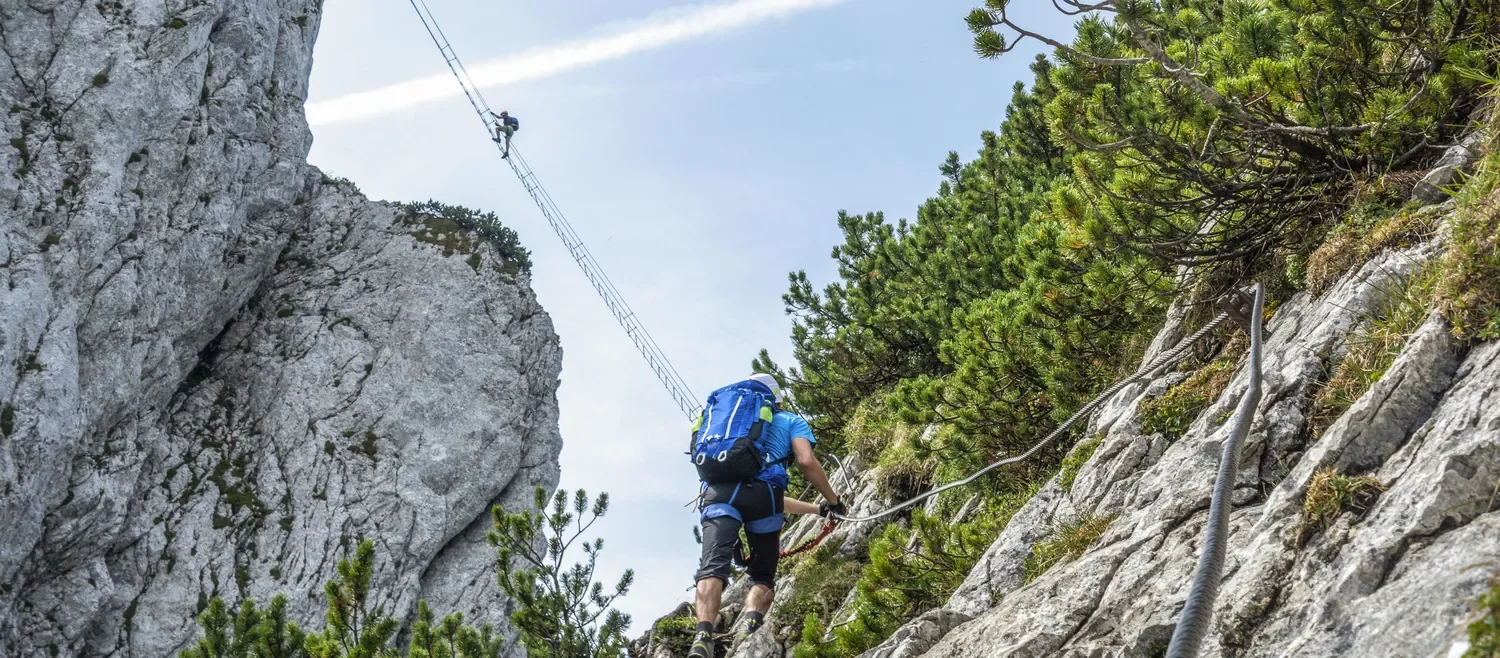
Rising above the lakes and forests of Austria’s Salzkammergut region, the Donnerkogel Klettersteig stands as one of Europe’s most thrilling and photogenic via ferratas.
Famous for its spectacular “Sky Ladder” — a 40-meter metal bridge suspended between two cliffs — this route blends alpine exposure, vertical climbing, and breathtaking panoramas into an unforgettable adventure.
Located near Gosau and overlooking the Gosausee Lake, the Donnerkogel route is part of the Dachstein mountain range, offering one of the finest via ferrata experiences in Austria.
Trail Overview
Location: Gosaukamm, Dachstein Range, Upper Austria
Nearest town: Gosau
Total route length: approx. 5.5 km
Via ferrata section: around 1.5 km of secured climbing
Elevation gain: 900 m
Highest point: 2,054 m (Großer Donnerkogel summit)
Duration: 4–6 hours round trip (depending on pace and stops)
Difficulty: C/D (advanced)
Route type: Out-and-back via ferrata climb to summit
Season: June to October
The Donnerkogel Klettersteig is a modern, well-equipped via ferrata that demands both endurance and focus. It’s suitable for confident climbers seeking exposure, with unforgettable views of the Dachstein Glacier and the emerald waters of Gosausee below.
Route Description
The adventure begins at the upper station of the Gosaukammbahn cable car, near the Gablonzer Hütte (1,550 m). From here, a short approach trail leads hikers to the start of the via ferrata.
The route ascends the west face of the Donnerkogel, following a line of steel cables, iron steps, and ladders securely fixed into the rock.
The first sections offer moderate climbing (rated B/C), winding up slabs and rocky terraces with panoramic views toward the Gosausee. As the route gains altitude, the terrain becomes steeper and more exposed.
Midway, climbers reach the highlight of the route — the “Sky Ladder.”
This airy suspension bridge spans a 40-meter gap between two cliffs, hanging hundreds of meters above the valley. Crossing it is both a test of nerves and an unforgettable experience, rewarded by one of the best photo opportunities in the Alps.
After the ladder, the route continues through vertical walls (C/D) and narrow ridges to reach the summit of the Großer Donnerkogel at 2,054 m. The 360-degree panorama from the top reveals the Dachstein Glacier, Lake Gosau, and the surrounding Salzkammergut peaks.
The descent follows an alpine path down to the Gablonzer Hütte, completing the loop.
Highlights
The Sky Ladder: the iconic suspension bridge that made this via ferrata world-famous.
Panoramic views: sweeping vistas of the Dachstein massif, Gosausee Lake, and the surrounding limestone peaks.
Modern equipment: well-secured cables, ladders, and anchor points throughout the route.
Varied terrain: a mix of vertical walls, traverses, and exposed ridges.
Summit experience: standing atop Großer Donnerkogel offers one of the most impressive viewpoints in the Northern Alps.
Difficulty and Required Skills
The Donnerkogel Klettersteig is rated C/D on the international via ferrata scale — meaning advanced.
It is not suitable for beginners or those afraid of heights.
Requirements:
Excellent physical fitness and endurance for 4–6 hours of continuous effort.
Confidence with exposure — long vertical drops and airy ridges are constant.
Previous via ferrata experience recommended.
Solid use of via ferrata gear (helmet, harness, energy-absorbing lanyard).
Surefootedness and no fear of heights.
While the route is well-secured, climbers should be aware that fatigue and inattention on steep or overhanging sections can lead to serious falls. The climb is physically demanding, especially after the Sky Ladder.
When to Go
The via ferrata is typically open from June to October, depending on snow and weather conditions in the Dachstein range.
The best months are July, August, and September, when the route is usually dry and cable cars operate daily.
Avoid:
Early spring (snow and ice may linger on ledges).
Late autumn or wet conditions, which make the rock slippery.
Start early in the morning to avoid afternoon storms common in alpine regions.
Access and Logistics
Nearest base: Gosau (accessible from Hallstatt or Salzburg).
Cable car: Gosaukammbahn – from Gosausee parking area to Gablonzer Hütte (operates from June to early October).
Starting point: Upper cable car station, 1,550 m.
Approach: 15–20 minutes from Gablonzer Hütte to the route’s start.
Return: Descend from the summit via the marked alpine path back to the hut (~1.5 h).
Total time: 4–6 hours (round trip, including ascent, summit, and descent).
Gear rental: available in Gosau or at the Gosausee cable car base (via ferrata set, helmet, harness).
Guides: local mountain guides in Gosau and Hallstatt offer guided ascents for those unfamiliar with via ferrata techniques.
Why It Belongs on Every Adventurer’s List
The Donnerkogel Klettersteig embodies the essence of modern alpine adventure: technical challenge, raw exposure, and world-class scenery.
Few via ferratas combine accessibility and intensity so perfectly — from an easy approach via cable car to the heart-pounding thrill of the Sky Ladder suspended high above Gosausee.
Standing on the summit, with the Dachstein Glacier glistening in the distance and the lakes shimmering below, you feel the full power and freedom of the Alps.
It’s a route that doesn’t just test your skills — it defines why we climb.