Via Ferrata Dalfazer
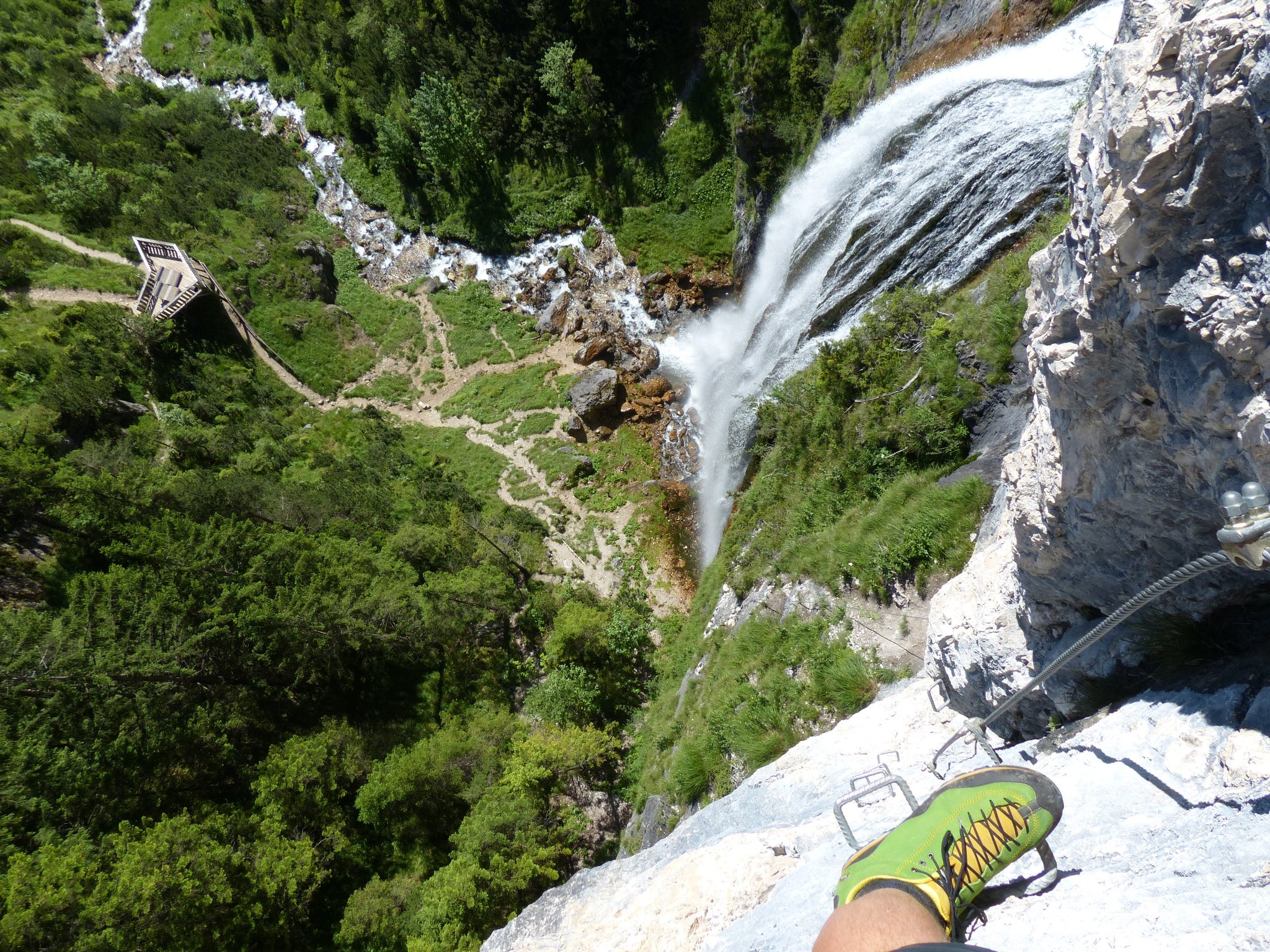
The Dalfazer Wasserfall Klettersteig is a standout via-ferrata route nestled in the Rofan mountain range above the shores of Achensee in Tyrol, Austria. Positioned alongside the waterfall of the Dalfazer stream, the route combines dramatic scenery with athletic challenge. Though relatively short in length, it offers steep terrain, considerable exposure and a sense of alpine adventure that makes it much more than just a “fun” ferrata.
Overlooking the valley and plunging down beside plunging water, this route is a compelling choice for climbers who want to taste serious via-ferrata terrain without committing to a full alpine expedition.
Trail Overview
Location: Buchau village (940 m) in the Achensee region → Rofan range, Tyrol, Austria.
Vertical climb on the ferrata: Approx. 80 m on the fixed section.
Total ascent from start to finish of the route (including approach/exit): Reported up to ~400 m.
Difficulty grade: D (very difficult) according to Austrian/German klettersteig grading.
Time requirement: Around 1 hour to 1 hour 10 minutes (approach + via-ferrata + descent) for the standard loop.
Type: Short but intense via-ferrata route, with waterfall views and high exposure.
Route Description
Approach
From the village of Buchau near Achensee, you follow a marked hiking trail up to the base of the Dalfazer waterfall. The approach is modest (about 230 m of ascent from parking near Kinderhotel Buchau) before the actual ferrata starts.
At a scenic viewpoint in front of the waterfall, you’ll see the fixed cables and rungs that mark the start of the via-ferrata section.
The Ferrata Section
The via-ferrata climbs alongside the waterfall, combining rock face climbing with fixed steel cables, rungs and handholds. Because the rock is occasionally polished from the water spray, some sections demand strong footwork and steady arms.
The middle section carries the most challenge — steep, exposed, often adjacent to the cascade or wet rock. One description notes: “not for beginners, the D‐passage is demanding and long.”
Exit / Return
After the steeper climbing ends, you continue on a forested walking trail (trail no. 413) descending back to the waterfall viewpoint and then retrace to Buchau. Alternatively, one can extend to Dalfaz Alm for the more ambitious option.
Highlights
Spectacular setting: The route runs directly beside the Dalfazer waterfall — offering dramatic views and the sound of cascading water.
Short but punchy: Though not a marathon climb, the intensity and exposure make it memorable.
Alpine immersion: Despite its accessibility, the route has a real mountain-feel with steep terrain and rewarding views of the Achensee region.
Accessible yet serious: A via-ferrata that is feasible within a short timeframe but still demands respect — perfect for a half-day alpine challenge.
Beautiful descent environment: After the ferrata, returning via forest trail and pastures gives a contrast from the vertical climb.
Difficulty & Required Skills
Grade D (very difficult): This indicates sustained steep sections, possibly slightly overhanging or with limited holds, higher exposure and high physical requirements.
Physical fitness: You need strong legs for the approach/descent, good upper-body strength for the ferrata, and stamina for the exposed sections.
Technical skills & equipment: Standard via-ferrata gear (harness, via-ferrata lanyard with energy absorber, helmet, gloves) is required. Comfortable with vertical or near-vertical climbing on fixed cables is essential.
Experience: Suitable for climbers with previous via-ferrata or alpine climbing experience. Not recommended for beginners without a guide. Some descriptions warn specifically that it is “nicht für Einsteiger” (not for beginners).
Exposure and risk awareness: As with all via-ferratas, proper clipping technique (one carabiner on the cable at all times, etc.), checking equipment, and awareness of weather are critical. The presence of waterfall spray can make rock slippery.
When to Go
Season: Best in late spring to early autumn (roughly June to September) when the fixed gear is snow-free and the waterfall flow is high. Reports indicate early or late season may involve more water or damp rock.
Time of day: Morning is advisable to reduce heat, and to have firmer rock (less wetness). Also fewer crowds early.
Weather conditions: Avoid in heavy rain or storms — waterfall could swell, rock becomes slick, and lightning risk is significant on exposed steel structure.
Day of week: Weekdays may be quieter; weekends see more visitors in the Achensee region.
Access & Logistics
Getting there: Reach Achensee via Salzburg-Innsbruck road/A13, then to Buchau near Maurach. There is a paid parking near Kinderhotel Buchau (940 m) at the start.
Public transport: Trains to Tegernsee, then bus line 9550 over Achenpass to Buchau.
Parking and signage: Park at the lot near Kinderhotel Buchau; follow marked trail to waterfall viewpoint; clear signs to the via-ferrata start.
Time needed: Reserve about 1¼ hours for the full route (approach + via-ferrata + descent). For extension to Dalfaz Alm, more time would be needed.
Safety & gear check: Ensure via-ferrata gear is in good condition. Let someone know your plan. Check local information for closures or water levels.
Extension options: After the ferrata, you can continue onward to Dalfaz Alm (30-45 minutes additional walk) if you’d like to make it more of a hike.
Why It Belongs on Every Adventurer’s List
This route ticks many boxes for the alpine enthusiast: dramatic scenery, vertical challenge, efficient logistics and a rewarding finish. The Dalfazer Wasserfall Klettersteig is not a long expedition — but rather a concentrated dose of high-alpine experience:
Compact adventure: If you’re short on time but still crave exposure and adrenaline, this is a perfect choice.
Scenic reward: The proximity to the waterfall and sweeping views over Achensee make it visually unforgettable.
Skill builder: For those accustomed to moderate trails, this route offers a chance to step up to grade D terrain in a managed environment.
Memorable variation: It gives an experience beyond a normal hike—steel cables, rock faces, and vertical ascents create an entirely different mindset.
Accessible alpine setting: Reaching this via-ferrata is easier than many remote high-alpine routes—making it more realistic for many adventurers.
In sum: if you want to experience the thrill of a via-ferrata, enjoy dramatic alpine water-features, and test yourself on steep vertical terrain—all in a relatively short time—this route is an exceptional choice.