Via Ferrata Mürren
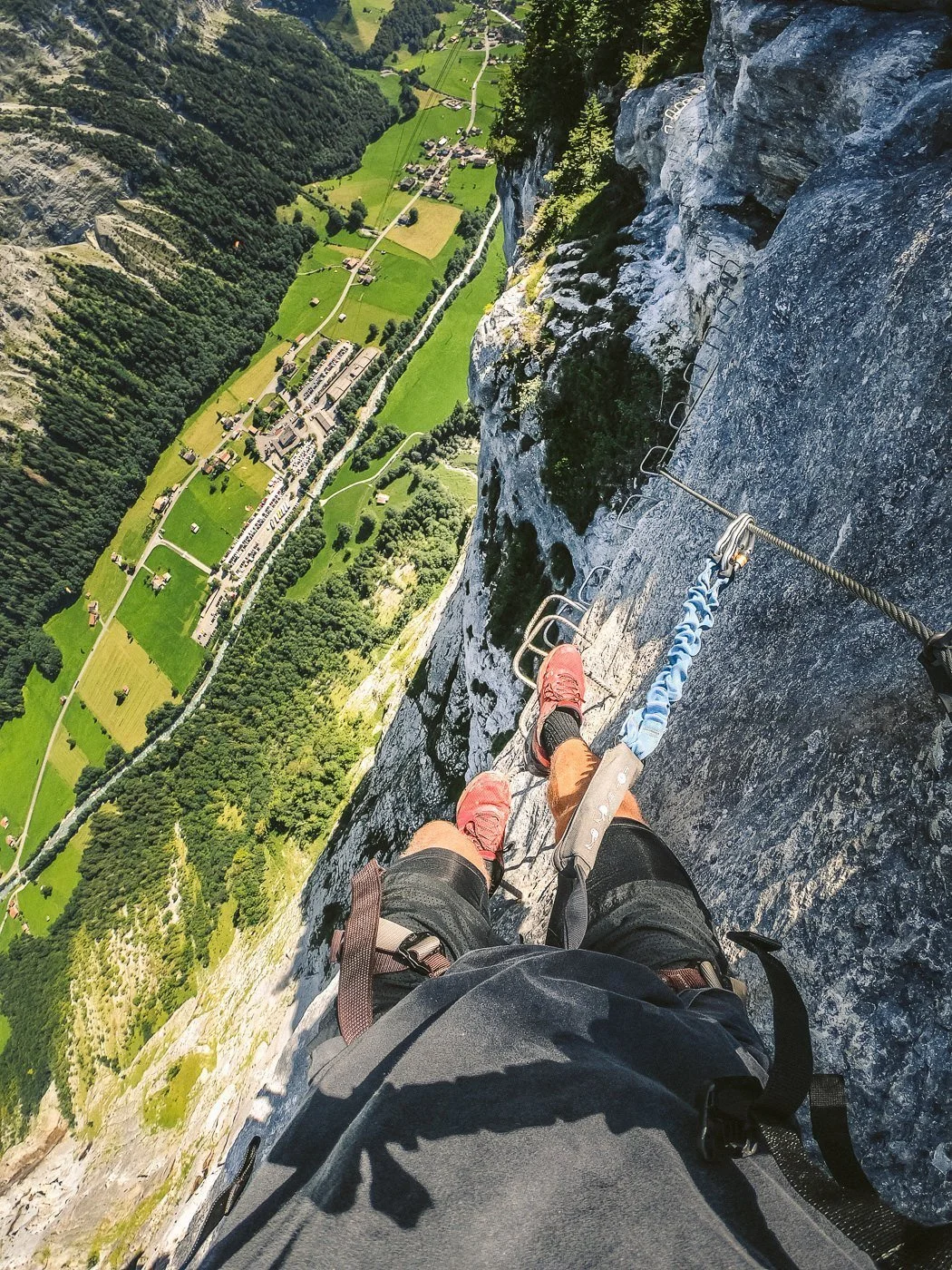
High above the alpine valley of Lauterbrunnen in the Bernese Oberland region of Switzerland lies one of the most dramatic via ferrata routes in the Alps: the Via Ferrata Mürren-Gimmelwald. Unlike traditional ascents, this route begins in the car-free village of Mürren (at approximately 1,640 m) and descends roughly 300 m over a 2.2 km stretch of cliff-hanging struts, ladders, cables and a suspension bridge, arriving at the village of Gimmelwald below. This high-adrenaline route combines spectacular mountain scenery with exposure, technical challenge and a unique way to traverse the alpine landscape.
Trail Overview
Length: approximately 2.2 km (≈1.4 miles) from Mürren to Gimmelwald.
Elevation change: roughly –300 m (descending from around 1,638 m to about 1,340 m).
Typical duration: around 2-3 hours depending on pace and group size.
Route character: a mix of via ferrata technical sections (steel rungs, cables, ladders, suspension bridge) and mountain-trail walking sections perched along the rock face above the valley.
Setting: on the cliff side above the Lauterbrunnen Valley, offering immense drop-offs and open panoramas of the Bernese Alps.
Route Description
The route begins in the village of Mürren, where you access the start of the via ferrata near the Sportchalet area via a short walk through the lower street and tunnel by the tennis courts. muerren.swiss+1 From here, the path moves immediately into the vertical terrain: steel steps and rungs are fixed into the rock face, and you clip your via-ferrata lanyard onto the fixed cable for protection.
As you progress, you traverse horizontally and slightly downward along the cliff edge, suspended above the valley floor. This is where the route gains its dramatic character: narrow ledges, exposed cables, and systems of ladders and steps. According to one source, a section includes “about 20-30 m incredibly exposed” where you are standing on metal brackets embedded in the rock with a 600-m drop below.
Mid-route features include a suspension bridge (sometimes called the “Nepal Bridge”) offering a thrilling crossing between rock faces. The final descent leads into the village of Gimmelwald, where you end the via ferrata and can continue walking the trail or take a cable car back up to Mürren or down to Stechelberg.
Highlights
Vertiginous exposure: The feeling of walking on a vertical wall above the Lauterbrunnen Valley is unforgettable — this section gives the route its reputation.
Suspension bridge crossing: An iconic element that adds a thrill beyond typical via ferrata climbing.
Scenic setting: Wide panoramic views of the surrounding peaks, valleys and alpine pastures, with the car-free village of Mürren above and the green valley below.
Unique descent route: Many via ferratas ascend; this one descends – offering a different flavour of alpine challenge and perspective.
Accessible from major alpine hub: Because it lies in a well-visited region near Lauterbrunnen and Mürren, logistics and transport are relatively straightforward.
Difficulty & Required Skills
While the route is often described as a “beginner via ferrata” rated around K3 or Intermediate-C level, it nevertheless demands respect:
According to an equipment & guidance site, it’s rated K3 and described as “accessible for anyone with average fitness… comfortable walking up to 5 hours and up to 600 m vertical ascent per day”.
The official SAC portal describes it as “quite varied in difficulty … very airy tight rope walk high above the valley.”
Key skills/requirements: good head for heights, surefootedness, comfortable with exposure, basic via-ferrata gear (harness, via-ferrata lanyard with shock absorber, helmet) and familiarity with clipping/unclipping technique. Renting gear or hiring a guide is often recommended especially for first timers.
Because of the descent, be aware of fatigue — you may be walking down rather than climbing up, which can stress knees and legs differently.
When to Go
The via ferrata is typically open from early summer through early autumn—e.g., June to October. One source lists an opening period 1 June to 31 October (09:00–18:00) as guidance.
Best conditions: dry weather, good visibility and stable skies. Because the route includes exposed metal fixtures, ladders and suspension bridge, wet or icy conditions significantly reduce safety and enjoyment.
Time of day: Starting early may help avoid groups and allow you to move at your own pace. Also better light for photography and less heat on the rock.
Summer months are busiest; if you prefer a quieter experience, consider early June (weather may be less certain) or September.
Access & Logistics
Start location: Car-free village of Mürren (alt ∼1,640 m). Reachable by rail and cable-car from Lauterbrunnen or from Stechelberg via the Schilthorn cableway.
Finish location: Village of Gimmelwald (alt ∼1,340 m). After completion you can ride the cable car or walk back via mountain footpaths.
Gear rental/guide: In Mürren there are shops offering via ferrata sets (harness + lanyard + helmet). Guides available for hire if you prefer instruction and safer experience.
Return transport: From Gimmelwald you can take the cable car to Stechelberg, then onward train/bus to Lauterbrunnen or further destinations. Make sure to check cable car schedules.
Safety & timing: Allocate 2-4 hours for the route depending on your comfort level, group size and pace. Bring water, proper shoes, gloves (often recommended for via ferrata), and check weather forecast.
Why It Belongs on Every Adventurer’s List
The Mürren-Gimmelwald via ferrata offers a rare combination of alpine thrill, accessibility and breathtaking scenery. Unlike more remote or technical routes requiring multi-day expeditions, this experience packages cliff-hanging adventure into a half-day outing. The dramatic setting — beside one of the most stunning valleys in the Alps — elevates the experience beyond mere path traversal: you feel airborne, connected to rock and sky, yet securely anchored by steel cables. For those seeking a memorable alpine activity that pushes comfort zones just enough without requiring full mountaineering skills, this route delivers in full. Whether you’re advancing your alpine skills or simply chasing an unforgettable memory, this via ferrata stands out as a must-do in the Swiss Alps.