
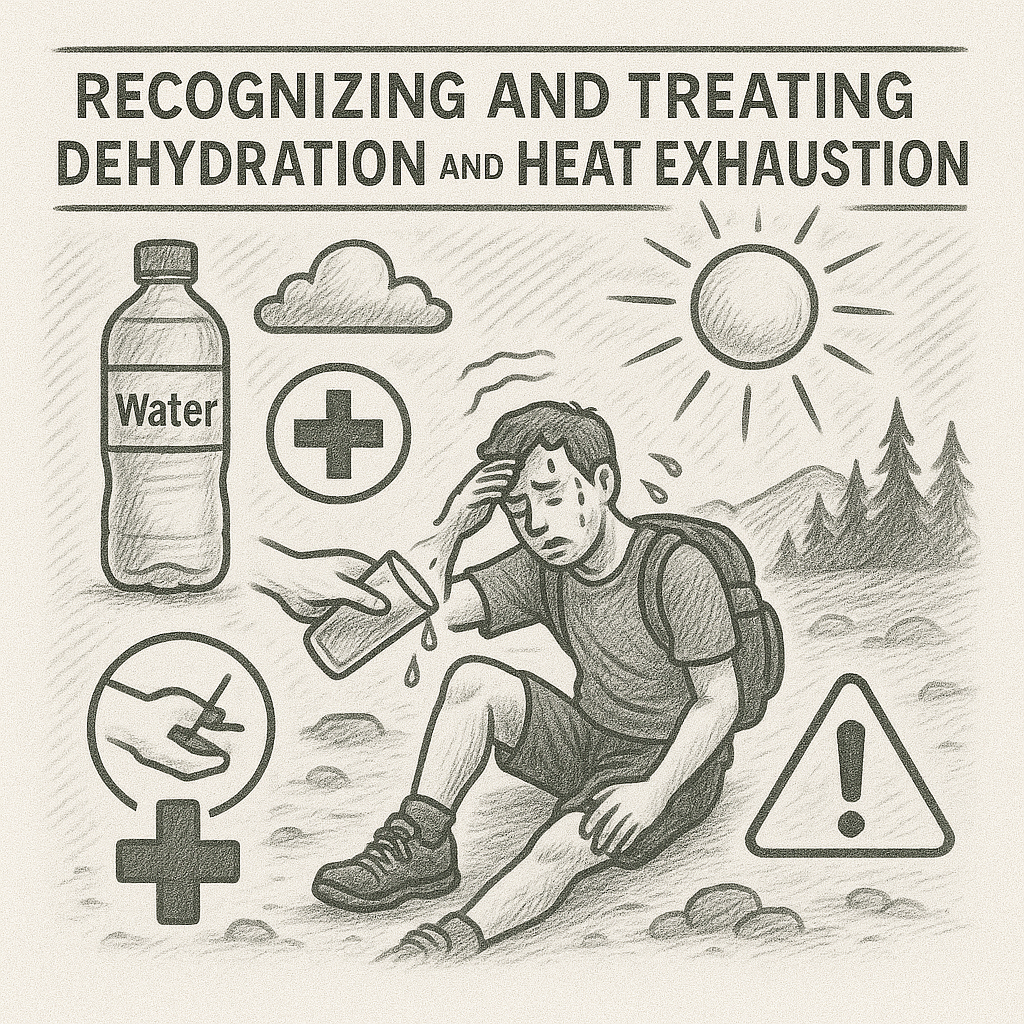
Recognising and Treating Dehydration and Heat Exhaustion
By recognising early symptoms, hydrating strategically and taking immediate action, hikers can avoid severe complications and maintain physical and mental performance. With proper preparation, awareness and gear, the mountains become safer and more enjoyable even in the hottest months.
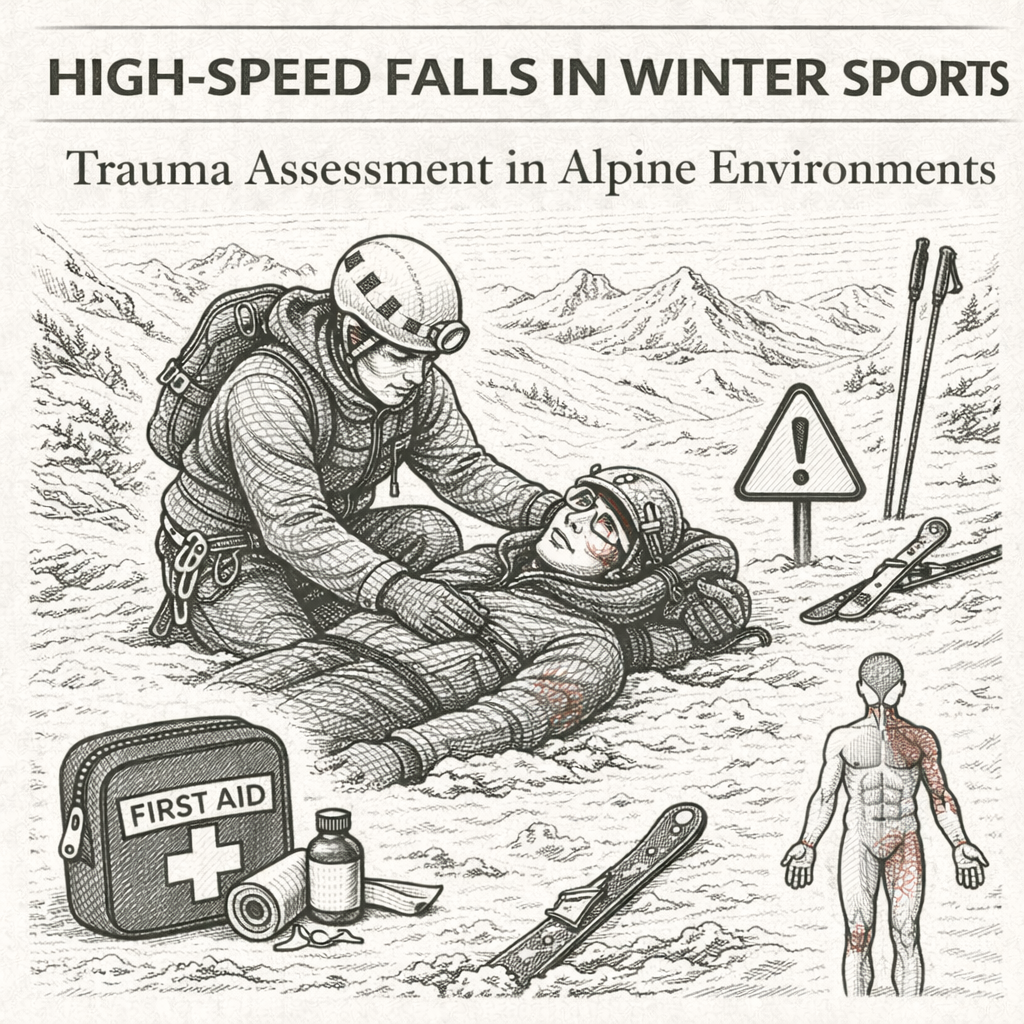
High-Speed Falls in Winter Sports: Trauma Assessment in Alpine Environments
High-speed falls are among the most severe incidents in winter sports such as ski touring, freeride skiing, snowboard mountaineering, and steep alpine descents. The combination of speed, hard snow or ice, and obstacles dramatically increases the risk of serious trauma.
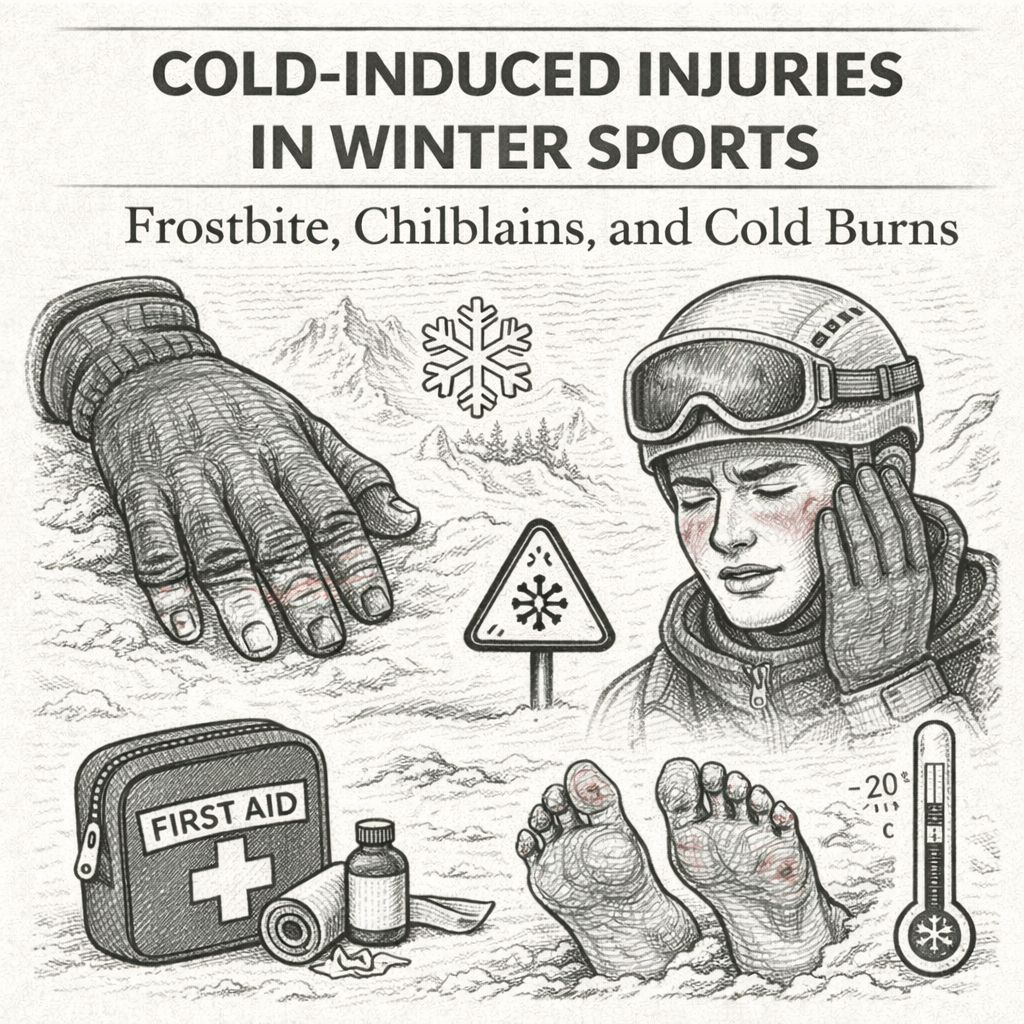
Cold-Induced Injuries in Winter Sports: Frostbite, Chilblains, and Cold Burns
Cold-induced injuries are among the most common medical issues in winter sports. Unlike traumatic injuries, they often develop gradually and may go unnoticed until tissue damage has already occurred.
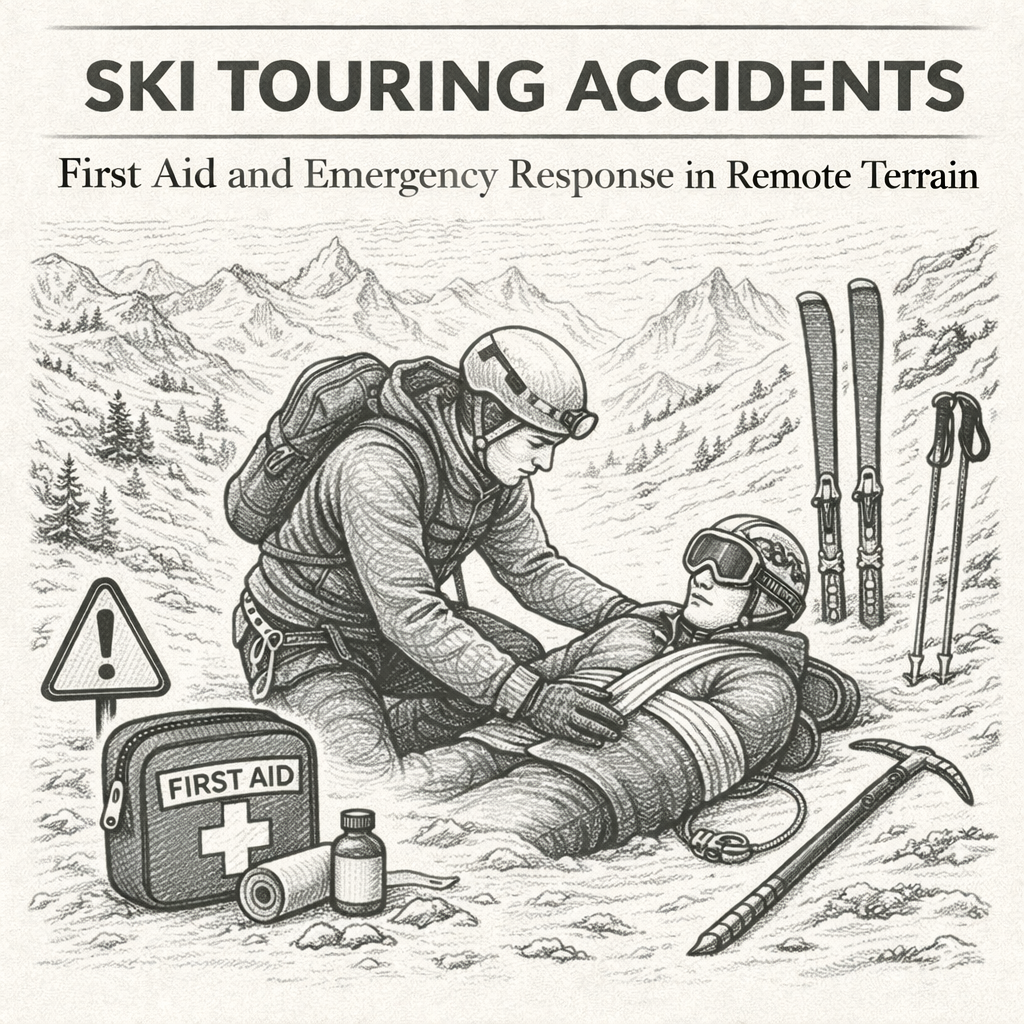
Ski Touring Accidents: First Aid and Emergency Response in Remote Terrain
Ski touring takes place in uncontrolled alpine terrain, far from ski patrols and immediate medical assistance. While it offers unmatched freedom and access to remote winter landscapes, it also exposes participants to significant objective hazards.
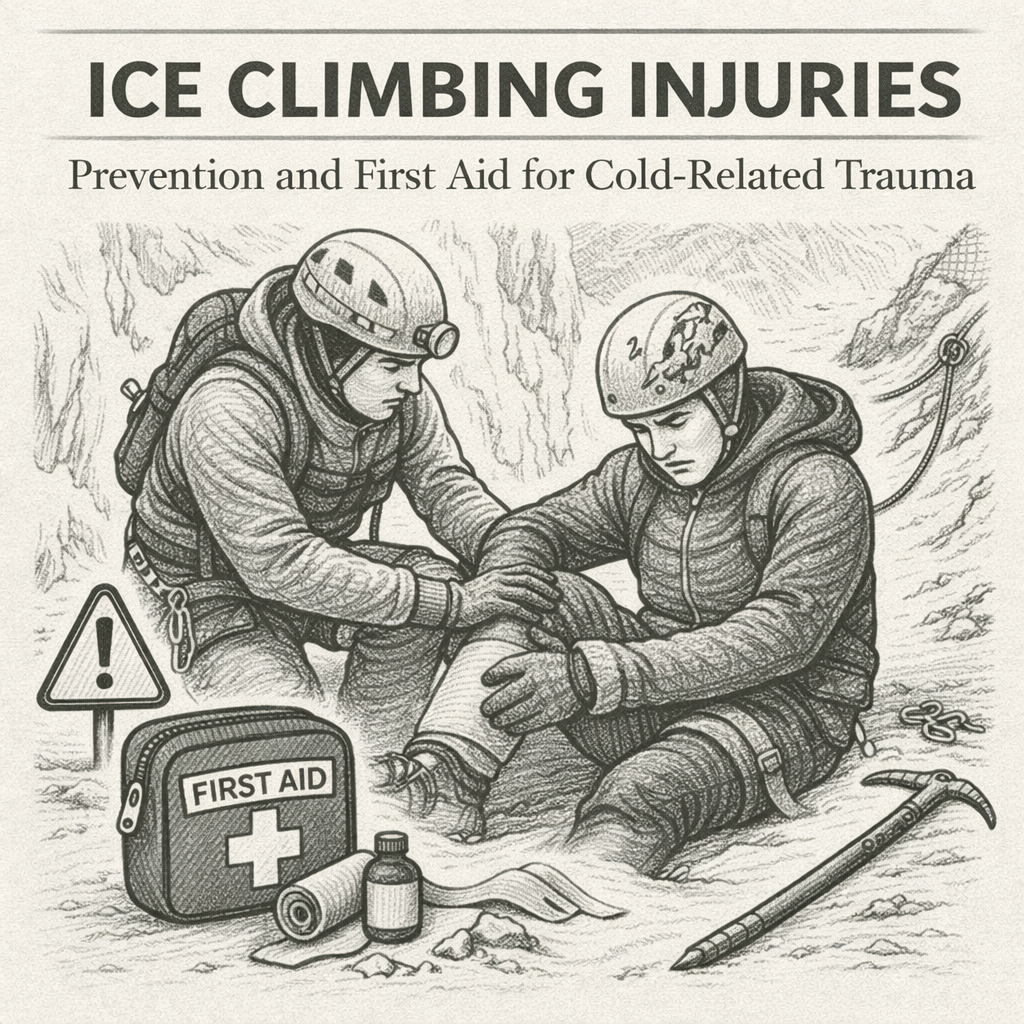
Ice Climbing Injuries: Prevention and First Aid for Cold-Related Trauma
Ice climbing is one of the most physically demanding and technically precise winter sports. Climbers operate in vertical terrain, using sharp tools, wearing crampons, and often exposed to extreme cold for extended periods.
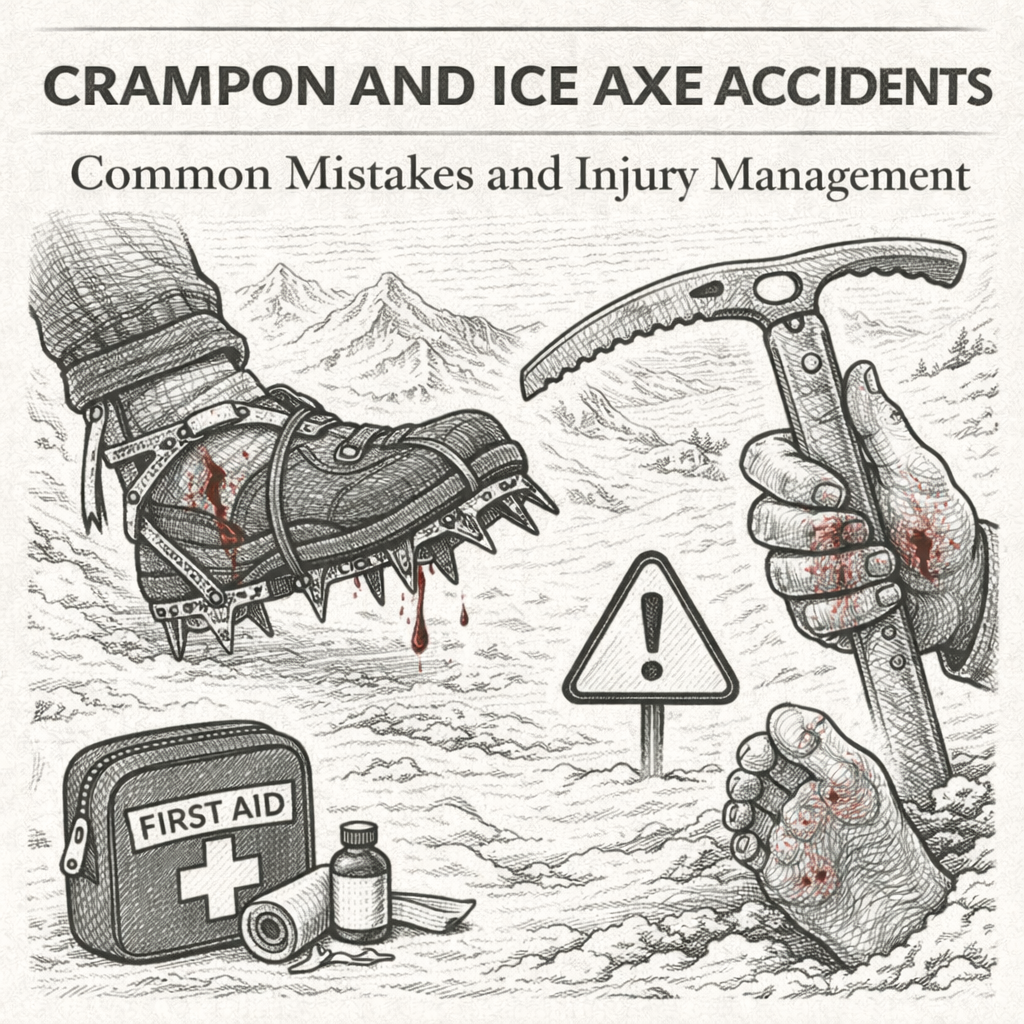
Crampon and Ice Axe Accidents: Common Mistakes and Injury Management
Crampons and ice axes are essential tools in winter mountaineering, glacier travel, and steep snow terrain. While they significantly increase safety when used correctly, misuse or poor technique can lead to serious injuries.
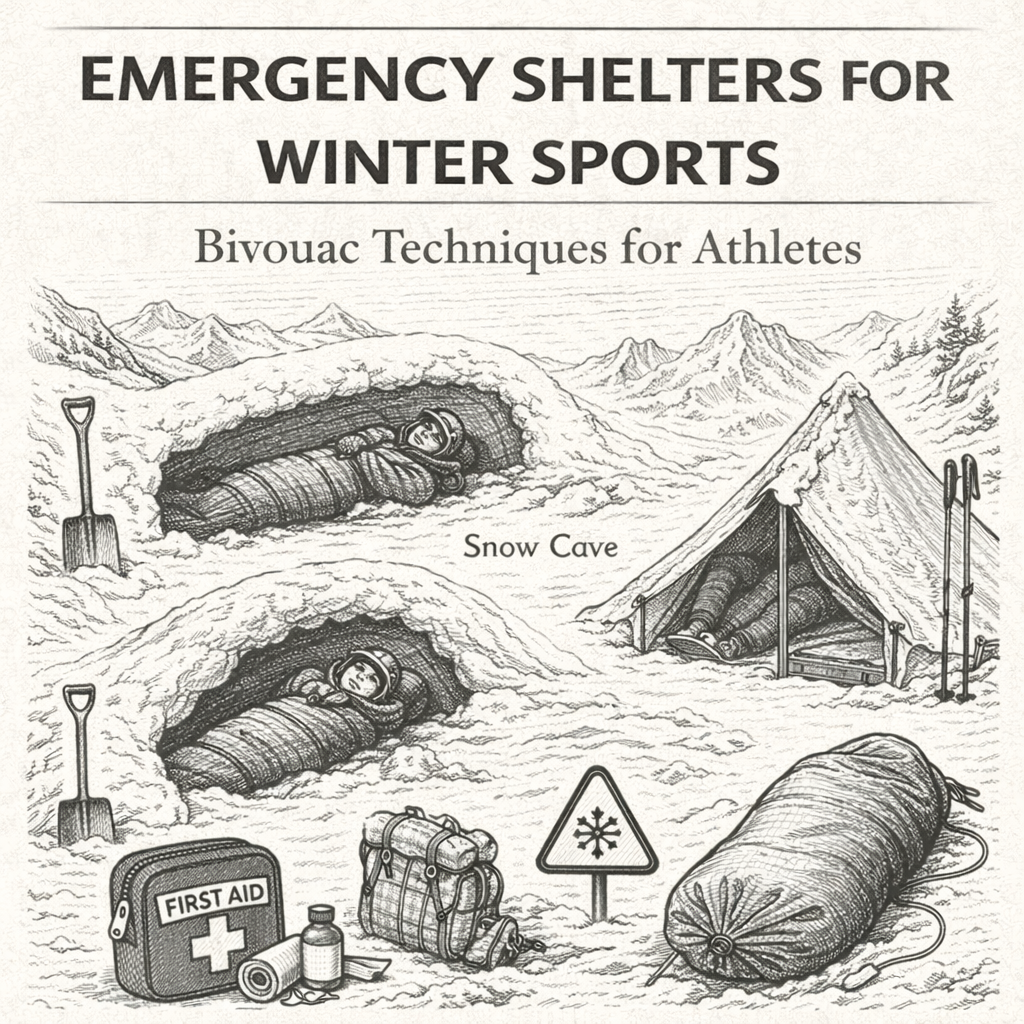
Emergency Shelters for Winter Sports: Bivouac Techniques for Athletes
In winter sports, unexpected delays caused by injury, weather deterioration, or navigation errors can force athletes to stop moving for extended periods. In cold alpine environments, immobility quickly becomes life-threatening.
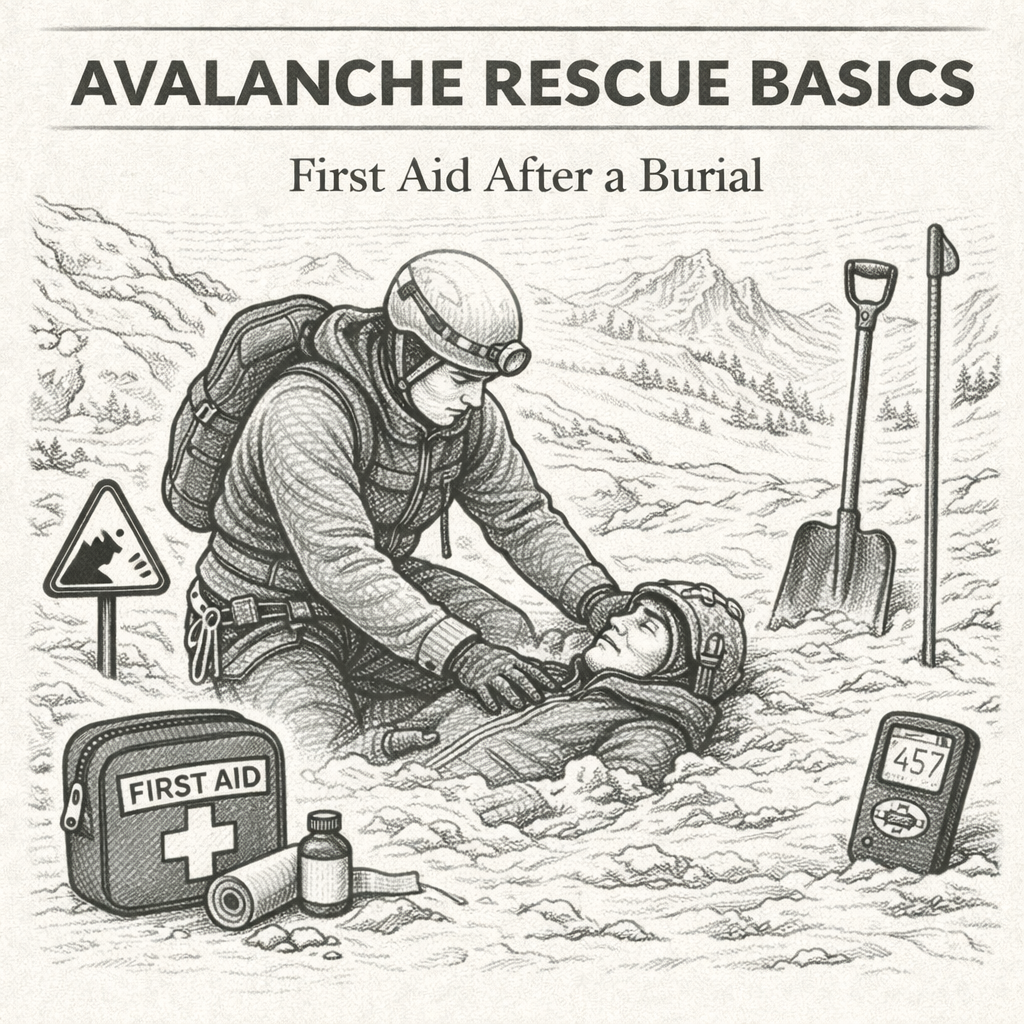
Avalanche Rescue Basics: First Aid After a Burial
Avalanches remain one of the most serious hazards in winter mountain sports, particularly in ski touring, freeride, and winter mountaineering. Survival after an avalanche burial depends not only on rapid companion rescue, but also on correct first aid immediately after extrication.
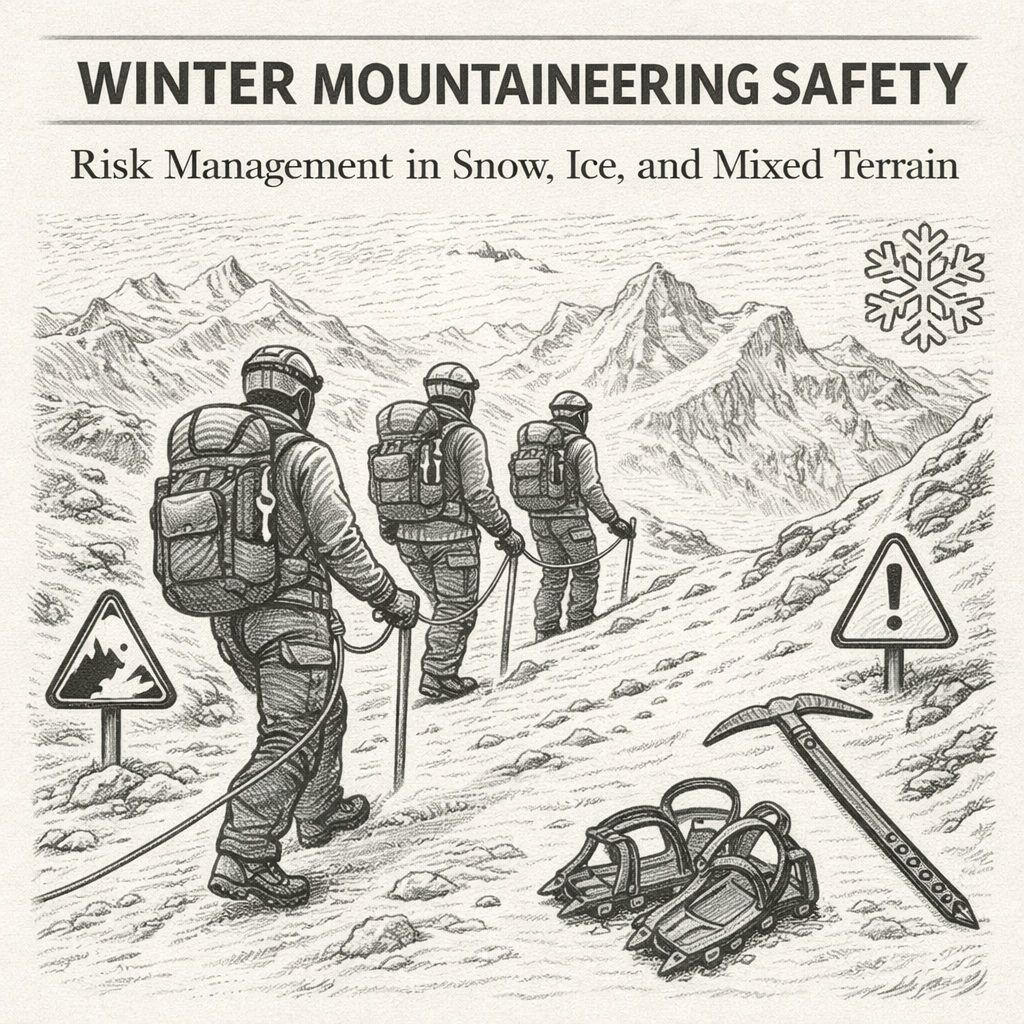
Winter Mountaineering Safety: Risk Management in Snow, Ice, and Mixed Terrain
Winter mountaineering combines the complexity of alpine terrain with the added hazards of snow, ice, cold, and rapidly changing weather. Routes that are straightforward in summer can become technically demanding and objectively dangerous in winter.
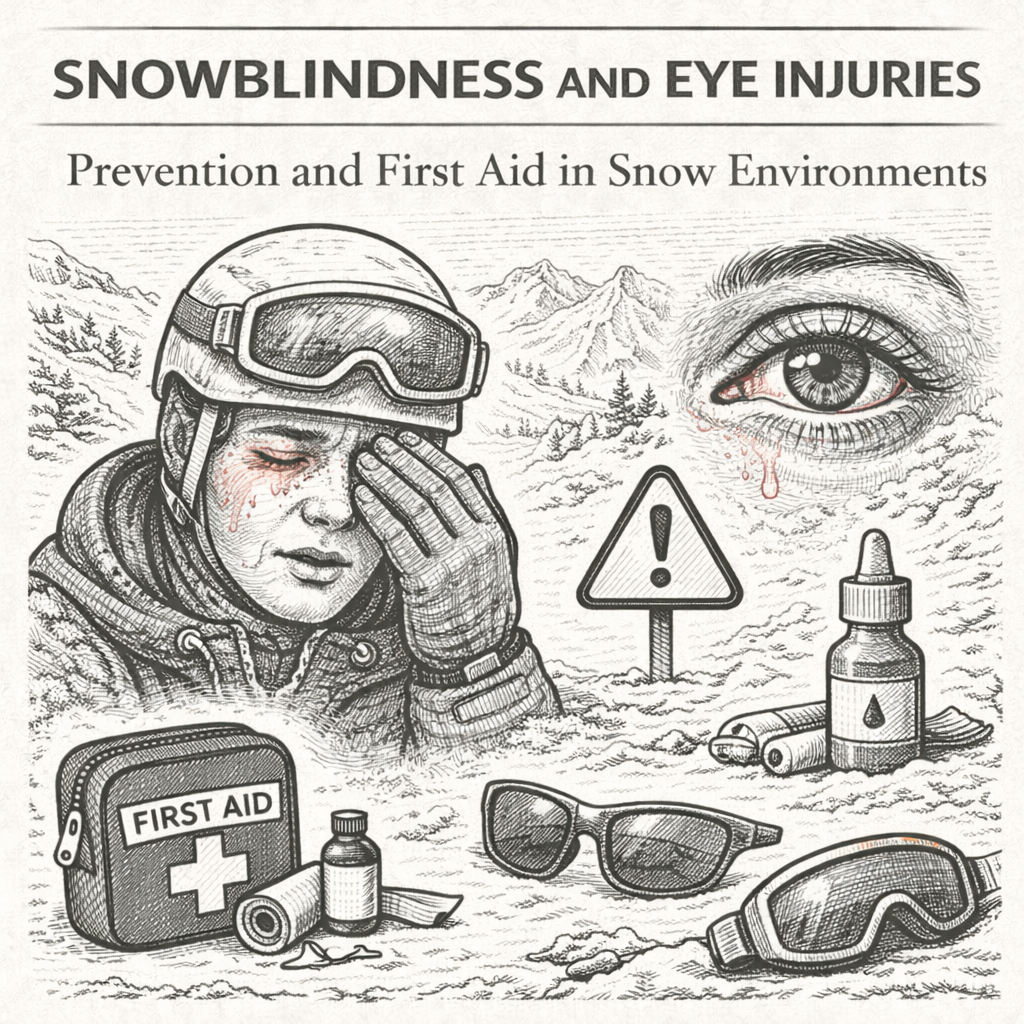
Snowblindness and Eye Injuries: Prevention and First Aid in Snow Environments
Eye injuries are often underestimated in winter sports, yet snow-covered environments create some of the most aggressive conditions for visual damage. High-altitude terrain, intense sunlight, and strong reflection from snow and ice significantly increase the risk of snowblindness and other eye injuries.
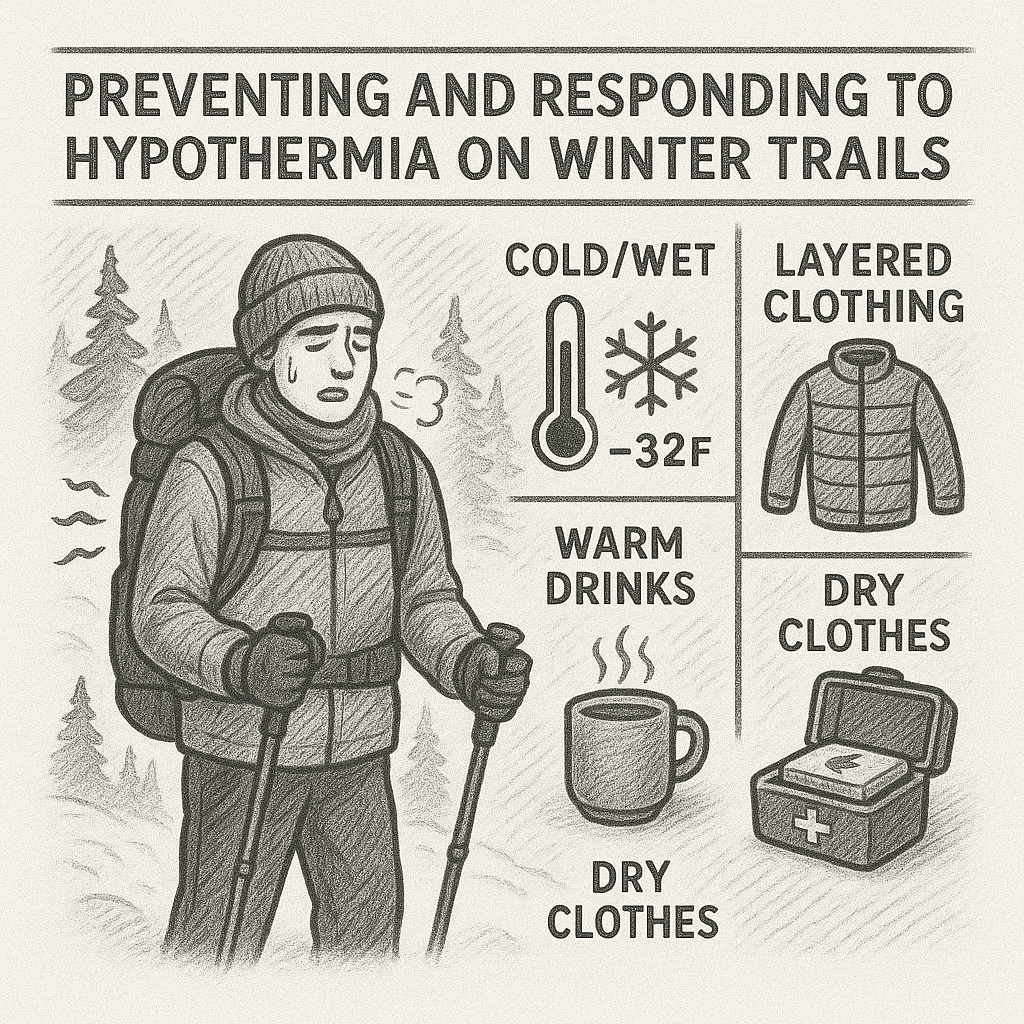
Preventing and Responding to Hypothermia on Winter Trails
With the right knowledge and equipment, winter trails can be explored safely and confidently, allowing you to enjoy the unique beauty of the cold season while staying protected from its challenges.
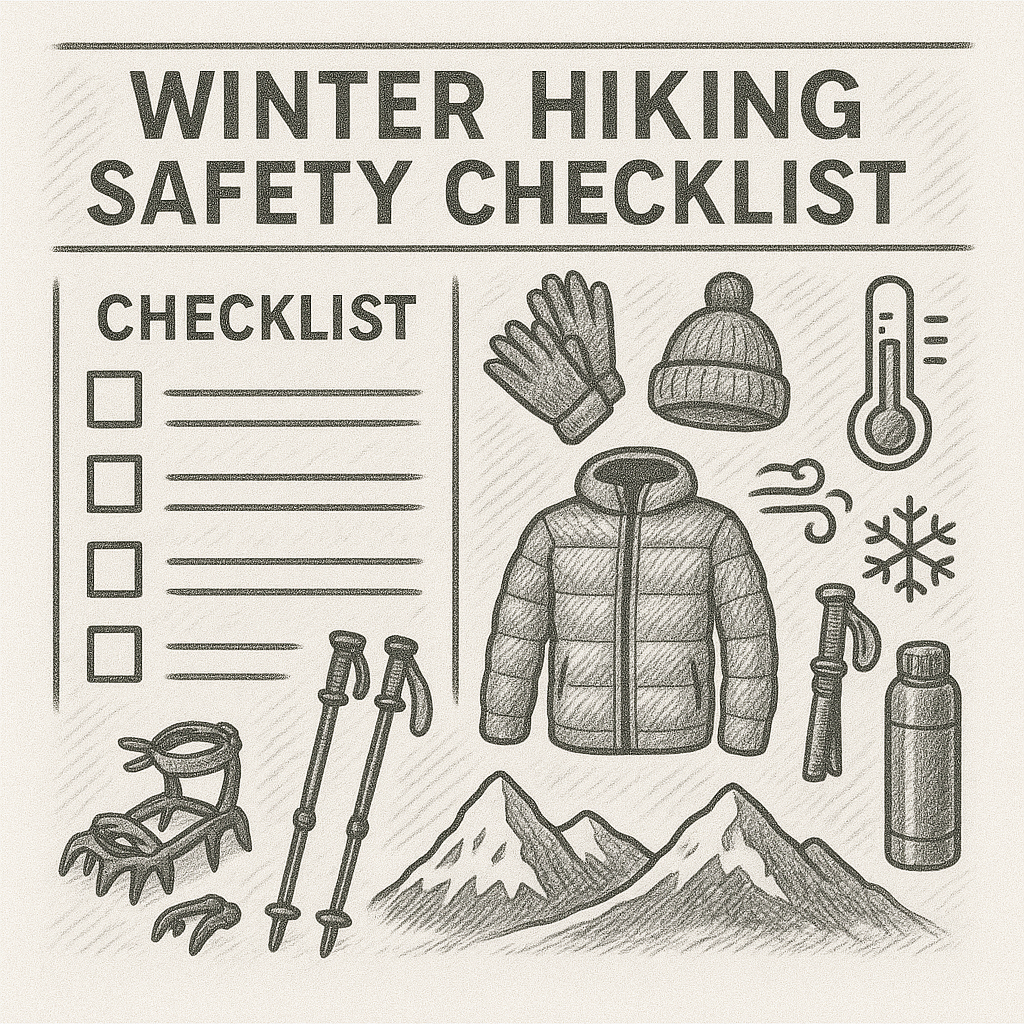
Winter Hiking Safety Checklist
With proper planning, winter trails become rewarding experiences rather than dangerous challenges. Approach the season with caution, stay aware of changing conditions and enjoy the winter landscape with confidence.
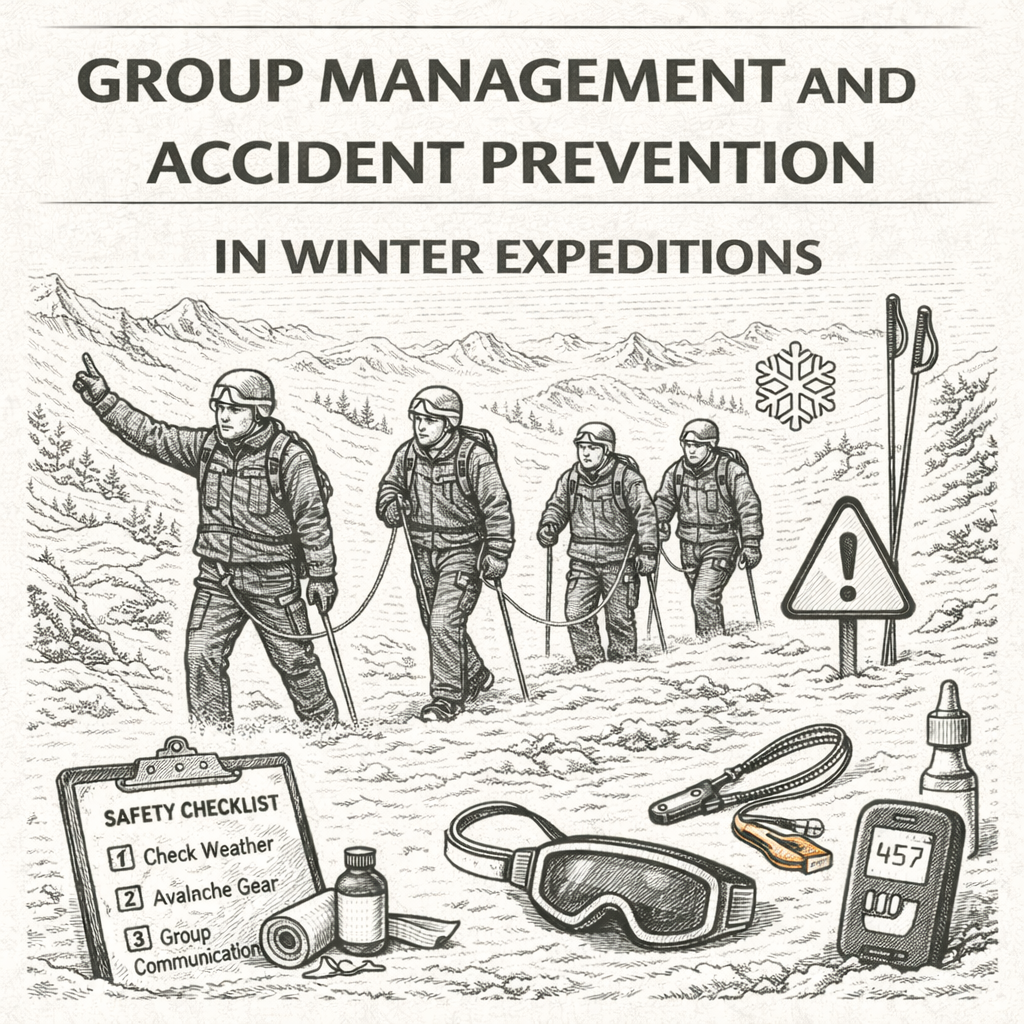
Group Management and Accident Prevention in Winter Expeditions
In winter expeditions, accidents are rarely caused by a single factor. More often, they result from a combination of poor communication, decision-making errors, fatigue, and environmental stress.
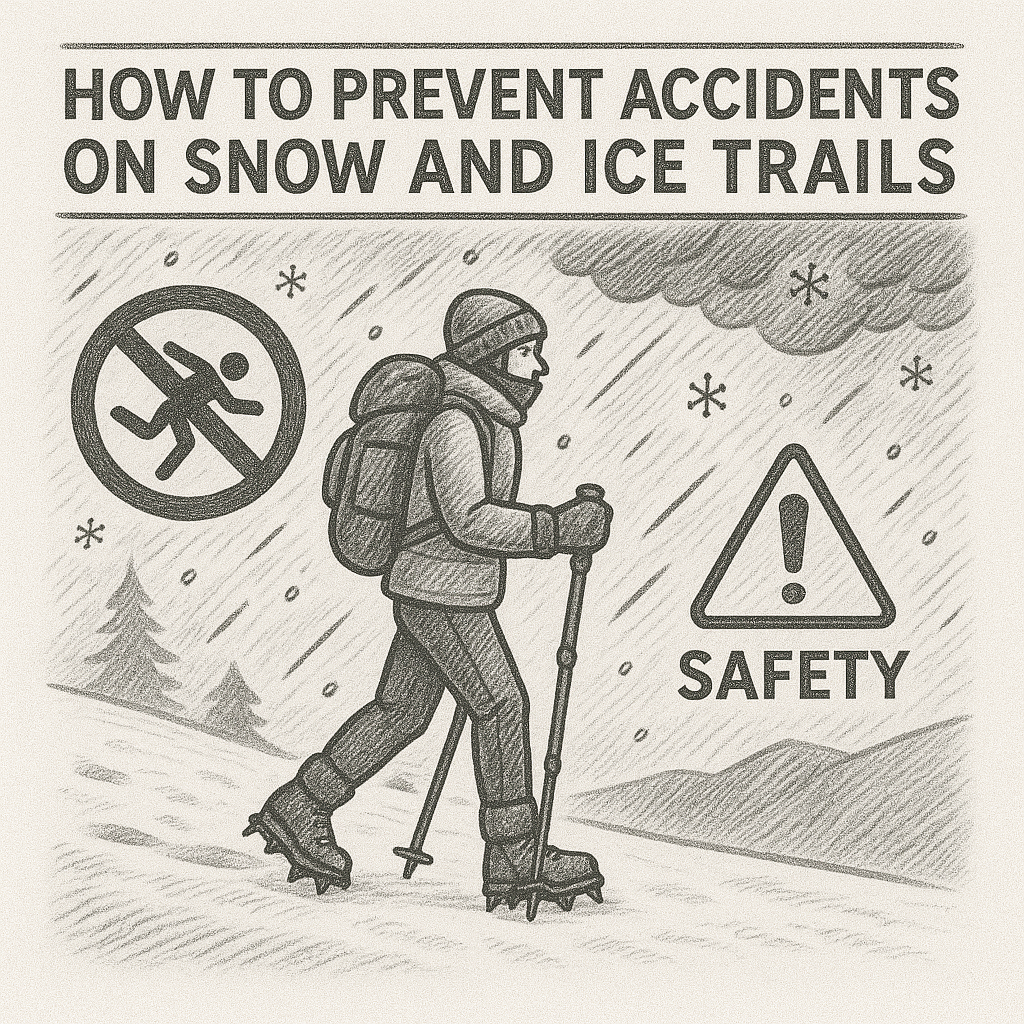
How to Prevent Accidents on Snow and Ice Trails
Winter hiking rewards those who prepare properly—offering quiet landscapes, crisp air and breathtaking views—while remaining safe through disciplined, informed decision-making.
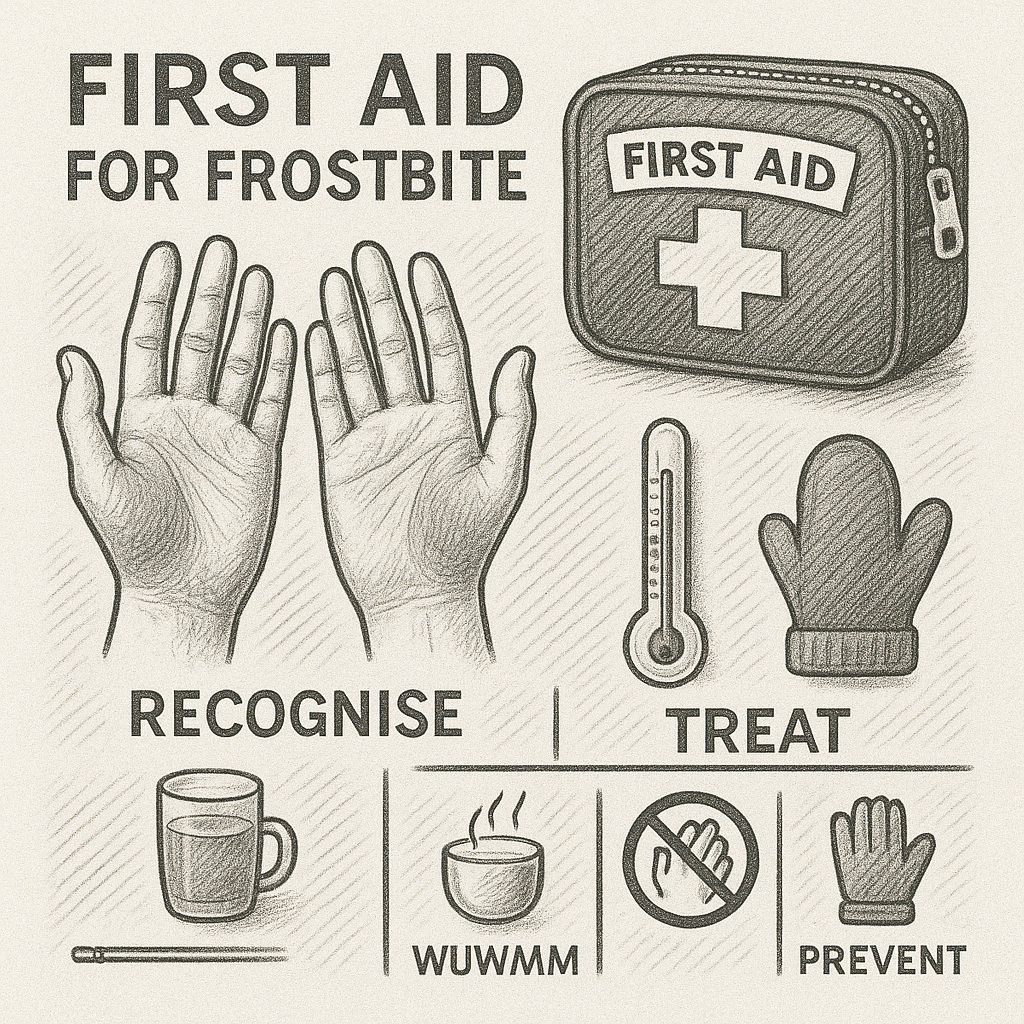
First Aid for Frostbite: How to Recognise, Treat, and Prevent Cold-Related Tissue Damage
With the right equipment, awareness and preparation, hikers can enjoy winter landscapes while staying safe from cold-related dangers.
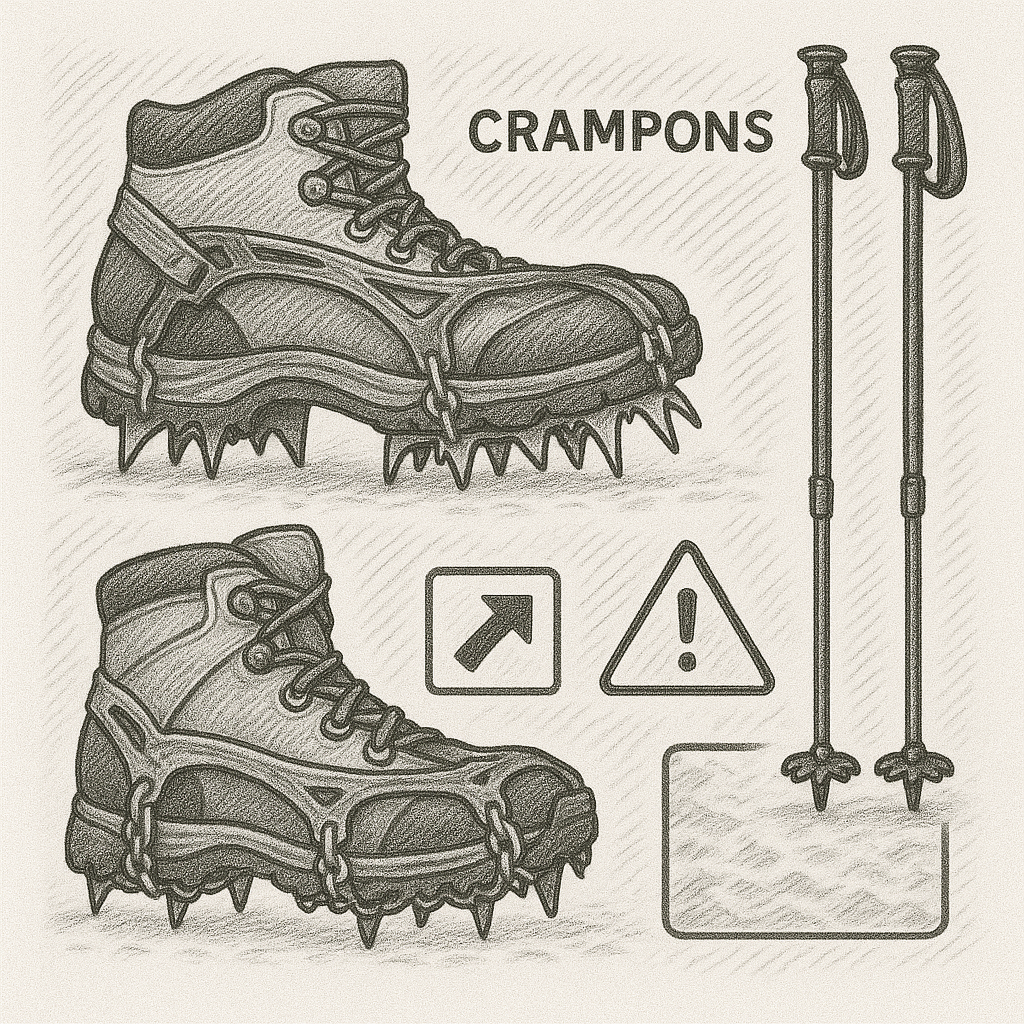
How to Use Crampons, Microspikes, and Trekking Poles Safely on Winter Trails
With proper technique and preparation, hikers can confidently explore winter landscapes while significantly reducing risk.
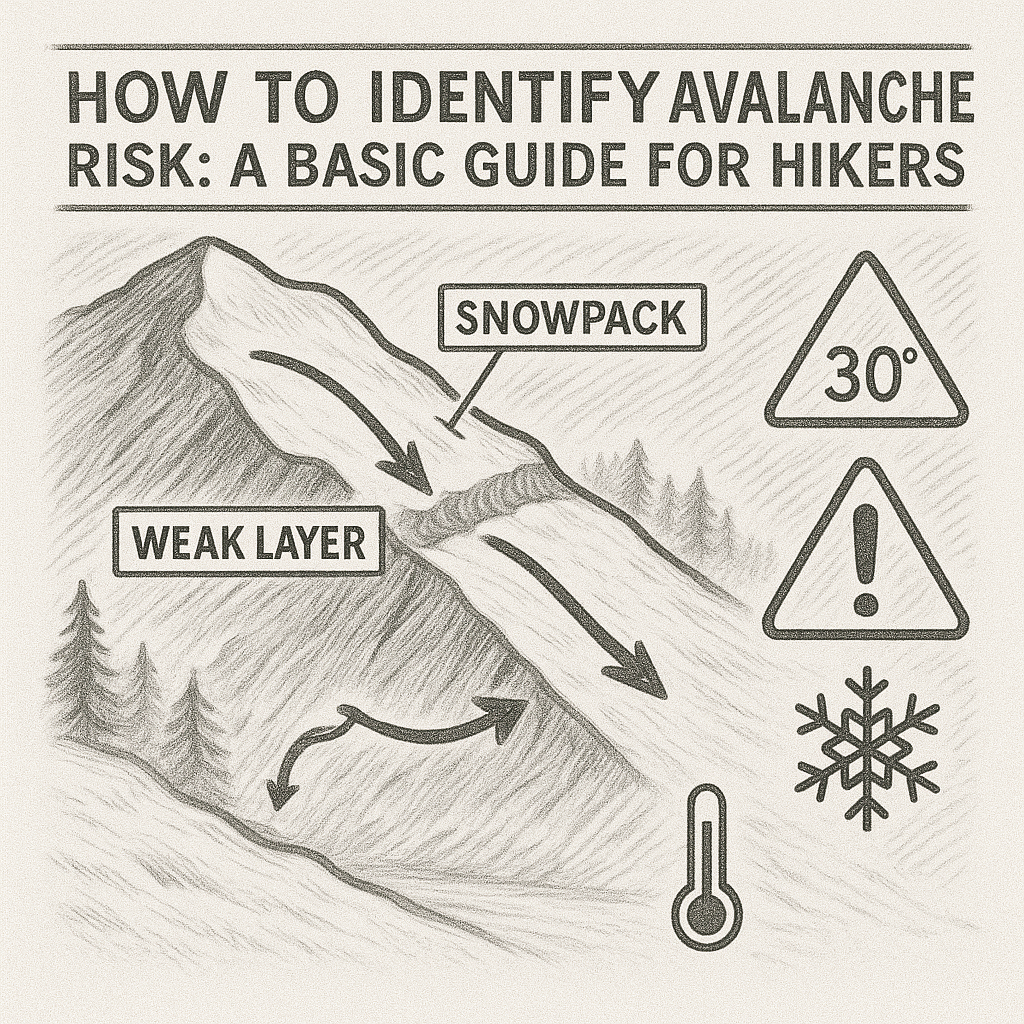
How to Identify Avalanche Risk: A Basic Guide for Hikers
With preparation, attention and respect for winter conditions, you can enjoy the beauty of snow-covered mountains while keeping yourself and your group safe.
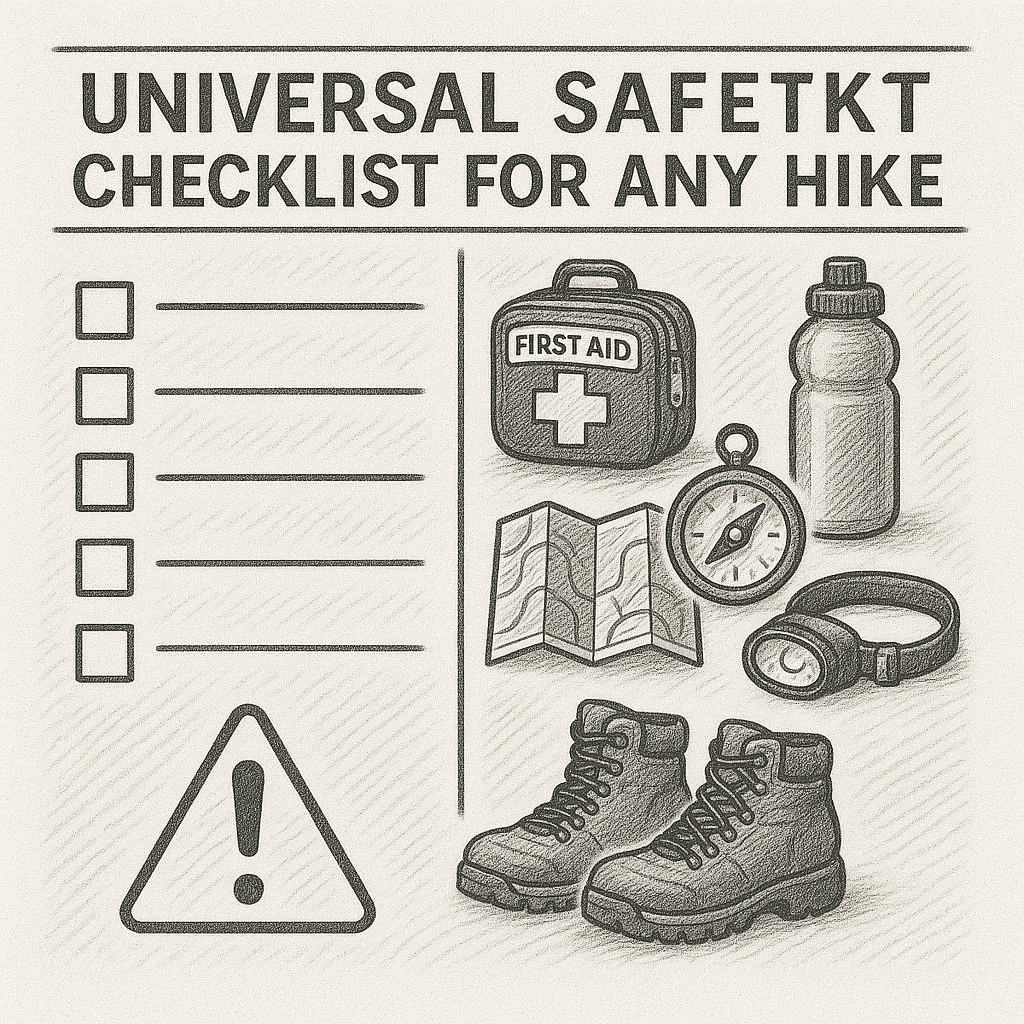
Universal Safety Checklist for Any Hike
A universal safety checklist ensures consistency and reduces the chances of forgetting essential items or overlooking critical details. By incorporating this checklist into your routine, you create a safety mindset that supports smart decisions before and during your hike.
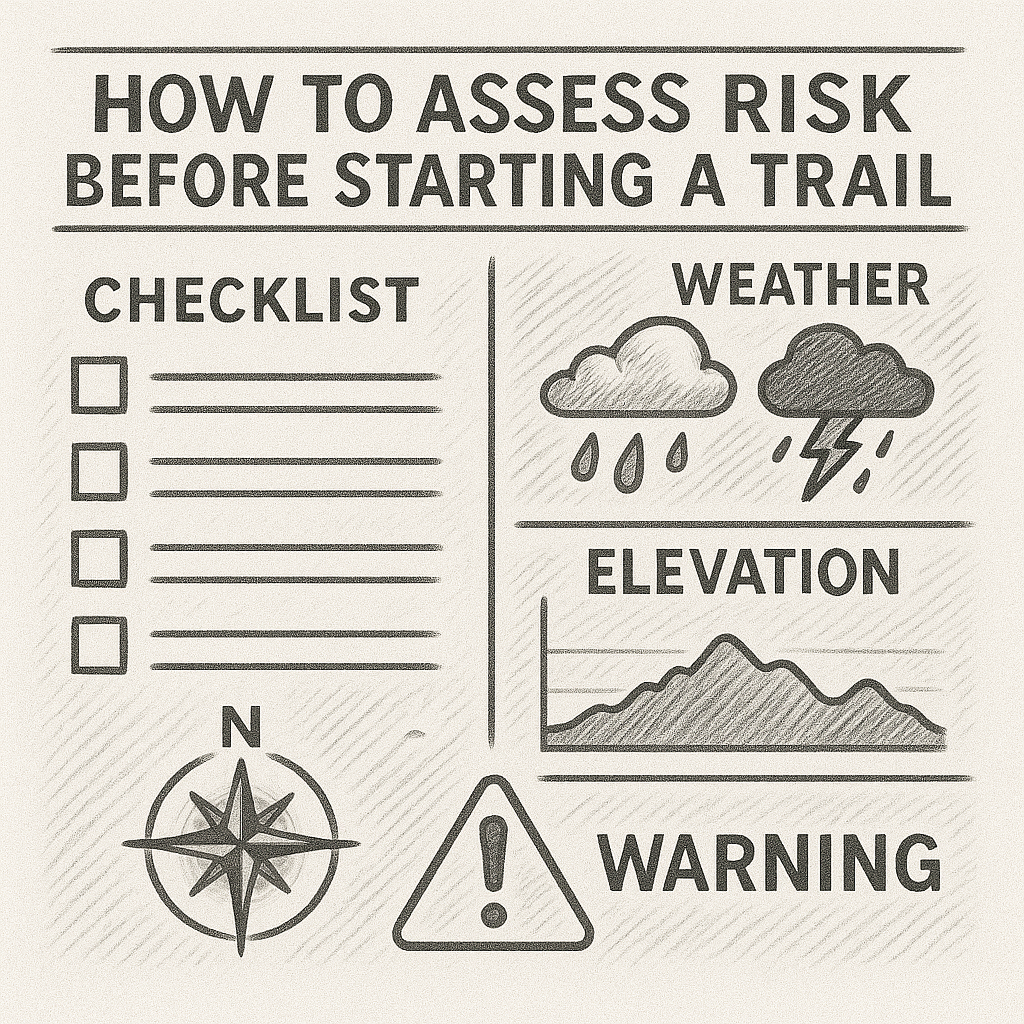
How to Assess Risk Before Starting a Trail
Risk assessment is not a one-time task but an ongoing mindset throughout your preparation and hike. Understanding the trail, reading environmental conditions and evaluating your personal readiness are fundamental for safe mountain travel.