Tengu-sanso
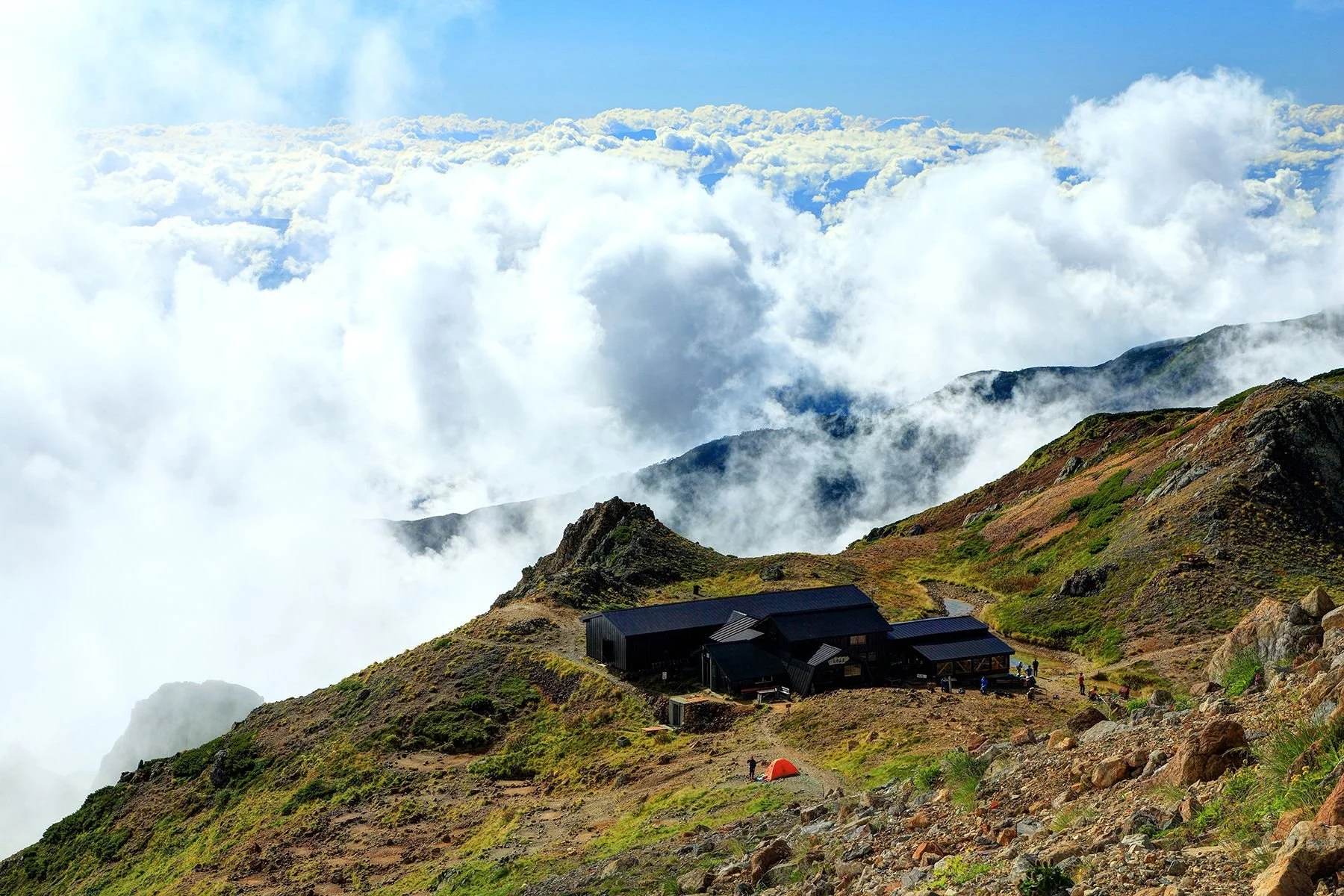
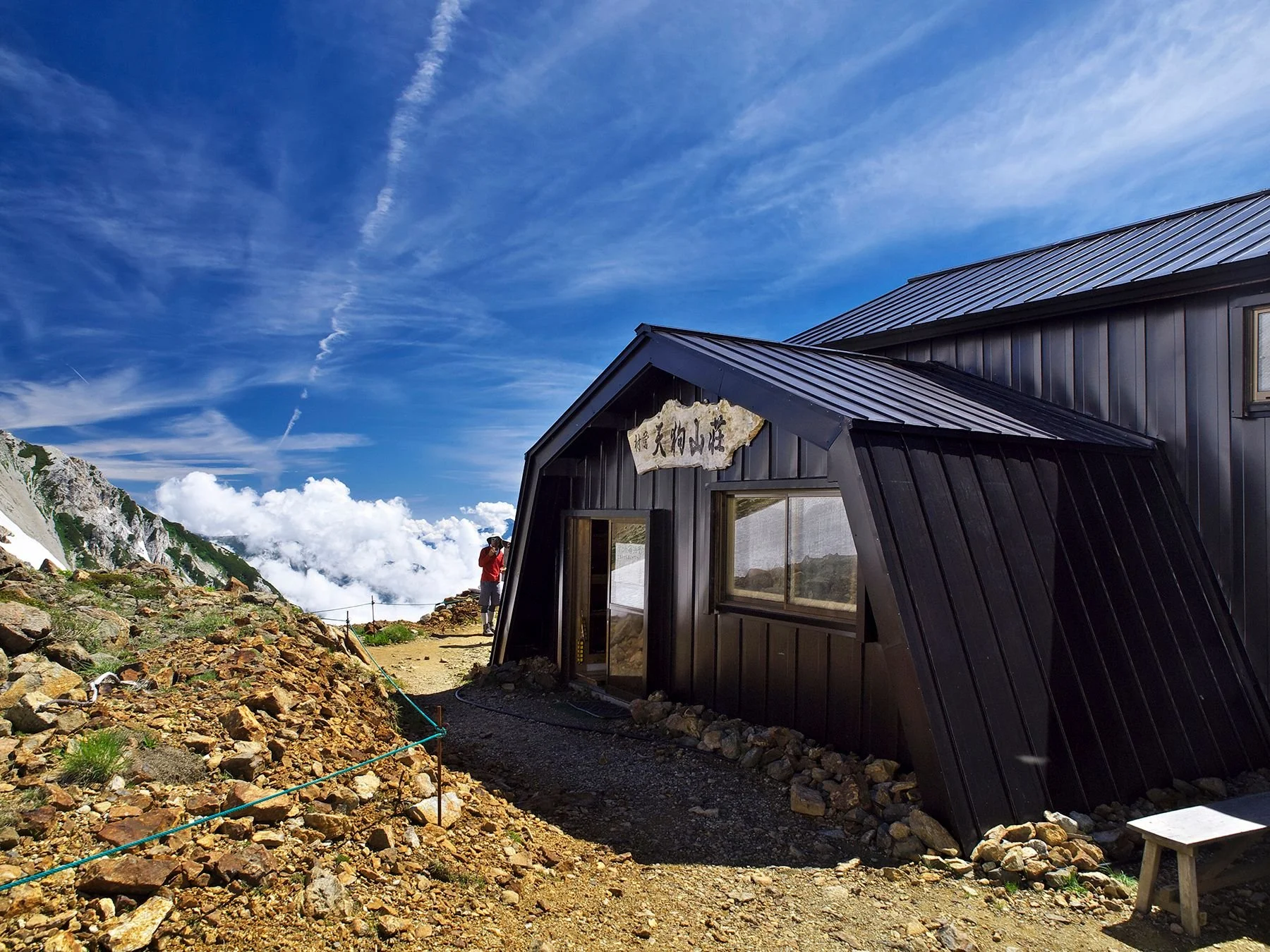
The Tengu-sanso is a public mountain hut located high on an exposed ridge of the Northern Japanese Alps, traditionally associated with routes around Mt. Tengu-dake and neighboring peaks. Remote, windswept, and functional, it serves primarily as a stage hut for experienced alpine hikers undertaking long ridge traverses rather than as a destination in itself.
-
Location: Northern Japanese Alps (ridge location near Mt. Tengu-dake), Japan
Altitude: ≈ 2,700 m
Type: Public mountain hut (Japanese alpine hut style)
Capacity: ≈ 60–80 sleeping places
Season:
Open/guarded: typically July to September (weather-dependent)
Management: Public / local authority
-
Access is fully alpine and weather-exposed.
Main approaches:
Via long ridge routes and high passes connecting neighboring huts
Hiking time: ~6–9 hours (route-dependent)
Elevation gain: ~1,000–1,600 m
Terrain: Alpine trails, rocky ridges, exposed sections
Difficulty: T3–T4
Stable weather, sure-footedness, and endurance are essential.
-
Strictly utilitarian, focused on shelter and safety.
Shared dormitory sleeping (futons or mats)
Simple meals when staffed
Limited drinking water (often rationed)
Basic toilets
Comfort is secondary to position and protection.
-
Quiet, disciplined, and weather-driven.
Fixed meal schedules
Clientele mainly ridge-traverse hikers and summit parties
Early evenings and very early starts are standard
The atmosphere reflects isolation and exposure.
-
Tengu-sanso is mainly used for:
High-ridge traverses in the Northern Japanese Alps
Linking stages between major summit huts
Emergency shelter during rapid weather changes
Long, committing multi-day itineraries
It is not a technical climbing base, but the terrain demands experience.
-
Best season: July to early September
Conditions: Strong winds, fog, and sudden storms common
Main risks: Exposure, hypothermia, whiteouts
-
Experienced alpine hikers
Long-distance ridge trekkers
Traverse-focused parties
Not suitable for beginners or casual overnights
Why This Hut Is Worth Visiting
The Tengu-sanso embodies the public high-alpine hut philosophy in Japan: minimal comfort, maximum strategic value. Its exposed ridge position makes it essential for hikers who prioritize route continuity, altitude, and commitment over scenery alone.