Via Ferrata Torre di Toblin (Delle Scalette)
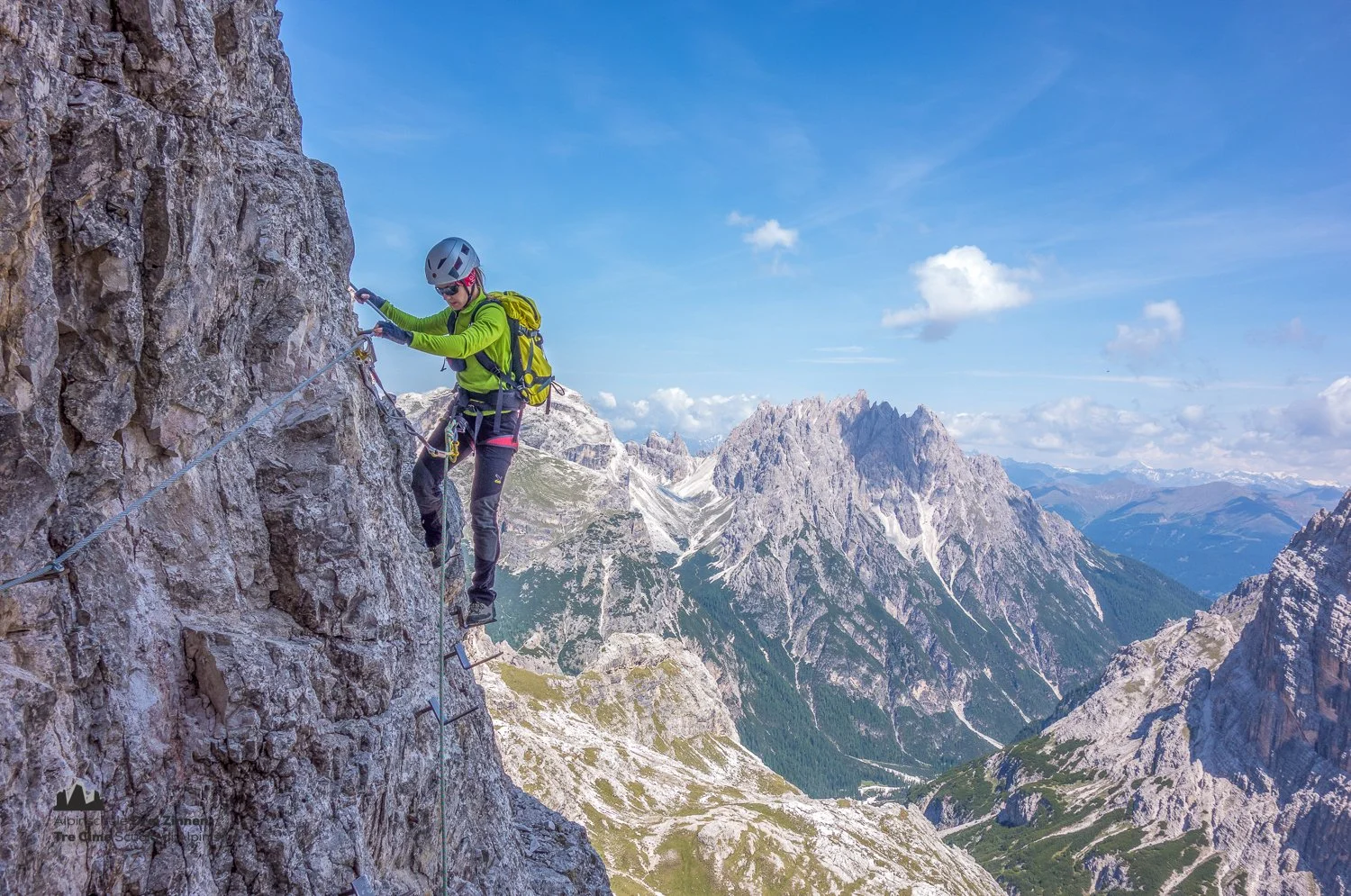
The Via Ferrata Torre di Toblin, also known as Delle Scalette, is one of the most iconic ferrata routes in the Tre Cime / Drei Zinnen area of the Dolomites. Famous for its dramatic ladders, exposed walls, and unmatched views, it offers an exhilarating but accessible alpine adventure. The route ascends the imposing Torre di Toblin (2,617 m), a wartime lookout tower, making it an experience that combines history, vertical excitement, and sweeping panoramas of one of the most scenic regions in the Alps.
Trail Overview
Duration: 3 to 4 hours (including ascent via ferrata and descent on the normal route)
Difficulty: Medium to Hard (C, with exposed ladders and vertical sections)
Best for: Intermediate ferrata climbers with good fitness and confidence on exposed terrain
Exposure: High; multiple vertical ladder systems and narrow ledges
Required gear: Via ferrata set (harness, lanyards, helmet), gloves, sturdy mountain boots; optional: lightweight via ferrata cow’s tail for resting
Route Description
The route begins near Rifugio Locatelli, where a short approach trail leads to the base of the Torre di Toblin. The ascent immediately introduces the character of the ferrata: steep iron ladders mounted directly onto the rock, narrow steps, and vertical walls secured with cables.
The climb progresses through a sequence of exposed ladders and ledges known as “Le Scalette,” offering a direct and thrilling route up the west and north faces of the tower. Several sections require arm strength and steady footwork, especially where the ladders are long and nearly vertical.
After the final ladder sequence, the route transitions onto easier scrambling terrain, leading to the small summit plateau. The descent follows a separate, easier ferrata route on the opposite side, avoiding traffic and providing a safer downclimb with cables and natural steps.
Highlights
Vertical ladder systems that create a dramatic and memorable ascent.
Spectacular views of the Tre Cime di Lavaredo, Monte Paterno, and the surrounding Dolomite spires.
A historic climb on a former World War I military outpost.
A perfectly designed loop system with separate ascent and descent routes, reducing congestion.
A compact yet intense ferrata ideal for combining with nearby routes such as Via Ferrata Paternkofel.
Difficulty and Required Skills
The Via Ferrata Torre di Toblin is rated C, with continuously steep sections and considerable exposure. Climbers should be comfortable ascending long ladders, managing vertical exposure, and maintaining balance on narrow ledges.
Good cardio fitness and basic upper-body strength are beneficial due to the ladder sequences. Prior via ferrata experience is recommended, though confident and fit beginners with guidance can complete the route safely. Proper gear and a cautious approach are essential, especially in wet or icy conditions.
When to Go
The best season is from late June to early October, depending on snow conditions. Early-season attempts may encounter snow patches or icy cable sections, making the climb riskier. Weather changes quickly in the Dolomites, so stable forecasts are important, particularly due to the exposed summit and metal ladders, which should be avoided during storms.
Access and Logistics
The route is most commonly accessed from Rifugio Locatelli, which can be reached from several trailheads, the most popular being Rifugio Auronzo or Val Fiscalina.
From Rifugio Locatelli, follow the signed paths toward Torre di Toblin; the base of the ferrata is reached in approximately 20–30 minutes.
Rifugio Locatelli and the surrounding huts offer food and accommodation, making it easy to combine this ferrata with multi-day hikes in the Tre Cime region. An early start is recommended to avoid congestion on the ladders.
Why It Belongs on Every Adventurer’s List
Torre di Toblin is a textbook example of what makes the Dolomites a world-class climbing destination: vertical drama, unique rock formations, military history, and unforgettable scenery. Compact yet intense, it delivers an authentic alpine experience without requiring extreme technical skills. For anyone exploring the Tre Cime area, this via ferrata stands among the most rewarding and scenic climbs in the region.