Via Ferrata Oskar Schuster
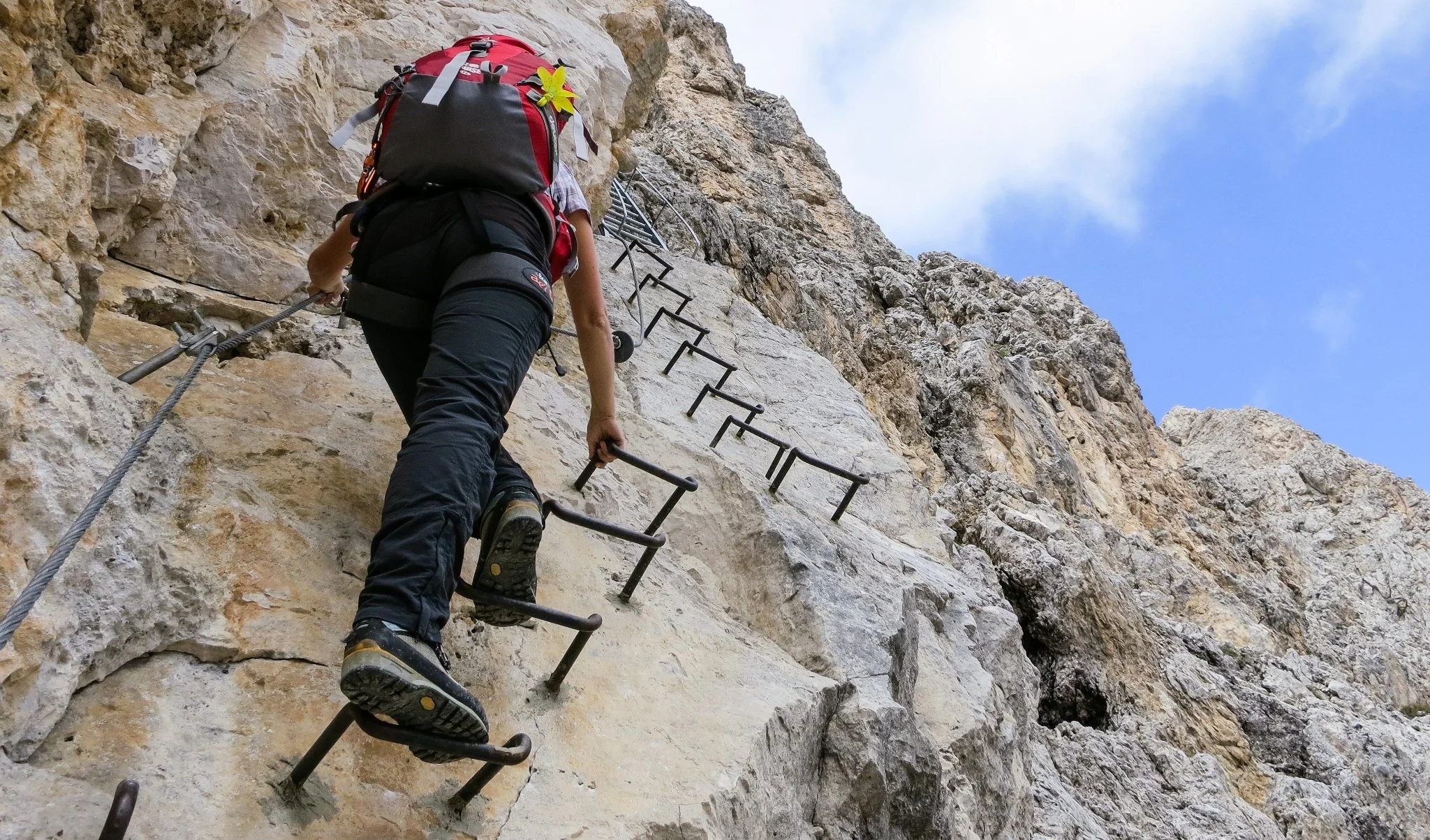
The Oskar Schuster Via Ferrata is one of the classic alpine routes of the Dolomites, weaving its way up the rugged Sasso Piatto (Plattkofel) in the heart of the Sassolungo Group. Known for its old-school character, exposed ledges and dramatic towers, it offers a true alpine adventure that blends scrambling, historic ferrata sections and breathtaking views over the Alpe di Siusi. Although not technically extreme, it requires confidence in exposed terrain and solid mountain experience.
Trail Overview
Duration: 4 to 6 hours total (1.5–2 hours approach, 2 hours via ferrata, 1–2 hours descent)
Difficulty: C / moderately difficult; some sections of grade D depending on conditions
Best for: Experienced hikers comfortable with exposure, scrambling, and older-style via ferrata infrastructure
Exposure: High on several traverses, chimneys, and ledges
Required gear: Helmet, via ferrata set, climbing harness, gloves; sturdy hiking boots strongly recommended
Route Description
The route begins at Rifugio Vicenza (2585 m), reached by a steep approach from the Alpe di Siusi or the Sasso Piatto hut. From the rifugio, the track heads north beneath towering limestone walls before reaching the start of the ferrata, marked by the first metal cables.
The initial section climbs a series of ledges and short vertical steps, gradually increasing in exposure while offering excellent grip on the rough Dolomite rock. The route then enters a series of chimneys and narrow gullies equipped with older ladders and iron pins, giving the ascent a classic alpine feel.
Midway, the route traverses an exposed slab before ascending a sustained section of cables leading to the upper ridge. From here, easier scrambling and short protected steps guide climbers to the summit of Sasso Piatto (2958 m), where panoramic views extend over the entire Sassolungo Massif, Val Gardena, and the vast meadows of the Alpe di Siusi.
The descent follows the normal path down the western flank toward Rifugio Sasso Piatto, completing the loop.
Highlights
A historic, traditional-style via ferrata with authentic alpine character
Dramatic limestone chimneys, gullies, ledges and exposed traverses
Summit of Sasso Piatto with far-reaching Dolomite views
Excellent combination of scrambling and protected climbing
Ideal location within one of the most iconic massifs of the Dolomites
Difficulty and Required Skills
The Oskar Schuster Ferrata is graded at a solid C, with short passages that may feel closer to D for less experienced climbers. The older infrastructure means metal rungs may be spaced out, and some protection is minimal. Good route finding, secure footwork, and the ability to climb confidently with exposure are essential.
It is not suitable for beginners. Participants should be comfortable with steep scrambling, basic climbing movements, and using a via ferrata lanyard system efficiently. Weather can quickly change at high altitude, so alpine awareness and decision-making skills are important.
When to Go
The ideal season runs from late June to late September. The route should only be attempted in stable weather, as rain, ice, or snow make the chimneys and slabs extremely dangerous. Early in the season, check for residual snow around the approach and summit.
Access and Logistics
Starting point: Alpe di Siusi or Monte Pana, with access to Rifugio Vicenza
Huts: Rifugio Sasso Piatto and Rifugio Vicenza offer convenient staging points
Approach: 1.5 to 2 hours to the start of the ferrata
Descent: Typically via Rifugio Sasso Piatto, forming a natural loop
Transport: Cable cars from Alpe di Siusi and lifts from Val Gardena shorten approach times; check seasonal schedules
Parking is available in Val Gardena, with shuttle or lift connections depending on the season.
Why It Belongs on Every Adventurer’s List
The Oskar Schuster Via Ferrata delivers the essence of Dolomite alpinism: rugged terrain, soaring rock towers, exposed passages, and a true sense of adventure. It is an unforgettable route for those seeking a classic alpine ferrata with character, challenge, and dramatic scenery. For experienced climbers, it stands as one of the most rewarding ascents in the Sassolungo Group.