Via Ferrata Punta Anna
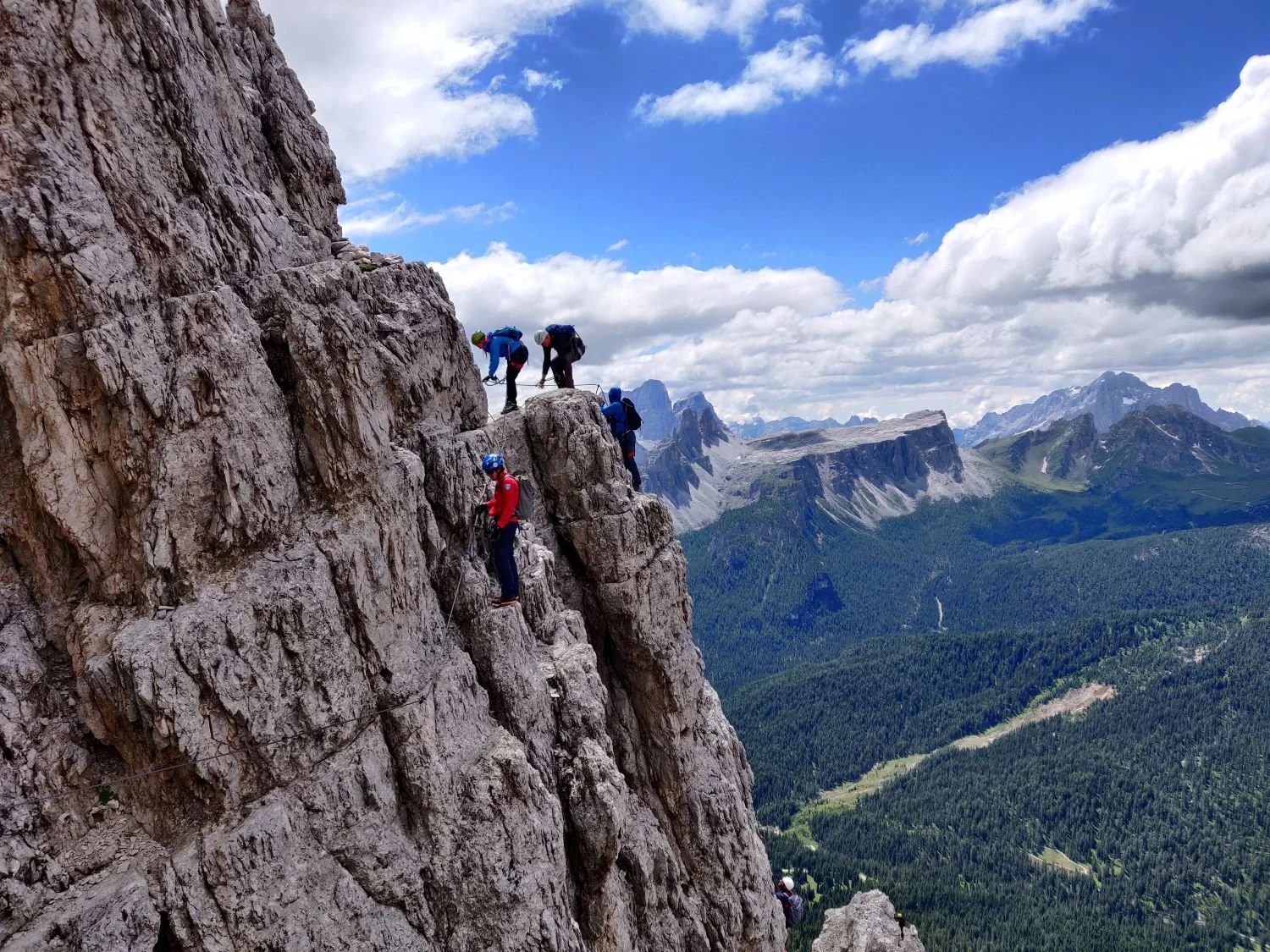
Via Ferrata Punta Anna is one of the most iconic and exposed routes in the Dolomites, rising directly above the town of Cortina d’Ampezzo and climbing the unmistakable spine of Punta Anna on the Tofana di Mezzo massif. Known for its breathtaking verticality, constant exposure, and uninterrupted climbing, it is a demanding route designed for experienced mountaineers seeking a world-class alpine challenge.
Trail Overview
Duration: 4 to 6 hours for the main via ferrata section; 7 to 9 hours round trip depending on fitness and descent choice.
Difficulty: High to very high (VF4–VF5). Sustained exposure with few resting points.
Best for: Experienced via ferrata climbers with strong technique, good endurance, and comfort on exposed terrain.
Exposure: Extremely exposed throughout; long, continuous vertical walls and narrow ridges.
Required Gear: Certified via ferrata set (Y-lanyard with energy absorber), climbing helmet, harness, gloves, sturdy mountain boots, layers for changing alpine weather, plenty of water, and optional lightweight via ferrata leash for photos/rests.
Route Description
The route begins near Rifugio Dibona, accessible via a mountain road from Cortina. A well-marked trail ascends to the starting cables at the base of Punta Anna. From the first meters, the via ferrata commits climbers to a near-vertical line with uninterrupted exposure. You climb steep slabs, sharp arêtes, and narrow ledges as the ridge drops away dramatically on both sides.
Midway, the line follows the knife-edge crest of Punta Anna, offering continuous cable protection but little relief from the height. The views open toward the Tofana di Mezzo summit, the Ampezzo Valley, and distant Dolomite peaks. The upper sections involve steeper steps, airy traverses, and short overhanging moves that require strength and precise footwork.
At the top of Punta Anna, climbers can choose to descend via normal trails or continue upward to link with the Via Ferrata Gianni Aglio for a longer, even more demanding extension toward Tofana di Mezzo.
Highlights
Continuous and dramatic exposure from start to finish.
Exceptional views over Cortina d’Ampezzo and the surrounding Dolomitic towers.
A pure ridge route that combines technical movement with alpine atmosphere.
Opportunity to extend the route to Tofana di Mezzo for an even more challenging full-day adventure.
One of the most celebrated advanced via ferratas in the Dolomites.
Difficulty and Required Skills
Via Ferrata Punta Anna requires a high degree of technical competence. The route includes steep, athletic sections with limited resting points, demanding strong arm and leg endurance. Climbers must be fully comfortable with continuous exposure and managing long stretches of vertical terrain.
Previous experience on advanced via ferratas is essential. Knowledge of proper clipping technique, energy management, and risk assessment is mandatory. Weather awareness is critical, as conditions can change rapidly and the ridge offers little protection.
When to Go
The ideal season is late June to late September, depending on snowmelt and weather stability. Early in the season, patches of snow may remain on ledges or access paths. Mid-summer typically offers the most reliable conditions, but afternoon storms are common, making early starts important.
Access and Logistics
Start in Cortina d’Ampezzo and drive or take a shuttle to Rifugio Dibona (2,083 m). A marked approach trail leads to the beginning of the via ferrata in approximately 45–60 minutes.
Descents vary depending on the chosen route:
Standard descent: From the top of Punta Anna, follow marked trails back toward Rifugio Dibona.
Extended route: Continue via the Gianni Aglio ferrata toward Tofana di Mezzo, then descend via the normal route or cable car (when operating).
Good weather planning, early departure, and sufficient water are essential due to the sustained physical nature of the ascent.
Why It Belongs on Every Adventurer’s List
Punta Anna stands out as one of the purest expressions of Dolomite via ferrata climbing. Its mix of technical challenge, dramatic exposure, and unforgettable alpine scenery creates an experience that stays with climbers long after they leave the ridge. For those seeking a demanding, world-class route that tests skill and nerve, Punta Anna is a benchmark adventure and a must-do ascent in the Dolomites.