Via Ferrata Marino Bianchi
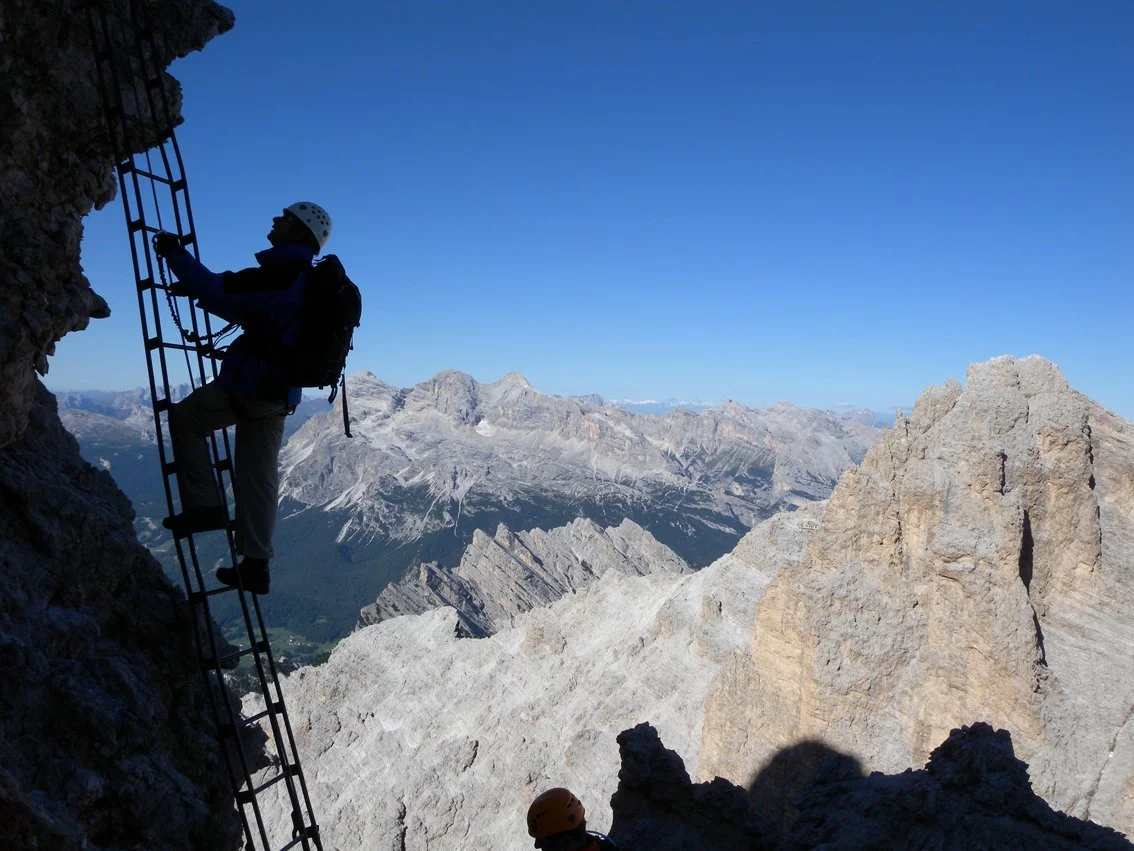
The Via Ferrata Marino Bianchi is one of the most iconic fixed-rope routes in the Dolomites, climbing the dramatic eastern ridges of Monte Cristallo above Cortina d’Ampezzo. Known for its knife-edge crests, ladders and panoramic traverses, this route offers a classic alpine atmosphere without requiring advanced mountaineering skills. It is long, airy and continuously exposed, rewarding climbers with unmatched views over the Ampezzo basin and the rugged Cristallo massif.
Trail Overview
Duration:
4 to 6 hours for the full loop, depending on conditions and fitness level.
Difficulty:
Grade C/D (intermediate to advanced). Requires confidence on exposed terrain and sustained cable sections.
Best for:
Experienced via ferrata climbers seeking a long, scenic, high-altitude route with significant exposure. Not recommended for beginners.
Exposure:
High to very high. Sharp ridges, vertical drops, narrow traverses and several sections with constant air under your feet.
Required Gear:
Standard via ferrata kit (helmet, harness, via ferrata lanyard with energy absorber), gloves, sturdy mountaineering or approach shoes, weather-appropriate layers. A lightweight rope may be useful for less confident climbers.
Route Description
The adventure begins at Rifugio Son Forca, reached by taking the Son Forca chairlift. From here, a marked path leads toward the base of Cresta di Mezzo, where the first metal cables appear. The route immediately enters steep, exposed ground, climbing metal ladders and gaining the narrow ridge.
The ferrata follows the long crest with continuous cables, alternating between ladders, short rock scrambles and tight traverses. The most thrilling sections include airy steps on the northern ridge and narrow passages where the drop plunges vertically on both sides.
As the ridge rises, the views expand across the Dolomites: Sorapiss, Antelao, Tofane and the whole Ampezzo region. The route ends close to the summit area of Monte Cristallo di Mezzo. Most climbers descend via the equipped path leading toward Forcella Grande, eventually returning to the chairlift.
Highlights
A classic Dolomite ridge route with unmatched exposure.
Continuous cable protection for most of the ascent.
Far-reaching views across the Cristallo massif and Cortina d’Ampezzo.
A long, adventurous outing suitable for experienced ferrata enthusiasts.
Accessible via lift, reducing the approach time.
Difficulty and Required Skills
The Marino Bianchi demands strong footing, confidence on exposed terrain, and the ability to manage sustained cable climbing for several hours. Technical sections involve vertical ladders, narrow ridges and awkward steps where balance is essential. Weather changes can affect conditions quickly at this altitude, so climbers must be prepared for wind and colder temperatures.
This route is not appropriate for beginners or those uncomfortable with significant exposure.
When to Go
Late June to late September is generally the safest period, depending on snow melt. Early and late season may still hold snow or ice on north-facing sections of the ridge, requiring caution. Clear, stable weather is essential; strong winds or storms make the route dangerous.
Access and Logistics
Starting point: Rifugio Son Forca, accessed via the Son Forca chairlift from Rio Gere (near Cortina d’Ampezzo).
Approach: 20–30 minutes from the lift to the start of the ferrata.
Descent: Follow the marked route toward Forcella Grande, then return to the lift station.
Important: The Cristallo cable car system may not operate every year; check local lift schedules before planning your trip.
Why It Belongs on Every Adventurer’s List
The Via Ferrata Marino Bianchi is a true Dolomite classic, combining dramatic exposure with a ridge-top journey through one of the region’s most distinctive massifs. It offers a perfect balance of physical challenge, technical interest and breathtaking scenery, making it a must-do for any climber who wants to experience the essence of Dolomite via ferrata routes.