Via Ferrata Ivano Dibona
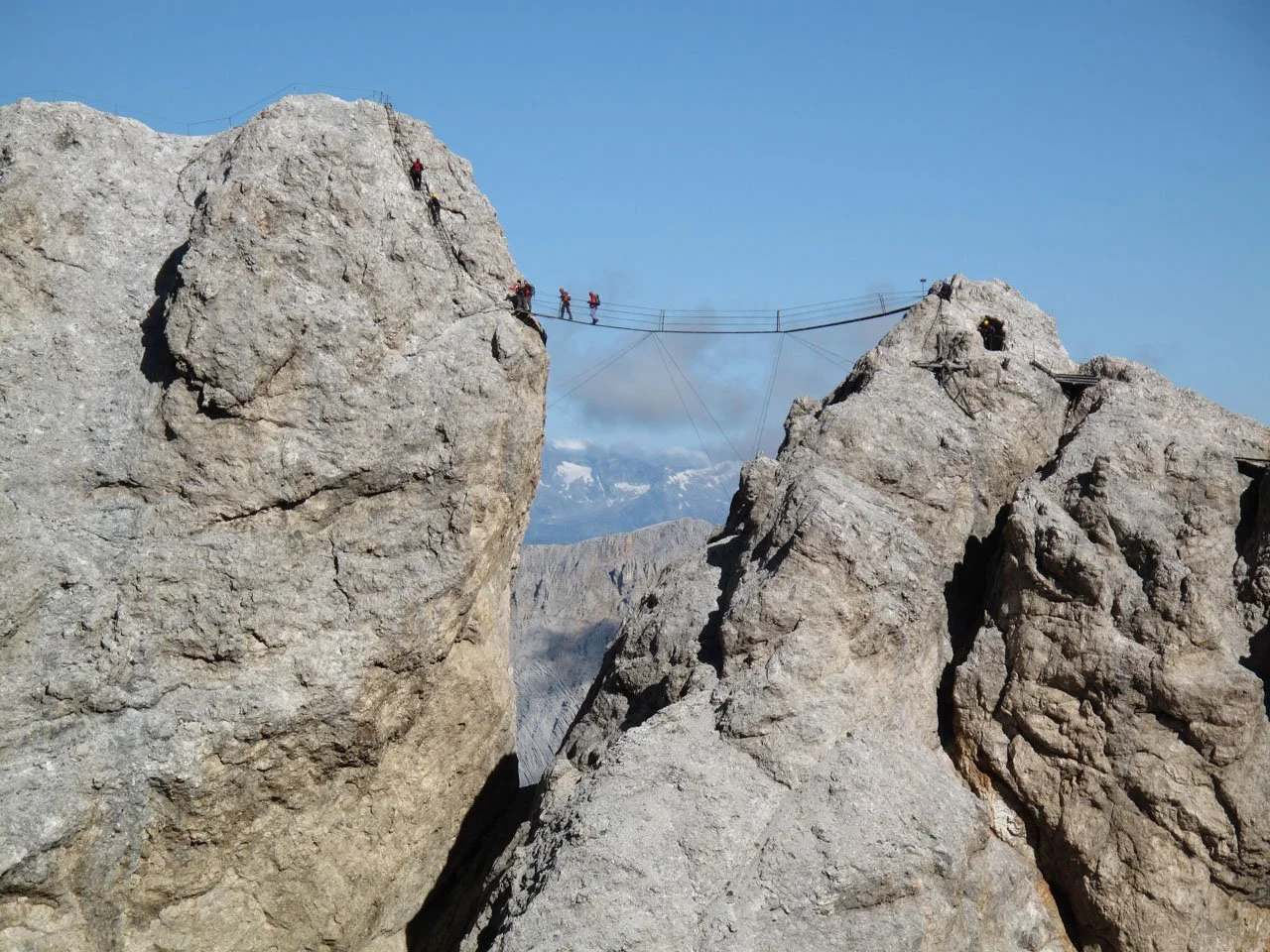
The Via Ferrata Ivano Dibona is one of the most iconic ridge routes in the Dolomites, known for its dramatic exposure, historical military remains, and the famous long suspension bridge of Monte Cristallo. Stretching across sharp ridgelines and steep limestone towers, this route delivers a blend of scenery, history, and physical challenge that makes it one of the most memorable ferratas in Italy.
Trail Overview
Duration: 6 to 8 hours for the full traverse, depending on pace
Difficulty: Moderate (B/C), with significant exposure along ridges
Best for: Hikers with solid mountain experience looking for a long, scenic ridge traverse
Exposure: High to very high in multiple sections, especially on ridgelines and the suspension bridge
Required gear: Standard via ferrata set (harness, helmet, lanyards), gloves, sturdy boots; optional lightweight via ferrata rope for less experienced climbers
Route Description
The route typically begins with a cable car ascent to Forcella Staunies (when operating) or via the steep approach from Rio Gere if the lift is closed. From the saddle, the path immediately enters the historic military tunnel and continues onto narrow ledges equipped with cables.
The first major landmark is the long suspension bridge, a signature moment on the Dibona traverse. After crossing, the route follows the crest of the Cristallo ridge, alternating between cable-protected sections, exposed walkable ridges, and short climbs. Old military outposts and bunkers appear along the way, offering insight into the First World War presence in the area.
The route then continues toward Forcella Grande and descends gradually through scree slopes and rocky paths toward the Son Forca area, eventually returning to the starting point or finishing near the Rifugio Son Forca, depending on the chosen exit.
Highlights
The dramatic suspension bridge spanning a deep Dolomite void
A ridge traverse with near-constant panoramic views over Cortina d’Ampezzo
Historical remains of World War I fortifications
Unique limestone formations of the Cristallo group
A varied experience combining exposed but manageable climbing, historical exploration, and scenic hiking
Difficulty and Required Skills
The Via Ferrata Ivano Dibona is rated Moderate (B/C), but the length and continuous exposure demand good fitness and strong nerves. Climbers should be confident on narrow ridgelines and capable of moving efficiently over mixed terrain. While the technical moves are manageable, wind, weather changes, and fatigue can increase the challenge. Basic via ferrata skills are expected, and beginners should only attempt it with guidance.
When to Go
The best period to complete the route is from late June to late September, depending on snowmelt. Early in the season, residual snow or ice on the ridge can make the traverse hazardous. Weather stability is crucial, as storms or strong winds significantly increase risk due to the high exposure.
Access and Logistics
The usual starting point is at Rio Gere or the Son Forca area above Cortina d’Ampezzo. When operating, the Staunies cable car reduces approach time and effort, though operations vary year to year. Without the lift, expect a steeper and longer approach.
Parking is available near Rio Gere. The route is linear but can be connected in loops depending on trail conditions and lift availability. Start early to avoid afternoon weather shifts and allow enough time for the long traverse.
Why It Belongs on Every Adventurer’s List
The Via Ferrata Ivano Dibona stands out not only for its scenic beauty but also for its emotional and historical depth. Traversing the Cristallo ridge places hikers in one of the most dramatic high-mountain settings in the Dolomites while walking through remnants of the past. The combination of exposure, variety, and iconic features makes this a bucket-list route for anyone seeking an unforgettable alpine experience.