Via Ferrata de Saint‑Christophe‑en‑Oisans
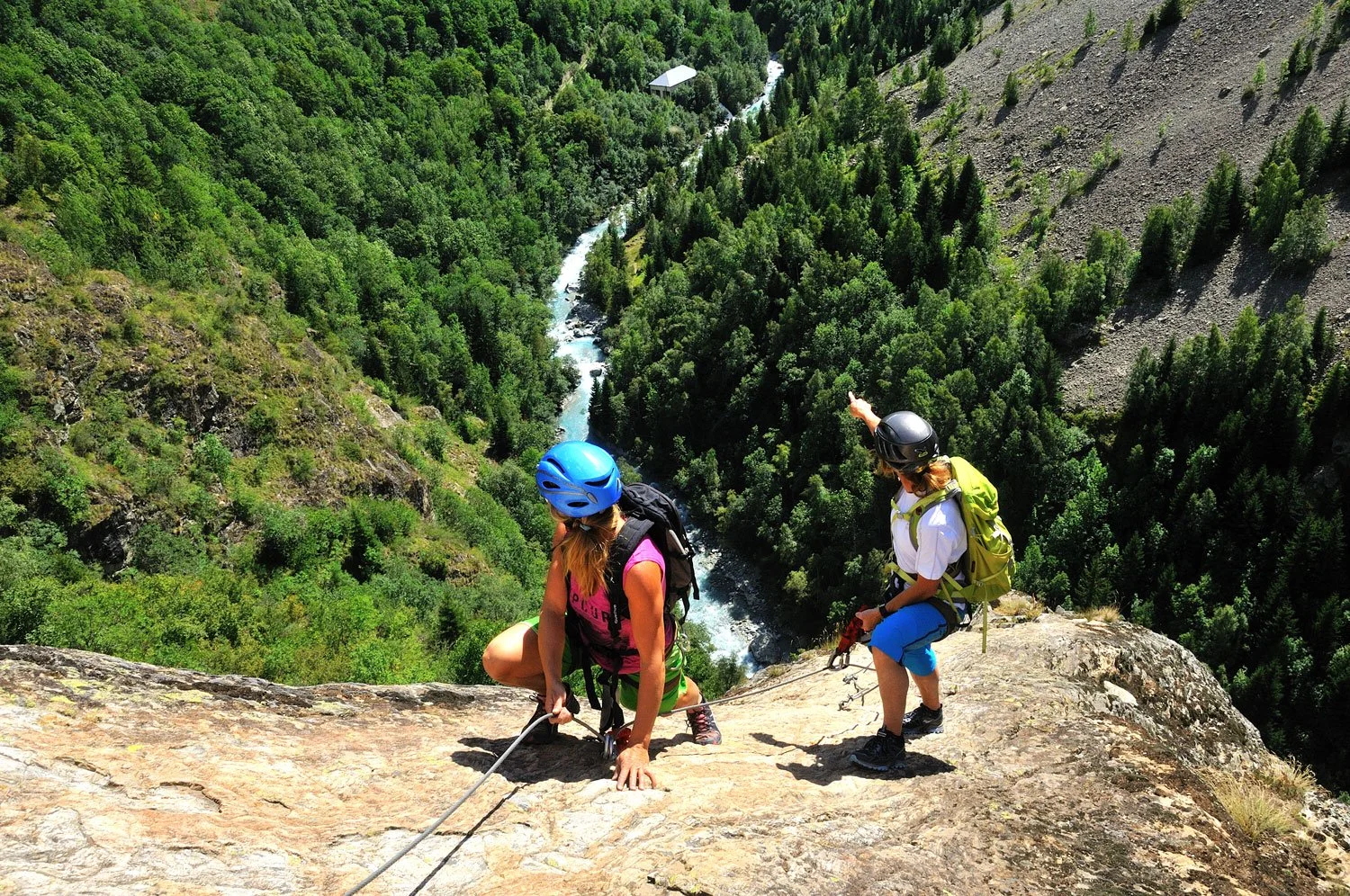
Tucked into the dramatic landscape of the Vallée du Vénéon in the French Alps, the Via Ferrata de Saint-Christophe-en-Oisans offers a thrilling blend of vertical rock, steel rungs and aerial exposure above a glacial torrent. From its soaring overhangs that hover above the rushing Vénéon river to its soaring suspended bridge and varied terrain, this route is a must-do for adventurers seeking both adrenaline and alpine atmosphere.
The route is located in the valley of Saint‑Christophe‑en‑Oisans in the Isère department, within the greater Massif des Écrins — making it a highlight of alpine adventure in southeastern France.
Trail Overview
Location: Saint-Christophe-en-Oisans (Isère), France.
Altitude of start: Around 1 200–1 385 m, depending on section.
Elevation gain: For the main demanding section approx. 344 m vertical ascent.
Length: Roughly 700 m of ferrata (main section) according to estimates.
Duration: Section 1 is stated at about 2h30 for fit climbers. Section 2, a gentler variant, around 1h30.
Difficulty ratings:
Section 1: rated D (difficult) in French classification.
Section 2: rated PD (peu difficile, “not very difficult”) and suitable from age 6+.
Key features: Overhangs above the Vénéon river, suspended footbridge, rock slabs and vertical faces.
Route Description
The Via Ferrata is organised into two distinct segments (“tronçons”) which offer different levels of challenge:
Section 1 (Tronçon 1)
From the village parking or the trailhead, you tackle the first overhanging rock ledge above the rushing Vénéon, immediately setting the tone of exposure and thrill. You then climb steadily, gaining height until reaching a notable suspended footbridge (~10 m long) that sways above a void — a dramatic moment in the route. After the bridge, the terrain shifts to slabs and vertical rock faces before arriving at the exit point by the road of Saint-Christophe-en-Oisans. This segment offers few escape routes and is intended for climbers comfortable with vertical terrain.
Section 2 (Tronçon 2)
This second segment was upgraded in 2018 to add escape options and to make it accessible to younger participants. Starting at ~1,385 m, it presents ~160 m of ascent and is designed for families or less technical participants. The route remains scenic — still above the Vénéon — but the exposure and technical difficulty are lower. A perfect introduction into via-ferrata in alpine setting.
Return/Exit
From the end of Section 1 or Section 2 you descend via a marked path back to the village or the parking zone. For Section 2 the return is short (~15 minutes) via a specially laid path.
Highlights
Jaw-dropping exposure above the Vénéon: The route begins literally above the blue glacier-fed torrent, giving that high-alpine feel from the start.
Suspended footbridge and aerial sections: The 10 m long bridge is a standout feature, combining thrill with magnificent views of the valley.
Varied terrain: From overhangs to slabs to vertical faces, the progression remains engaging and not monotonous.
Family-friendly option: Section 2 offers a gentler route for younger adventurers (from age 6) and less experienced via-ferrata participants.
Scenic alpine valley setting: The surrounding cliffs, lush meadows, and glacial river make the route as much an aesthetic experience as a challenge.
Difficulty and Required Skills
Section 1 – rated D (difficult) in French via-ferrata scale. Expect:
Significant exposure (cliff edges, overhangs)
Good upper-body strength and confidence on vertical terrain
Solid via-ferrata kit: helmet, harness, via-ferrata lanyards with shock absorber, sturdy gloves, good shoes.
No major climbing moves, but the terrain is demanding and sustained.
Little escape route: once committed, you’re on the route, so check weather and physical condition.
Section 2 – rated PD (not very difficult). Suitable for:Beginners to via-ferrata or with children (age 6+), as the setting is gentler though still vertical.
Basic fitness and no fear of heights helpful.
General safety: Mountain weather changes quickly, metal ladders/cables conduct rain/wetness, so always check conditions. Via-ferrata remains an activity mixing hiking and climbing — treat it with respect for risk.
When to Go
Season: Typically from April/May through October, depending on weather and snowmelt. Example: via-ferrata section information lists opening from 15 April to 19 October.
Best months: Late spring to early autumn (May–September) when the approach and rock are clear of snow, and the views are vivid.
Weather: Choose days with stable weather — avoid thunderstorms (metal structures, exposed terrain).
Time of day: Early morning or after midday is best for sun/lighting on the face, plus fewer crowds.
Conditions: After heavy rain checks are essential — slippery metal and rock surfaces are hazardous.
Access and Logistics
Getting there: Drive or bike to the hamlet of Saint-Christophe-en-Oisans via the valley road. Parking available near “Plan du Lac” or the small Banchet parking lot before the two via-ferrata junctions.
Approach: From the parking area, short walk or hike to the start of the via-ferrata (5-10 minutes for Section 1 in some descriptions).
Equipment hire: Available at the white-water base at Plan du Lac for Section 2 and general activities.
Return: After finishing the route, follow the marked trail back to the village or parking area. For Section 2, return path is ~15 minutes.
Facilities: Basic amenities at Saint-Christophe village or Plan du Lac — cafés, parking, information centre.
Safety note: Make sure to check local signage, conditions, and optionally hire a guide if new to via-ferrata or alpine terrain.
Why It Belongs on Every Adventurer’s List
The Via Ferrata de Saint-Christophe-en-Oisans offers a unique convergence of thrill, alpine scenery and accessibility. For the intrepid hiker or climber, this route delivers:
A genuine vertical adventure above a glacier-fed torrent in the heart of the Écrins massif — few via-ferrata offer such dramatic alpine context.
A route that suits both experienced ferratists (Section 1) and families or newcomers (Section 2) — making it versatile.
Spectacular visual and atmospheric reward: the suspended bridge, the overhangs, the valley views leave a lasting impression.
A location that immerses you in true alpine wilderness, yet remains reachable and manageable in a day — perfect for those who split time between trekking and via-ferrata.
In short, whether you’re seeking your next adrenaline fix or gently introducing younger ones to vertical mountain fun, this via-ferrata ticks both boxes. It’s not merely a climb — it’s a mountain memory.