Via Ferrata de la Grande Falaise
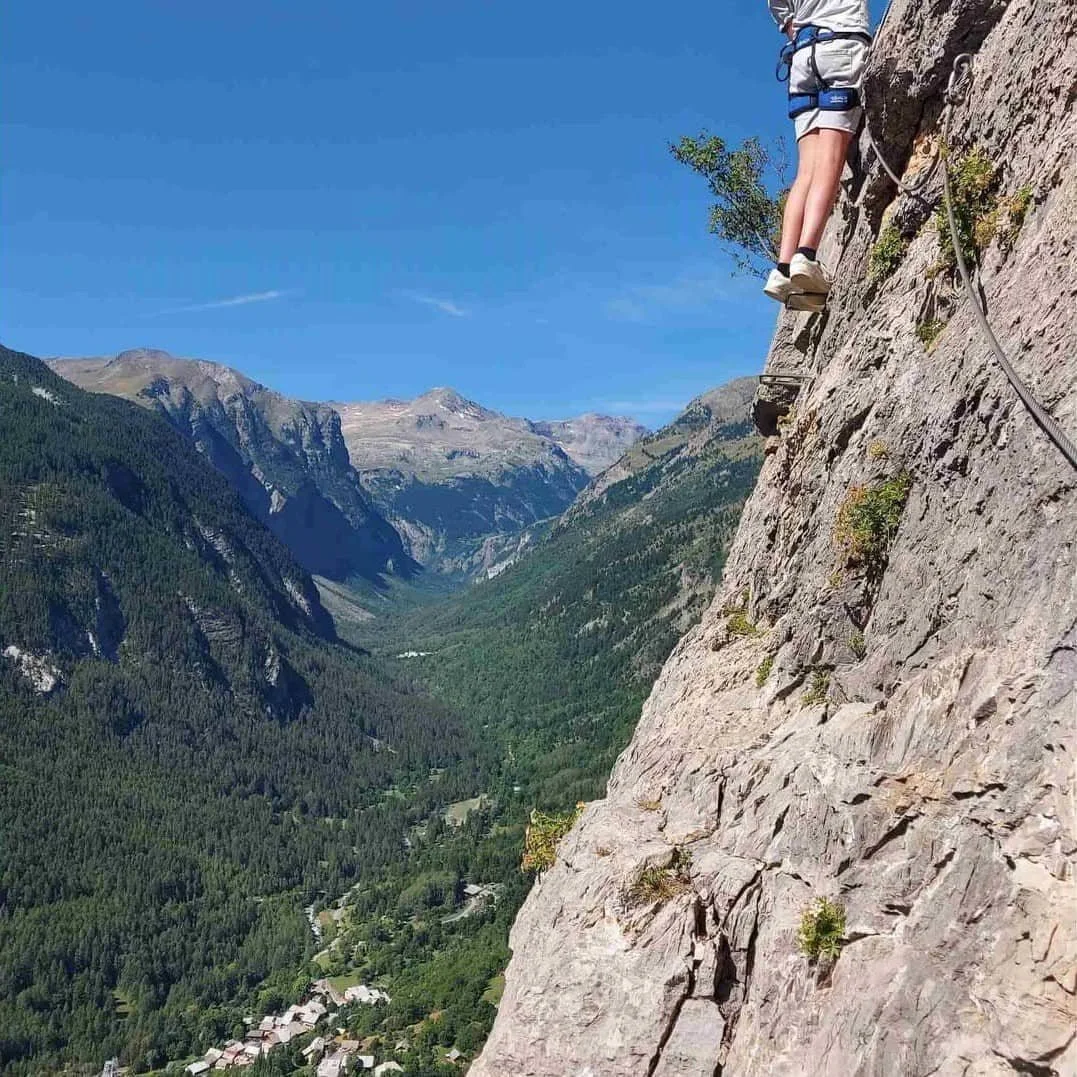
Nestled in the dramatic limestone walls above the valley of Freissinières, in the French Hautes-Alpes, the Via Ferrata de la Grande Falaise is a classic and historic route. Opened in 1988, it is widely regarded as the first via ferrata established in France. With its mix of air-filled traverses, exposed slabs and spectacular valley views, this route offers both adventure and alpine character in one half-day outing.
Trail Overview
Location: Above Freissinières, Hautes-Alpes department, Provence-Alpes-Côte d’Azur region, France.
Type: Via ferrata (protected climbing route) equipped with steel cables, rungs and fixed safety line.
Length / Elevation: Approximately 800 m of route length with around 300 m of vertical gain.
Grade/Difficulty: Rated C/D (according to via ferrata grading) – certain sections are more demanding than typical beginner lines.
Duration: The via ferrata portion typically takes 1.5–2.5 hours, plus approach and descent paths; plan for half a day.
Route Description
The ascent begins with a short approach path (~20–30 minutes) from the parking area, heading uphill toward the base of the south-facing limestone cliff of the Grande Falaise.
Part 1: The route begins by gaining height via a mix of easy clipped cables and rock traces. You traverse upward and to the right across “Corde à Nœuds” (Rope with Knots) wall and then the long “Minérale Gazeuse” traverse, offering superb views over the valley. An escape route is available at this halfway point for those who wish to exit early.
Part 2: After the escape point, the route becomes more aerial and athletic. It climbs through a cave, crosses the “Vire aux Quartz” ledge, and negotiates the final slabs (“Dalles Osées”) with sustained exposure to the drop below. The natural rock dominates – there are relatively fewer artificial rungs compared to modern via ferratas, so the climber must rely more on rock features.
The descent follows a trail beneath the route, back down to the valley road and car park.
Highlights
Historic significance: As France’s first via ferrata (1988), it holds a special place in the development of the discipline.
Dramatic exposure: Long traverses high above the valley floor provide thrilling views and a sense of daring.
Spectacular rock face: The south-facing orange-calcareous wall catches the light beautifully and the route keeps you close to the rock’s texture.
Scenic valley backdrop: The quiet alpine valley of Freissinières beneath, with its green meadows and mountain peaks, makes for a breathtaking panorama.
Two-part structure with an escape option: This allows flexibility, making it accessible to more people while still offering a challenge for those who push on.
Difficulty & Required Skills
The Via Ferrata de la Grande Falaise is rated around C/D, meaning it is moderately to strongly difficult.
What you need:
Good physical fitness for sustained climbing and exposure.
Comfort with being exposed, working over cliff edges and leaning into the wall.
Strong sure-footedness and willingness to use natural rock features (since metal rungs are fewer than in ultra-modern routes).
Proper via ferrata equipment: helmet, harness, via-ferrata lanyard with energy absorber, gloves, and good hiking/climbing shoes.
Good weather awareness: since you’ll be on exposed rock, avoid thunderstorms and wet conditions.
Navigation skills: trail to approach and descent require standard hiking ability.
While the route allows less experienced users to exit early, those continuing need to be comfortable with sustained exposure and some vertical climbing.
When to Go
Best season: From late spring to early autumn (typically May to October) when the cliff is dry, the wall is sun-facing, and mountain weather is more stable.
Avoid: Early spring when snow or ice may persist on the wall, or during heavy rain when the rock becomes slippery and metal gear conducts.
Time of day: Start early to get the wall in good light and avoid afternoon weather changes/upward-drifting clouds in the valley.
Crowd factor: As one of France’s first via ferratas and well-known, arrival early helps avoid mid-day groups.
Access & Logistics
Approach: From Freissinières village, drive to the designated parking area near the valley road. Then a steep footpath of about 20-30 minutes brings you to the base of the via ferrata.
Descent: After the via ferrata, follow the marked downhill trail back to the valley road and parking.
Location coordinates: Roughly 44.7577° N, 6.5383° E.
Equipment rental or guide services: Local providers in the Hautes-Alpes offer via ferrata kit rental and guided ascents for safety and orientation.
Accommodation & logistics: Stay in or near Freissinières or the nearby town of Briançon — good base for food, lodging and gear-shops.
Transportation: If not driving, train or bus to Briançon and then bus or taxi to Freissinières.
Why It Belongs on Every Adventurer’s List
This route offers a unique blend of historical significance, alpine exposure, aesthetic beauty and technical engagement. For any adventurer seeking a compelling vertical experience in the Alps, here’s why it stands out:
You’ll climb a piece of via-ferrata history – the first of its kind in France.
The route grants you dramatic cliffside traverses with jaw-dropping valley views beneath.
The south-facing rock ensures a bright, photogenic setting (ideal for your outdoor content, especially given your storytelling focus on alpine adventures).
It’s accessible enough to be done in half a day, yet challenging enough to satisfy serious adventure seekers.
The landscape and setting resonate with your brand’s identity: wilderness, alpine culture, raw mountain emotion.
For your All Alps / All Hiking platform, this via ferrata is a perfect feature — it aligns with your spirit of capturing alpine stories, connecting with nature and sharing adventures that inspire others.