Via Ferrata de la Tête de la Sallanche
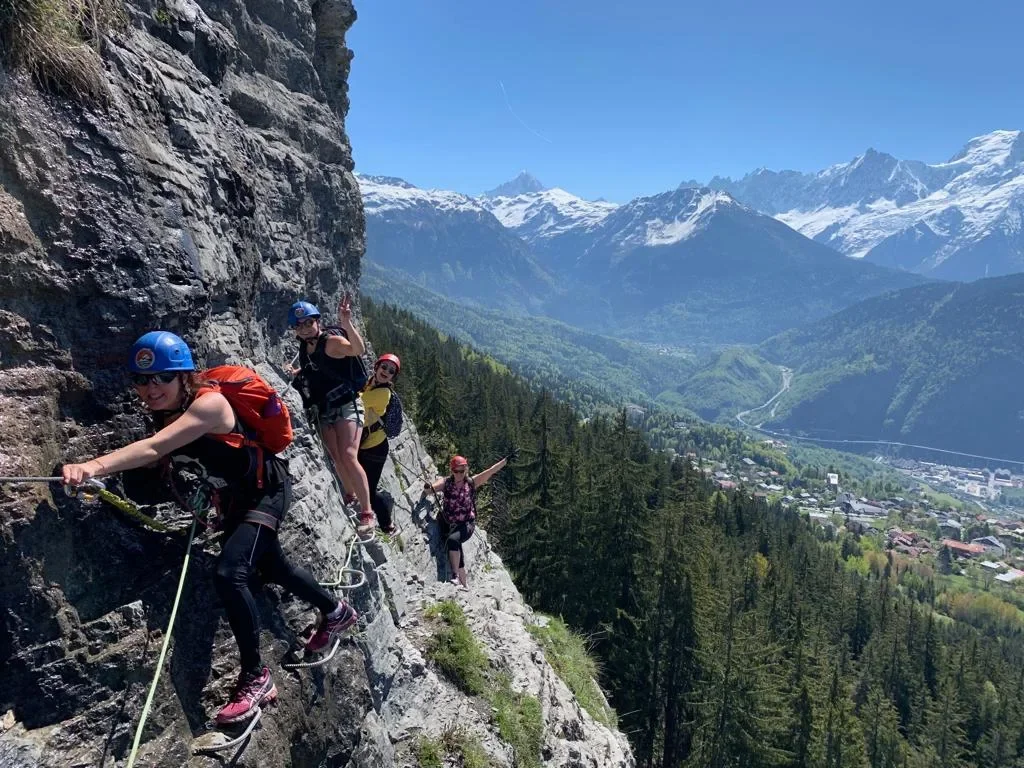
Located in the stunning Mont Blanc region of Haute-Savoie, France, near the town of Sallanches, the Via Ferrata de la Tête de la Sallanche offers climbers an exhilarating blend of vertical rock, spectacular views, and the thrill of high-altitude, secured climbing. The route provides a gateway into the world of via ferrata for strong hikers looking to venture beyond simple trails into the vertical dimension of the mountains.
Why it’s worth doing
Stunning alpine setting – The Mont Blanc massif looms over the valley, offering dramatic panoramas over Sallanches and the Arve valley.
Unique experience – A via ferrata blends hiking and climbing: you’ll use metal rungs, cables, and fixed anchors to traverse exposed rock faces.
Adrenaline & accessible adventure – If you're comfortable with heights, and have good fitness and sure-footing, it’s a memorable alpine experience.
Great complement to hiking – For those already exploring trails in the Mont Blanc region, it adds vertical fun without requiring full technical mountaineering.
Key Specifications
Location: Sallanches area, Haute-Savoie, France (Mont Blanc region)
Estimated difficulty: Intermediate to advanced via ferrata level (specific rating under this exact name may need confirmation)
Approach & logistics: Requires hiking to the base of the rock face; suitable equipment (helmet, via ferrata harness & lanyards) mandatory
Best season: Late spring to early autumn (June to September) — when rock is dry and route is open
Views & environment: High limestone or similar rock faces, vertical sections, some exposure above the valley floor
Duration: Expect several hours (including approach, via ferrata section, and descent) depending on fitness & route choice
Route Description & What to Expect
Approach:
Begin from Sallanches or a nearby trailhead (check local access). A hike leads you to the foot of the cliff where the via ferrata starts. The approach may include forest paths or alpine meadows giving way to rock.Via Ferrata Section:
You’ll attach to a steel cable with a double-lanyard system and ascend via metal rungs, stirrups, and possibly bridges or traverses.
Expect sections of significant exposure: hanging walls, ledges, and possibly overhangs or wide spans above the valley. The sense of height will be very real.
Strength and confidence needed: you’ll use both legs and arms, maintain balance on narrow ledges, and deal with the vertigo-effect of looking down into the valley.
Key moments might include traversing outward from the face, crossing fixed bridges (if present), or negotiating steeper pitches.
Summit / Finish:
On completion, you’ll reach a terrace or path at the top of the equipped section. From here you may have sweeping views back over Sallanches and toward Mont Blanc.Descent:
Return via a marked trail down the hillside, forest or alpine path, back to the valley or car park. Ensure you allow enough daylight for descent.
Practical Info & Preparation
Equipment Required:
Via ferrata set: harness, energy-absorbing lanyards with two carabiners.
Helmet (mandatory in case of rock-fall).
Good hiking/approach shoes with grip.
Gloves (optional but helpful for cables/rungs).
Backpack with water (≥1 L), snack, wind/waterproof jacket, sunglasses, sun-cream.
Physical & Skill Level:
Good fitness and mountain experience recommended. Comfortable with exposed heights.
Not suitable for beginners without guidance; if in doubt use a certified mountain guide.
Safety & Weather:
Avoid during thunderstorms — cables and metal rungs conduct electricity and rock gets slippery in rain.
Early season may still have snow or damp rock; verify local conditions.
Access & Logistics:
Park near Sallanches (or nearest trailhead) and follow signage to via ferrata.
Confirm local tourist office for access, route status, any fees or restrictions.
Group/Guide Option:
If unfamiliar with via ferrata, consider hiring a mountain guide to lead you and ensure safe progress.
Timing:
Early start recommended to avoid afternoon storms and to benefit from morning light and cooler temperatures.
Why This Fits an Advanced Hiking Portal
Including this via ferrata on a trail/hiking portal like All Hiking broadens your offering: it transitions from pure hiking into mountain adventure and vertical terrain. It's perfect for fit hikers wanting to go beyond trails and add an element of technical thrill. You can label it as a “via ferrata adventure” rather than a simple trail, include gear checklists, difficulty ratings, and link to other via ferratas in the Mont Blanc region.