Via Ferrata de Génat
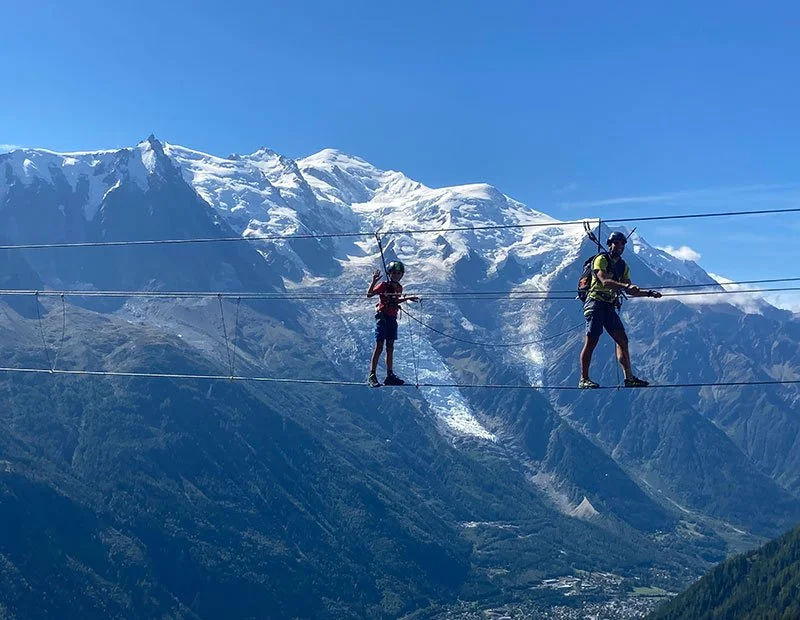
Tucked away in the dramatic mountains above Chamonix (France), the Via Ferrata de Génat offers thrill-seekers a chance to climb, dangle and traverse high on vertical granite faces with the majestic backdrop of the Mont Blanc massif. Immersed in alpine air and panorama, this via ferrata blends hiking, climbing and adrenaline in one high-mountain experience.
Trail Overview
Type: Via ferrata (protected climbing route with steel cables, ladders, foot-holds)
Location: Chamonix Valley, Haute-Savoie, France
Approximate Duration: Half-day to one full day depending on variant and access
Elevation / Exposure: High — vertical drops, cliff exposures, alpine ridge views
Setting: Alpine rock face in the Aiguilles Rouges massif (or surrounding peaks) with sweeping views across the Mont Blanc massif
Purpose: For hikers looking to step into vertical terrain safely, but with no lesser sense of adventure
Route Description
The Via Ferrata de Génat begins with an approach hike from the valley floor of Chamonix up to the base wall — often via a gondola or cable car to reduce vertical approach. From the starting point, you clip into the steel cable and ascend via metal rungs, ladders and bridging sections fixed to the rock face. Along the route:
A steep initial section with welded rungs guides your ascent up the vertical granite.
Mid-way there may be a horizontal traverse or a hanging foot-bridge crossing a gap or exposed notch in the rock.
The upper section opens into high alpine terrain: rock ledges, occasional loose stone, panoramic vantage points.
The final segment leads you onto a ridge or plateau from which you can either descend via a trail or cable car, or link to adjacent mountain tracks.
The return is usually via walking down the ridge or trail that leads back to the lift station or valley path.
Highlights
Breathtaking panorama of the Mont Blanc massif: Climbing high on the face allows sweeping 360° views—valleys, peaks and glaciers.
Adrenaline and vertical terrain: The combination of ladders, bridges and exposed traverses gives that “climb rather than hike” sensation.
Alpine setting, but accessible: While challenging, the route provides a gateway to high alpine exposure without full mountaineering gear.
Unique vantage points: You’ll likely cross a rope/steel bridge or traverse a steep buttress giving you spectacular angles of the valley below.
Highlight photo moments: Vertical steel fixtures, sheer drops, and the valley stretching below make for iconic outdoor photography.
Difficulty & Required Skills
Difficulty Level: Intermediate to advanced via ferrata. Not just a simple family‐walk ferrata; expect vertical climbs, exposure, and high altitude.
Required Skills & Attributes:
Comfortable with heights and exposure (fear of falling difficult to mask).
Good upper body strength (pulling up via ladders/rungs).
Sure-footedness on rock ledges and transitions.
Basic ability to self‐belay via via-ferrata harness and long-line system.
Weather awareness: thunderstorms or rockfall pose serious hazards.
Equipment Needed:
Via ferrata harness with energy‐absorbing lanyard + two carabiners.
Helmet (mandatory).
Gloves for gripping steel rungs.
Good hiking boots with firm grip.
Backpack with water, food, wind/rain shell.
Important Note: Although technical climbing gear (ropes, crampons) may not be needed, this is still mountain terrain: rock quality may vary, sections may require caution.
When to Go
Best Season: Late spring through early autumn (June to September) — when the rock is free of snow, cable car/lifts are operating, and weather is more stable.
Avoid: Early spring (remaining snow) and late autumn (shorter days, colder, possible snow). Also avoid times of high thunderstorm risk.
Optimal Conditions: Clear, calm mornings, ideally starting early to avoid mid-afternoon thunderstorms and allow descent in daylight.
Access & Logistics
Base Location: Chamonix Valley, Haute-Savoie, France. Use Chamonix as your base town.
Lift Access: Usually a cable car or gondola (for example from Les Praz to La Flégère) is used to reach higher trailheads and reduce approach time.
Approach Walk: From lift station you hike to the via ferrata start (often 20-40 minutes).
Descent Options: After completing the route, descent may be:
Via the mountain trail back to lift station/valley.
Using lifts/cable cars if you’ve returned to the ridge.
Guide / Rental Options: If you’re not familiar with via ferrata techniques or mountain exposure, hiring a mountain guide is recommended. Equipment rental is often available in Chamonix or from the lift station.
Transport: Reach Chamonix via Geneva airport or train. Local buses/gondolas serve the valley.
Safety Check: Always verify lift operating hours, weather forecast, gear condition, and rescue procedures.
Why It Belongs on Every Adventurer’s List
The Via Ferrata de Génat offers more than just a climb: it immerses you in alpine terrain, challenges your limits, and rewards you with iconic mountain views. Few experiences combine the exhilaration of climbing with the natural beauty of the Mont Blanc region in such an accessible way. Whether you’re a seasoned mountain lover craving vertical exposure or a hiking enthusiast ready to step into something wilder, this via ferrata stands out:
It’s memorable. The vertical steel rungs, the hanging bridges, the views—they stay with you.
It’s a blending of skill sets: part hike, part climb, part adventure.
It’s photogenic. Every section presents a vista or a moment worthy of keeping.
It’s a milestone. Completing a route like this marks a transition: from walker to mountain adventurer.